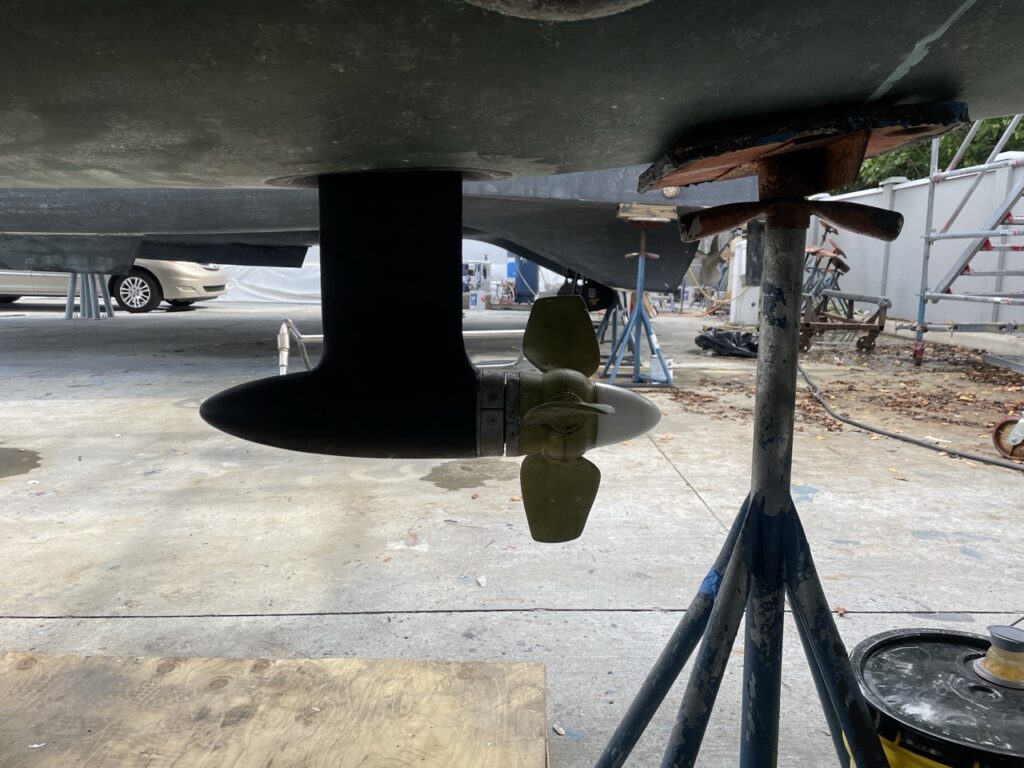
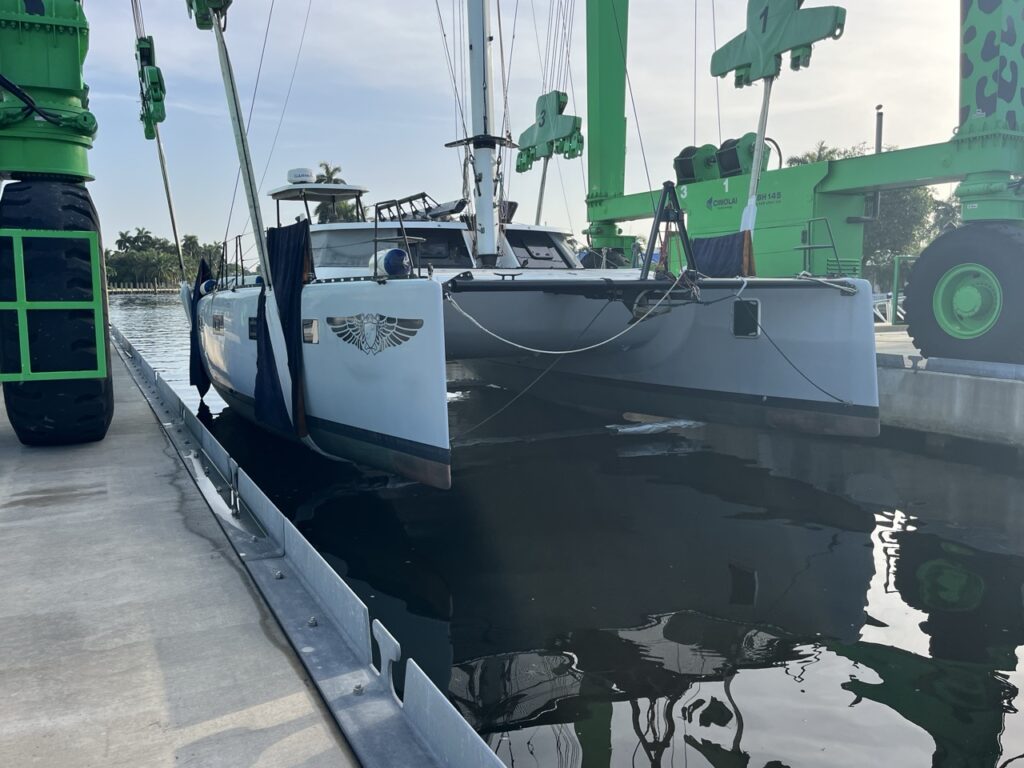
After six weeks on the hard, three shipments from Finland, one new motor, two replacement saildrive legs, and a freshly removed mast and rigging, The boat was floating.
The motors were (sort of) running. The Starboard motor had an issue just after we were put in the water, but seemed to be functioning okay, enough to move the boat.
Now we could slip the lines and see how the engines faired under loads and at higher power settings. We were finally moving the boat again. It felt like the end of a very long chapter.
Except it wasn’t, we still had a few pages to write apparently.
Sea Trials
On July 12th we pulled out of the slip and made a run up and down the water way of the marina. The port motor was silent and all indications pointed to a perfectly working system. The starboard motor, however, was making a strange, but different grinding sound. Once we were back on the dock, after running through a number of parameters and tests, we determined the cause was most likely due to pitch issues.
This would hopefully be something that we could fix while still in the water. We had to be out of the slip by the following morning and our place on the hard was already filled with a new boat. So there wasn’t much choice but to go back to the safety of the Lake Sylvia anchorage to wait for Oceanvolt’s response, continue trouble shooting and figure out our next steps. Regardless of the outcome, we could not continue to pay the steep marina fees.
Now we would just have to navigate the long, narrow, winding river again. This time, however, we would be without the safety net of the SeaTow boat should something happen. The good thing was that, without a mast, we would now fit under the all the bridges. The only thing we would have to be concerned about was if the railroad bridge came down for some reason, which it rarely did.
So of course…
Back Down the New River
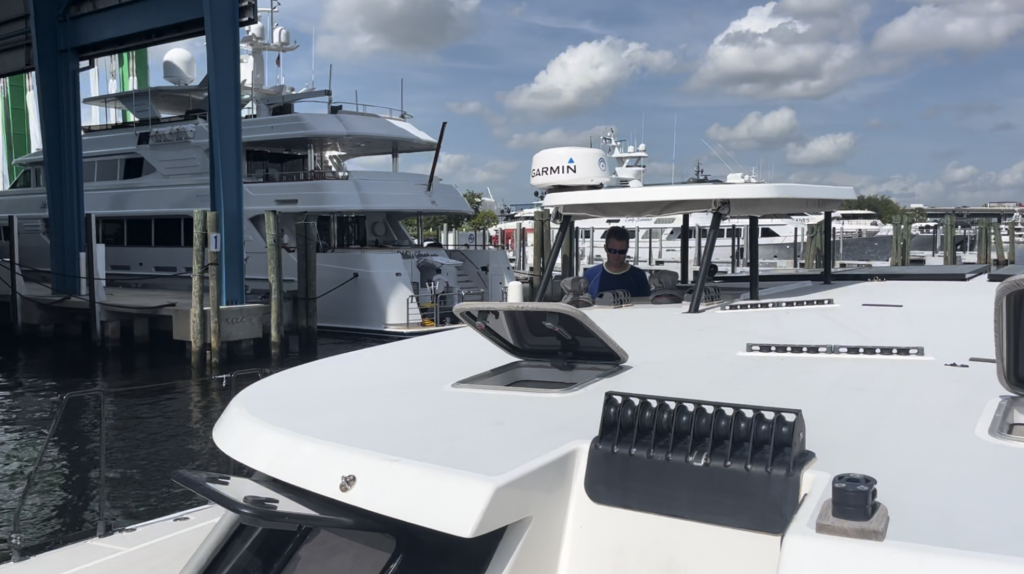
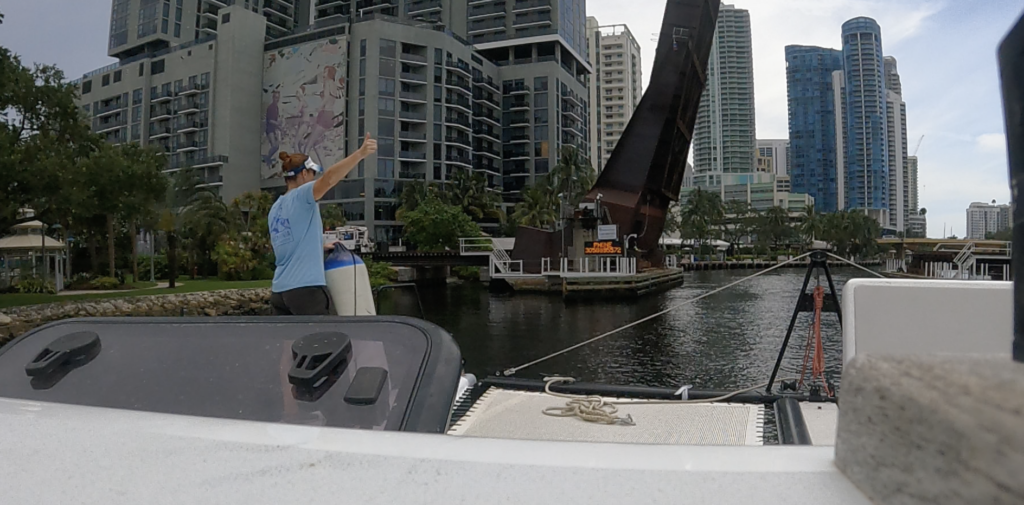
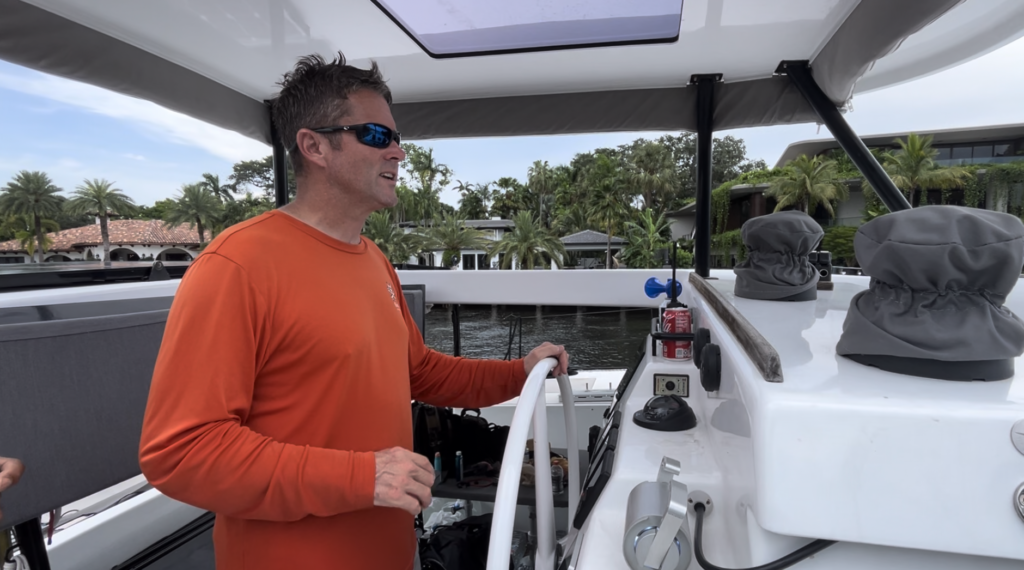
As we headed out of the LMC early on July 13th in hopes of not encountering too much traffic, we threw the lines off and headed out. Our nerves a bit on edge. We had a good system set up for navigating the river. Kevin was at the helm, we had a Nordic Marine rep on board to help troubleshoot the motor if needed and could act as an extra hand in case something went wrong and we lost the motor completely, and I sat up on the boat with a fender in my hand and gave Kevin a head’s up what I saw coming toward us as we approached blind turns.
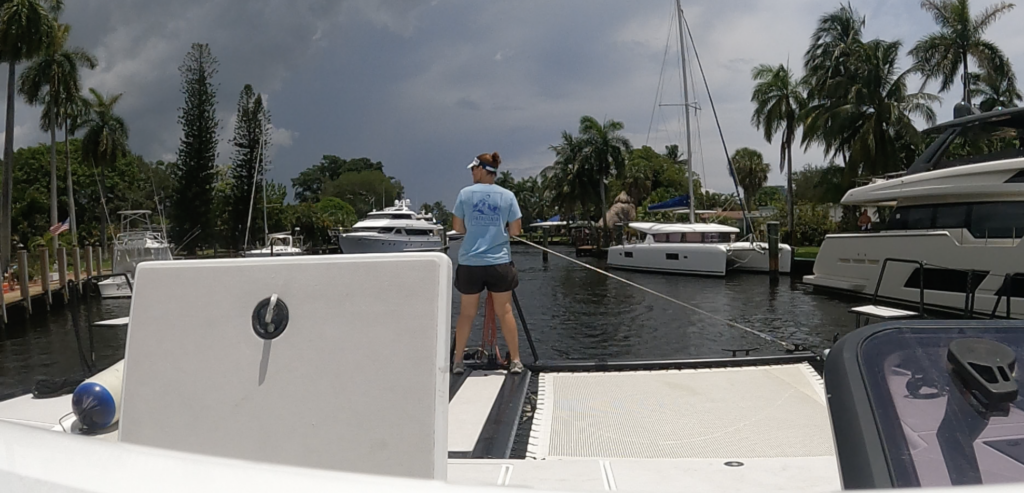
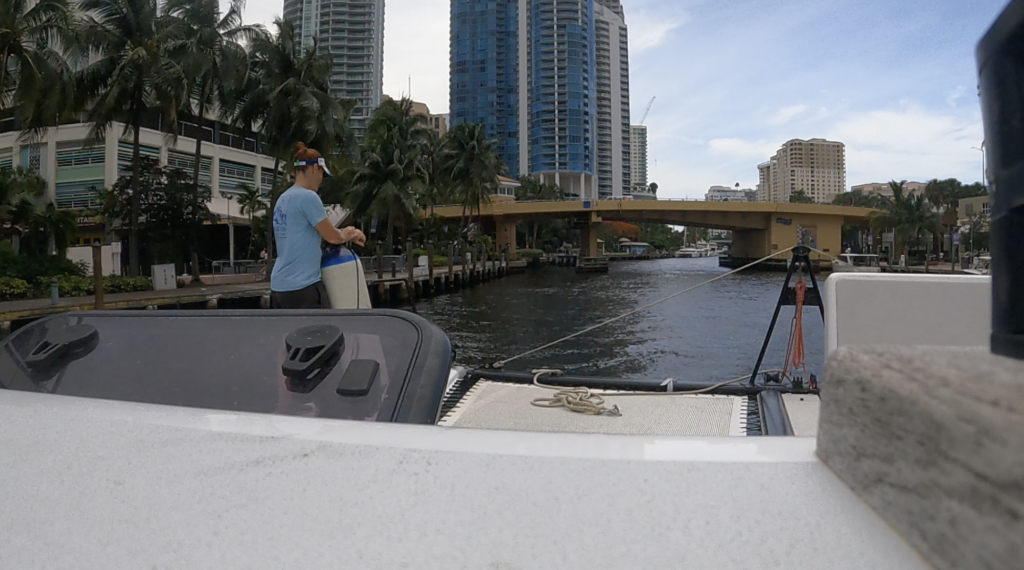
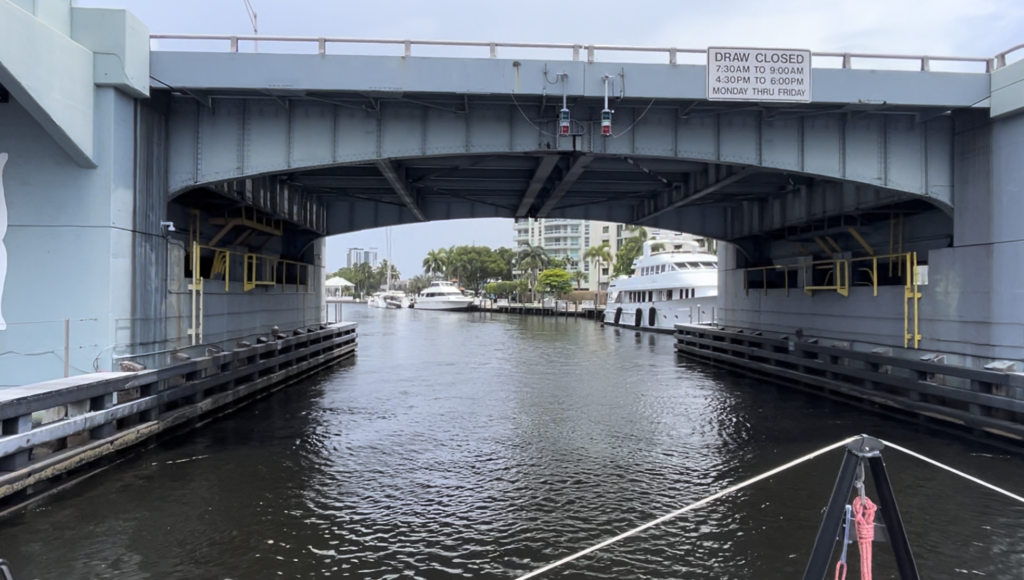
Bonus: Huge advantage. With no mast, we came in at under 15 feet / 5m, so no waiting on bridges!!
This worked great until we heard the fateful call that the railroad bridge was going to be lowered. Of course it was. If we had two perfectly working motors, we wouldn’t bad an eye. However, with the decent current pushing us toward the bridge and the narrow maneuvering room, this would be incredibly nerve wracking.
The bridge came down, Kevin did his best to keep us in place and centered in the river. However, as if it new it would be perfect timing, the starboard motor started glitching, we were loosing thrust. We decided before it became a bigger problem we would turn and tie up to a empty park dock, troubleshoot and wait for the bridge to go back up.
After a lot of consternation, very uncomfortable moments a small crowd gathering to watch (though conveniently not offering to help), we managed to get ourselves safely tied off. Kevin sadly stepped on a slippery part of the dock surface and momentarily ended up in the water. He shook it off and we went to figuring out the new game plan.
Back to Where We Started Our US journey 6 weeks prior…Lake Sylvia
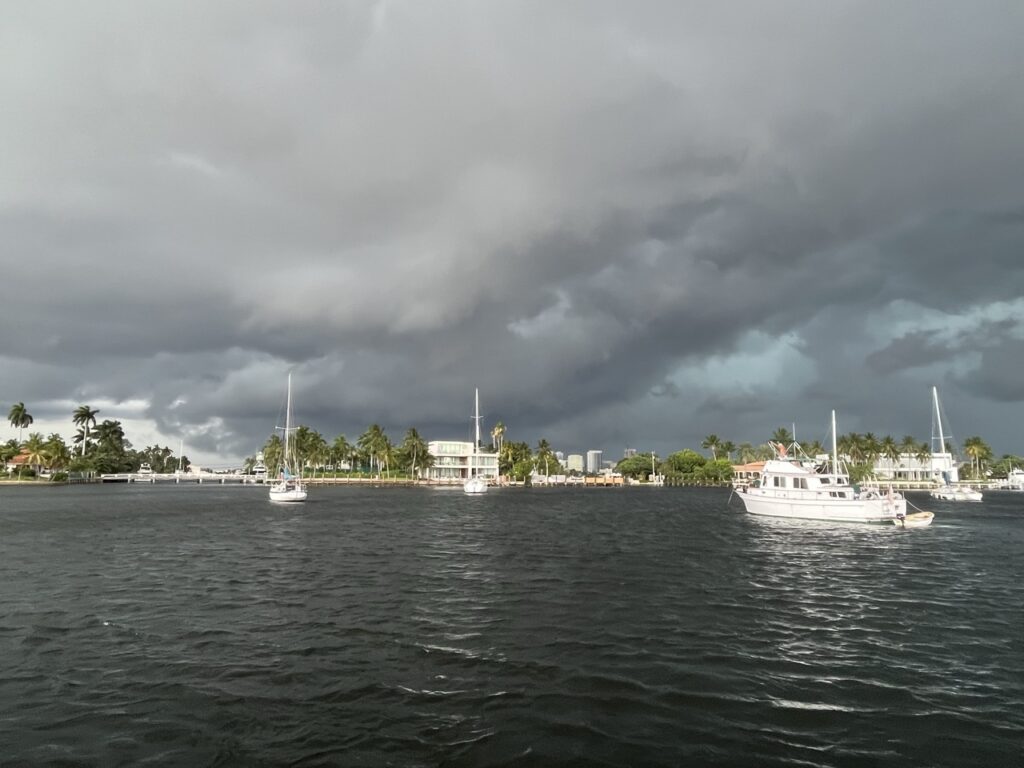
We managed to navigate the starboard motor thrust issues enough to get us get us safely anchored back in Lake Sylvia. While we knew, what we now just call “the Lake”, was a fairly comfortable place to sit for a bit, this was not exactly where we wanted to be. So we were a bit grumpy having not been able to get out of Fort Lauderdale. We had hoped to be heading at least a little ways up the ICW to make some progress.
The only consolation was that for the first time in over a month, we felt more like cruisers again instead of mechanics. We still, however, were not confident in taking this motors north, so we had a bit more trouble shooting to do.
With just over two weeks from our hurricane-window extension from expiring, we needed to get this figured out. Fast.
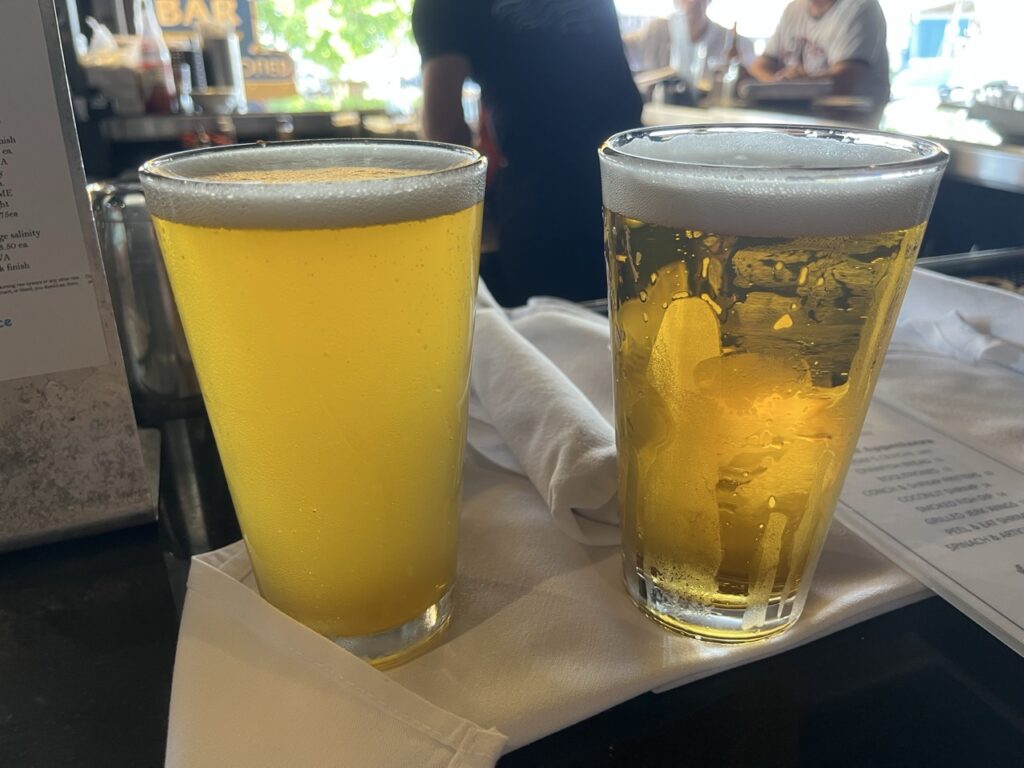
We dropped our Nordic Marine rep off to make his journey back to Miami while we waited for Oceanvolt’s thoughts on the latest issue. We took the dinghy over to Coconuts, where we grabbed a beer, some tasty apps, and lamented at our current situation.
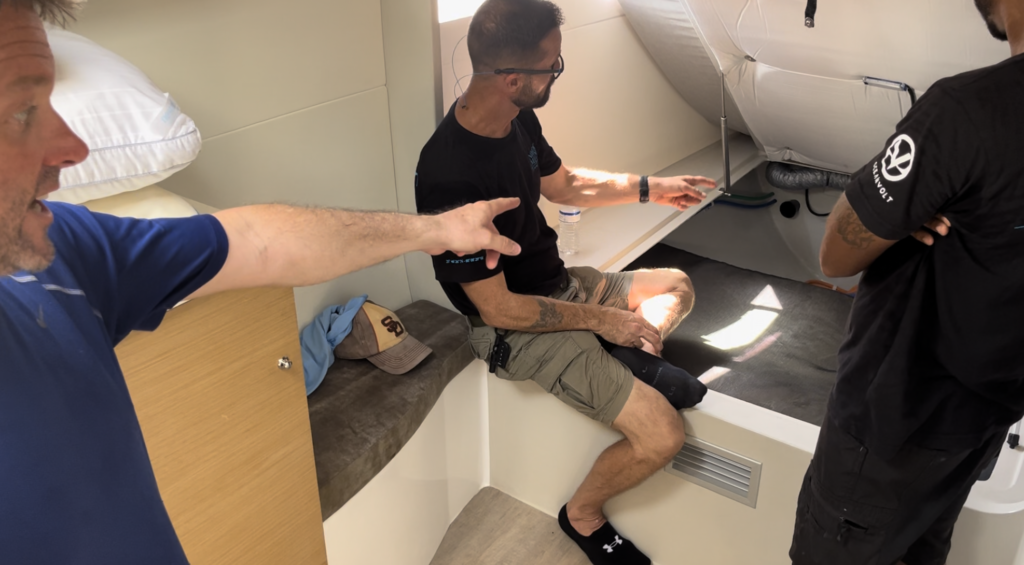
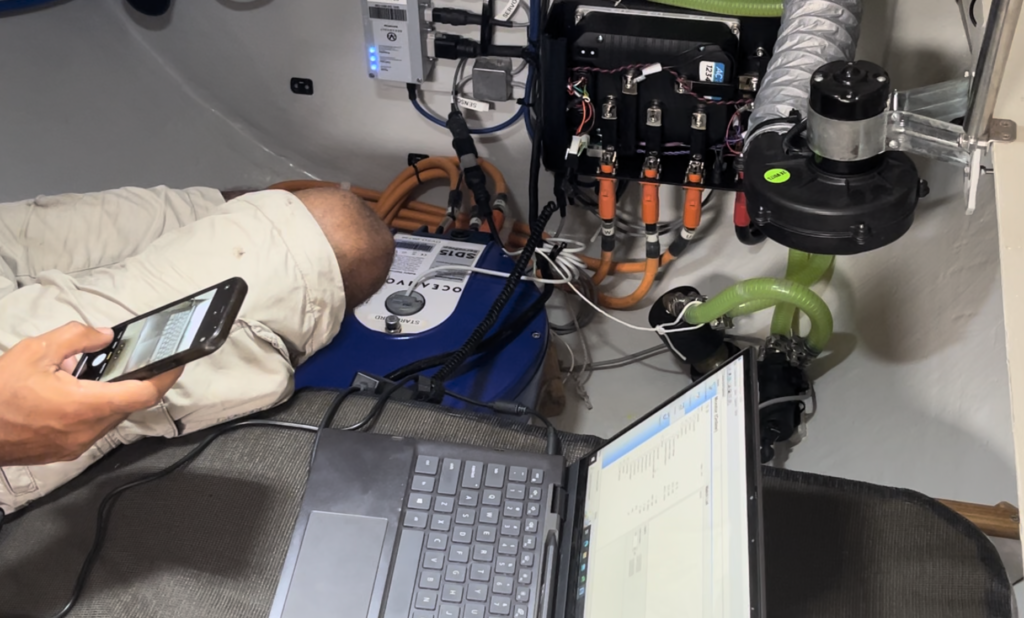
Two days later, with some troubleshooting ideas from Oceanvolt, we had our rep back onboard, laptops and tools out, scattered around the engine bay in order to determine if we could get the starboard motor working correctly.
For the next three long,hot, exhausting days we had Nordic Marine onboard and went back and forth with with Oceanvolt in Finland running diagnostics and trying different things, we were exhausted mentally and physically, and running out things to try. This was not looking good. It’s hot. 90+ degrees…so this is fun! It’s been, and is brutal inside/outside. We were supposed to be in New England!!
A Random Thought May Save the Day
We were reaching for help from every direction at this point. Finland, Miami, random forums on various social media sites. And lo and behold, on July 18th, a random Oceanvolt owner piped up and told us to check the motor position sensor. He had an issue with one shipped to him that was not connected properly.
Sidenote: They rectified shipped him a new motor head to replace it under warranty…there is a definite concerning pattern here. Quality assurance on outgoing products seems to be hit or miss.
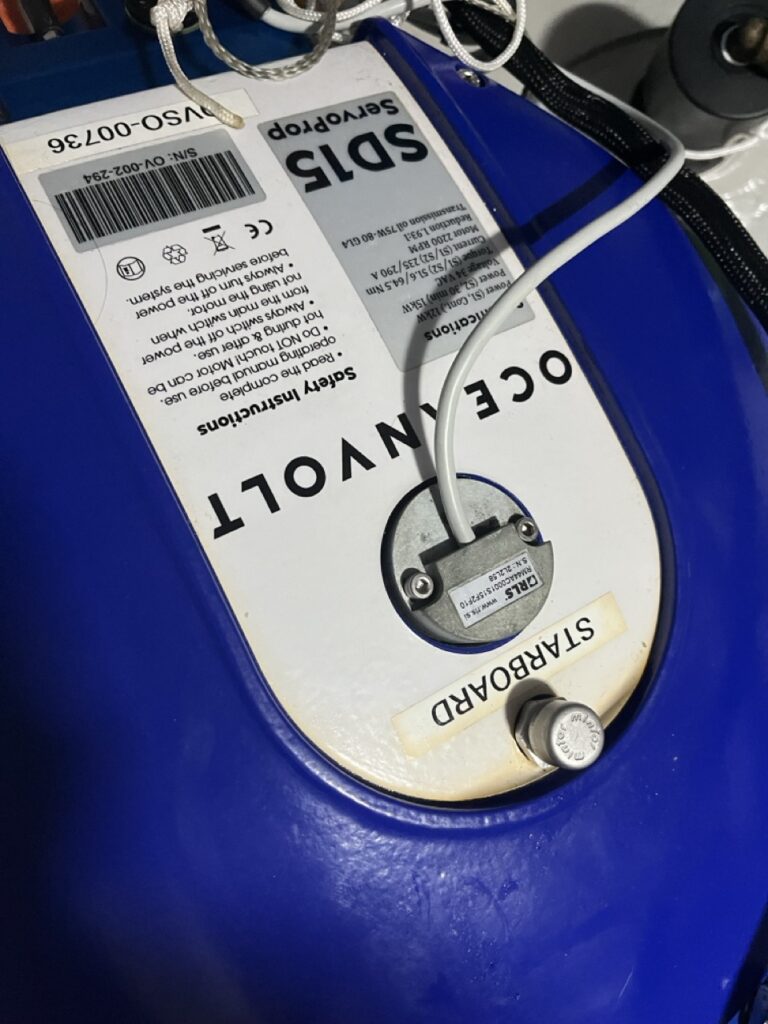
Once we looked at the sensor on the top of the motor head, we immediately knew something was off, it was slightly tilted. We checked the port motor head and sure enough, it was lying flat. Could it be this simple?!
The Importance of the Position Sensor
The position sensor is essentially the motor’s “eyes.” It tells the motor controller exactly where the internal spinning parts are at all times so the motor knows when and how to apply power. Without that information, the motor can’t run smoothly or efficiently. Think of it like the timing system in a car engine—if the timing is off, the engine may still run, but not very well. The sensor helps ensure the motor delivers power smoothly, efficiently, and without unnecessary wear.
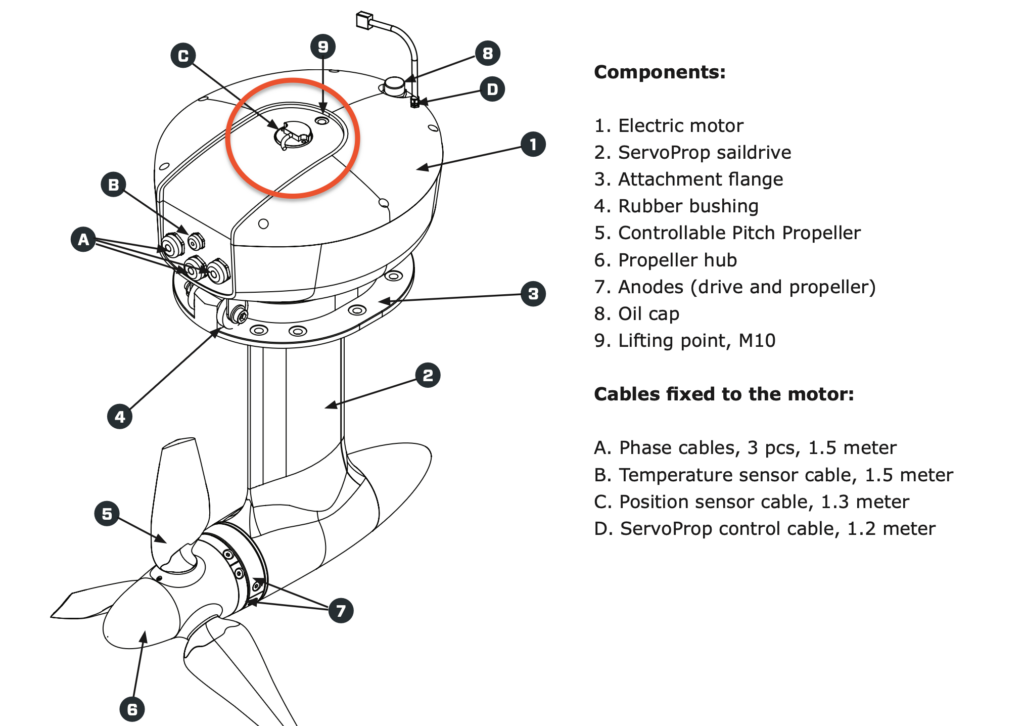
If that sensor is not seated flush against its mounting surface, it will provide inaccurate position data. The sensor is designed to sit a specific distance from the rotating magnet or target wheel. If it stands proud even a few millimeters, the magnetic field reaching the sensor may be weaker or distorted. Additionally, a misaligned position sensor can sometimes create symptoms that feel like a mechanical issue due to timing communication issues because the motor “hunts” for position or produces uneven torque.
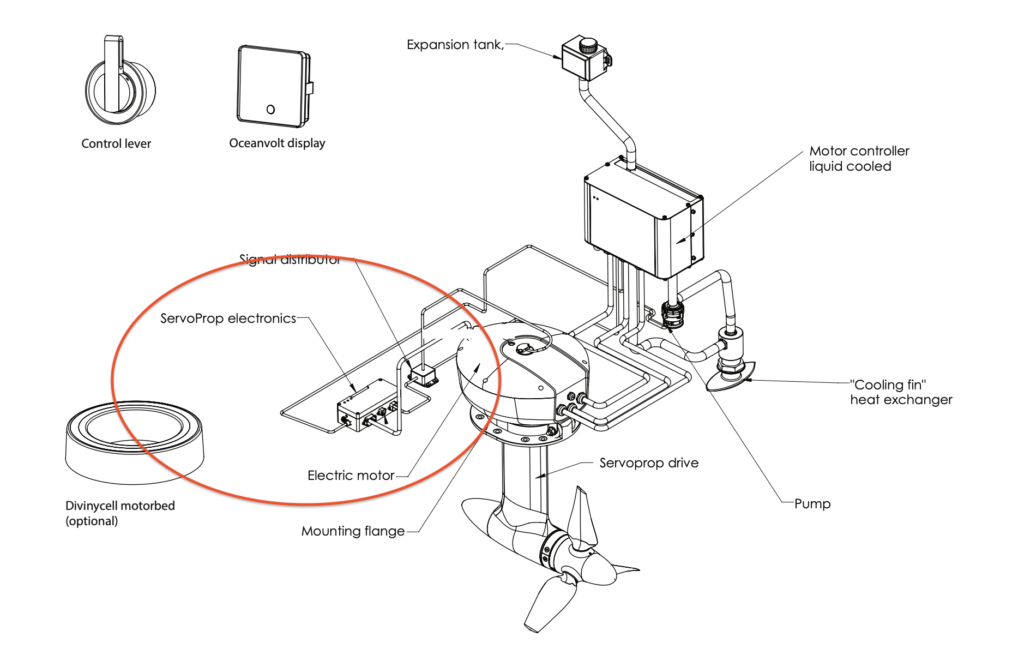
Symptoms include: Rough running, Reduced power, Increased current draw, Excessive heat, Vibration or cogging at low RPMs (Gurgling?!)
ALL of these sound familiar!
And there it is folks!
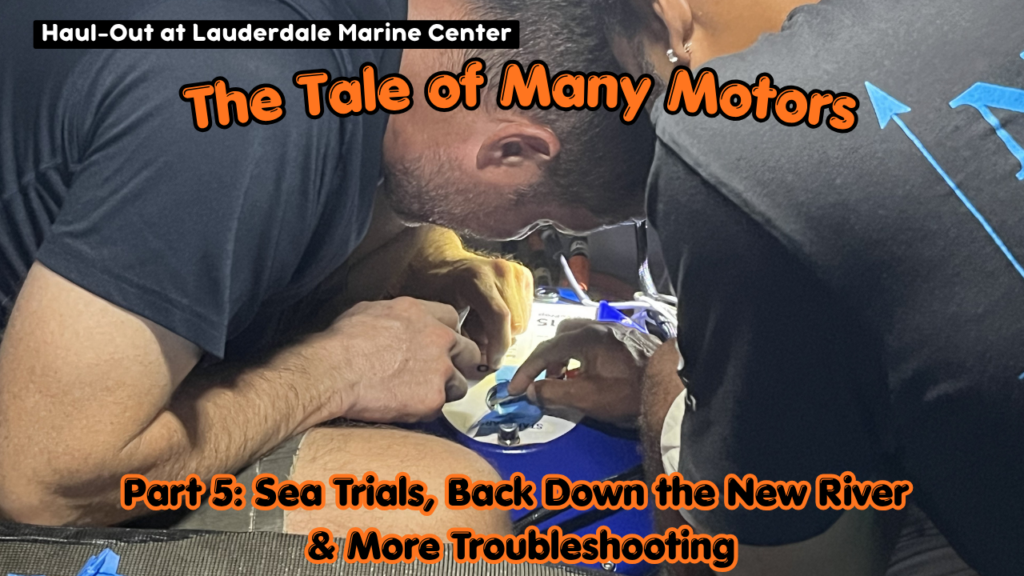
Kevin and Nordic Marine rep pulled out the sensor to see what might be causing the tilt. Sure enough, a sheered screw on the helicoil was unseating the sensor from being in its intended flush position. (a sheared helicoil unseating the sensor from being in its intended flush position. Who would even thin!k to look at that?! Apparently, not Oceanvolt. Based on forums and other owners we spoke with, this is not an uncommon issue.
Kevin and our rep were able to MacGyver the sheered screw out and replace it. It was like watching surgery happen! “Scalpel!” We also replaced the the sensor for good measure…just in case.
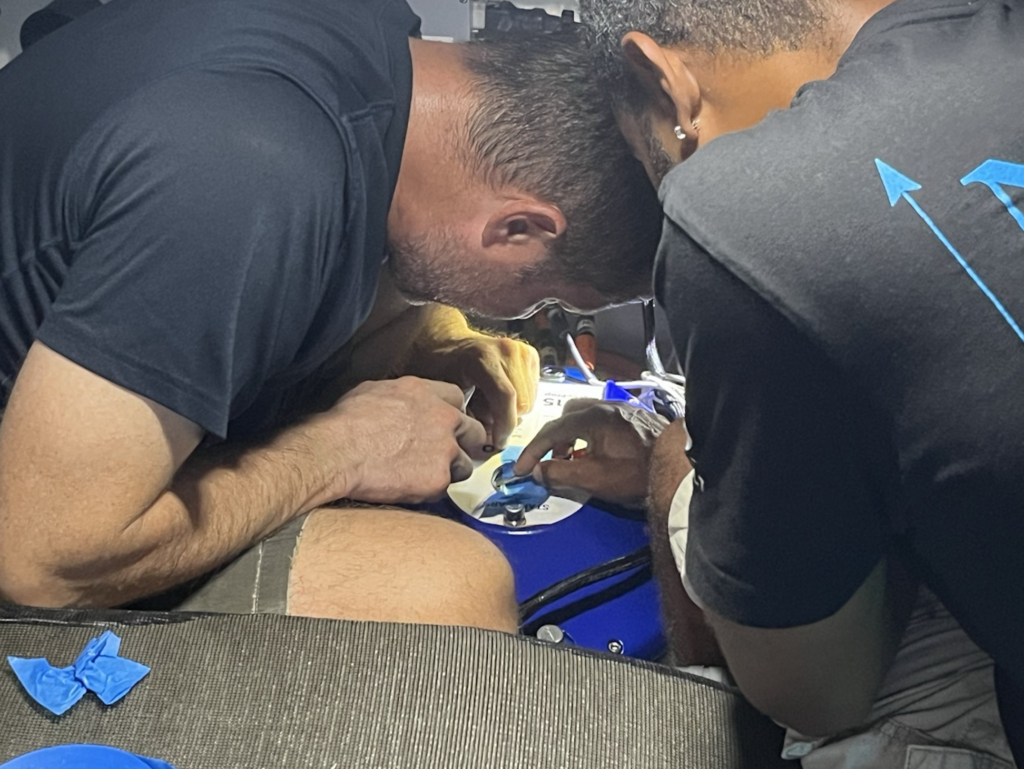
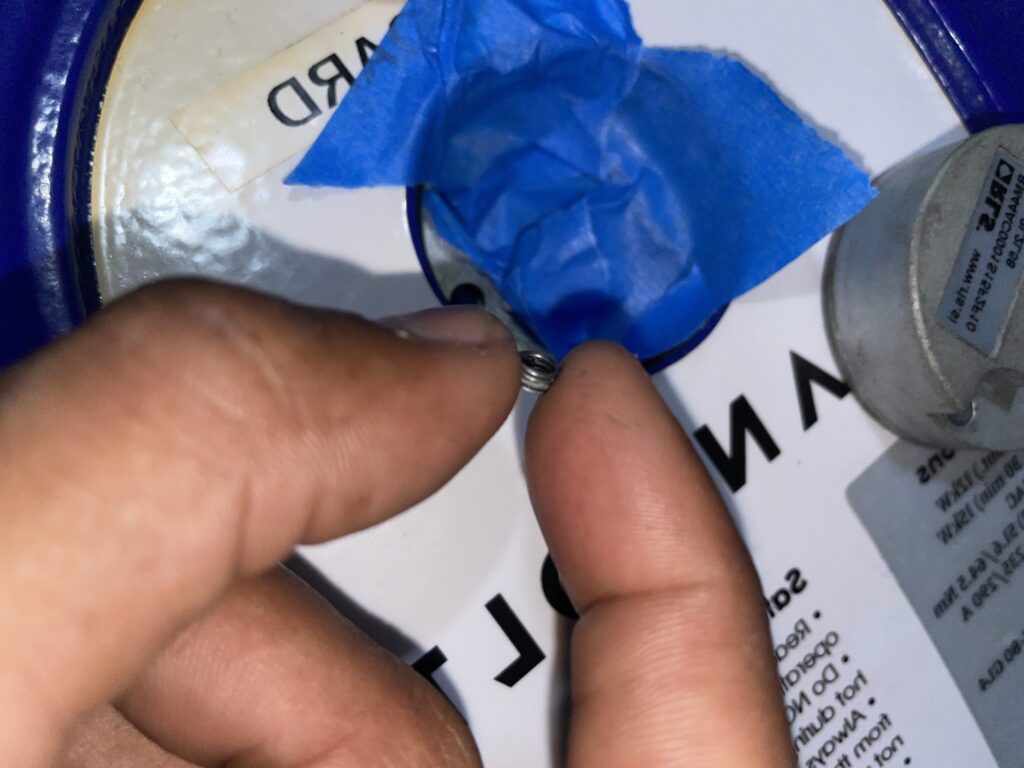
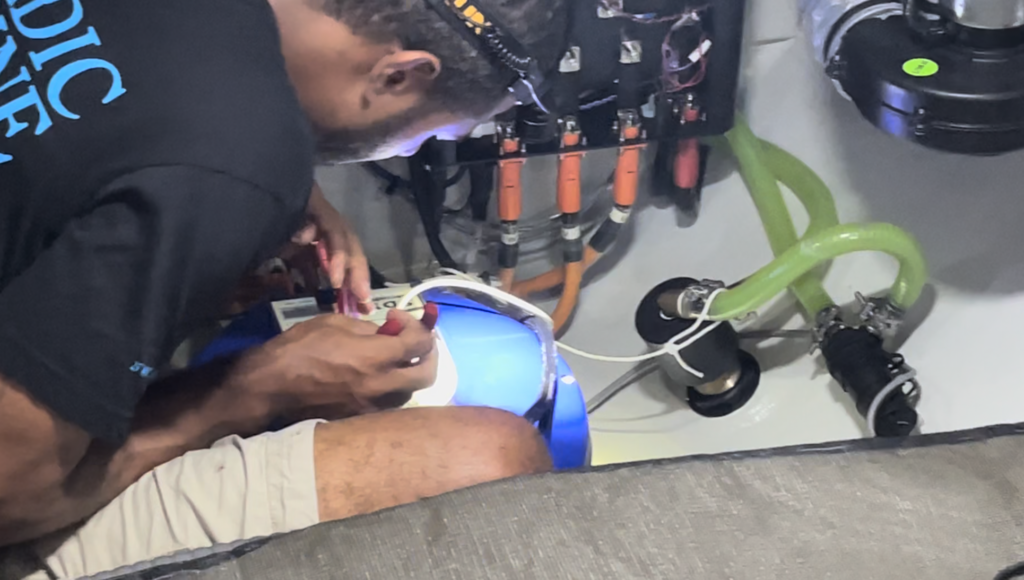
Our rep then re-configured the pitch settings for the motor and we started running tests. Amazingly everything sounded fine! OMG, is this finally it. Are we good?!

And this being the motor head we have been using for the last several months including crossing an ocean, how long has this been effecting us?! And why did we figure this out ourselves and not Oceanvolt is a lingering question…
So did we fix the problem or or simply postpone it.
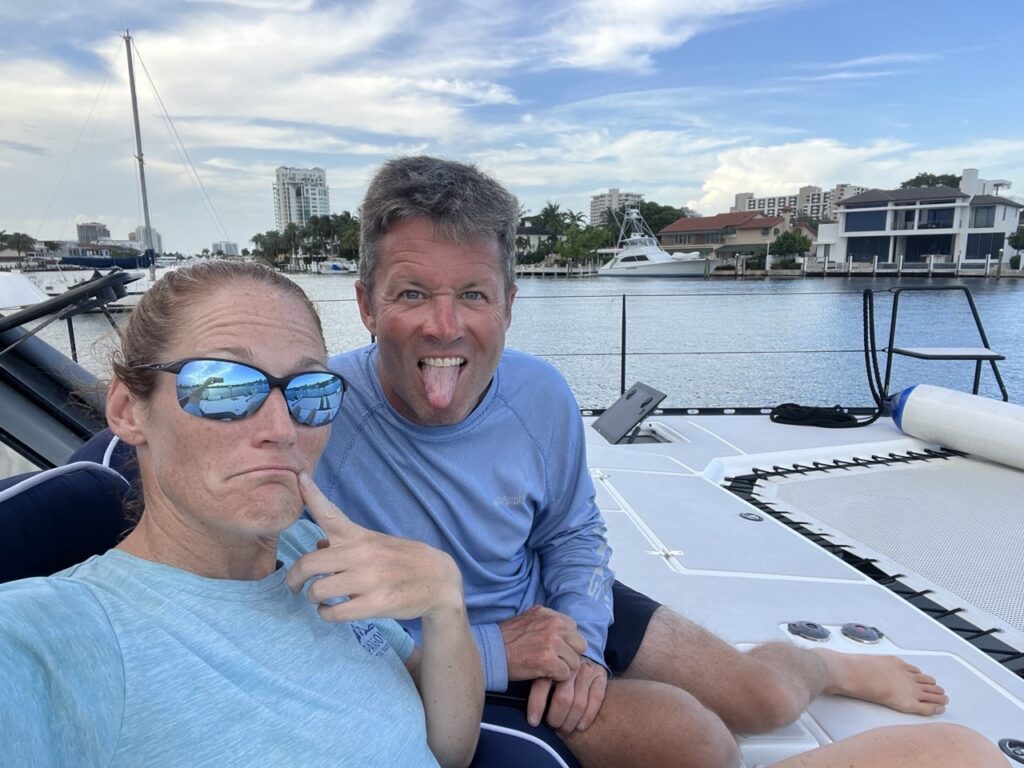
Regardless, two working motors, 2 weeks to get north of Hattaras, we pointed the bow north and started motoring up the ICW toward Norfolk.
Whether that was a good idea or not…well, that’s the next story.
For the video version of this story…
Discover more from Water Wings Sailing
Subscribe to get the latest posts sent to your email.