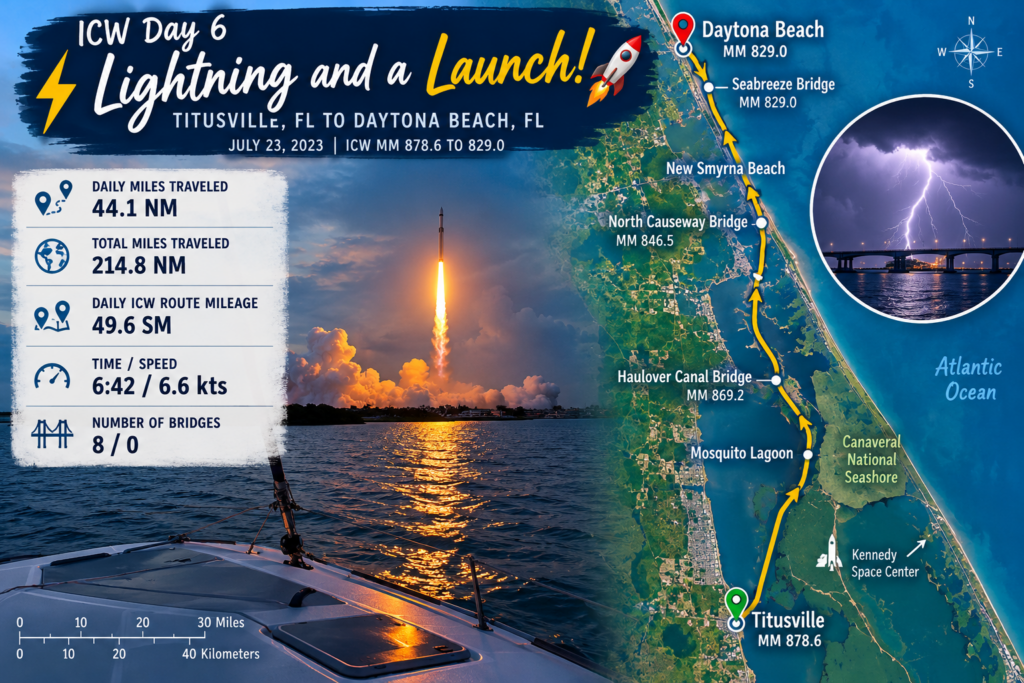
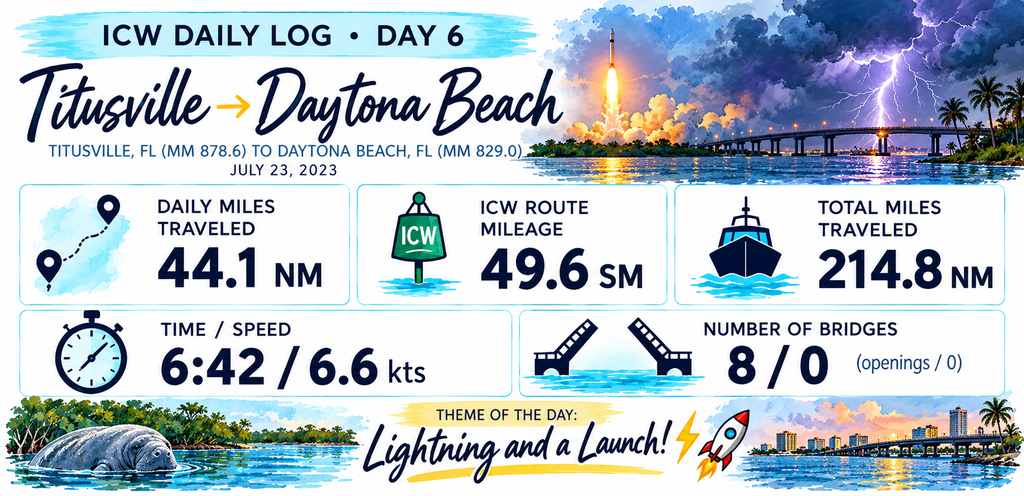
July 23, 2023 | Titusville, FL. (878.6) to Daytona Beach, FL (829.0)
Theme of the Day: A thunderous welcome into Daytona Beach and the rescheduled Space X launch is a go!
Another day, another 45 miles of Florida in the bank! Day 6 took us away from the more populated areas of the Space Coast, through some of the wildest stretches of the Intracoastal Waterway we have seen so far, and eventually into the much busier waters of Daytona Beach.
Along the way, we’d trade wide-open lagoons for a narrow canal, pass through protected wildlife areas, and encounter a few more of Florida’s seemingly endless bridges.
And just when we’d reached our destination, Mother Nature threw us one HECK of a welcome party!
Goodbye, Titusville. Hello, Wild Florida!
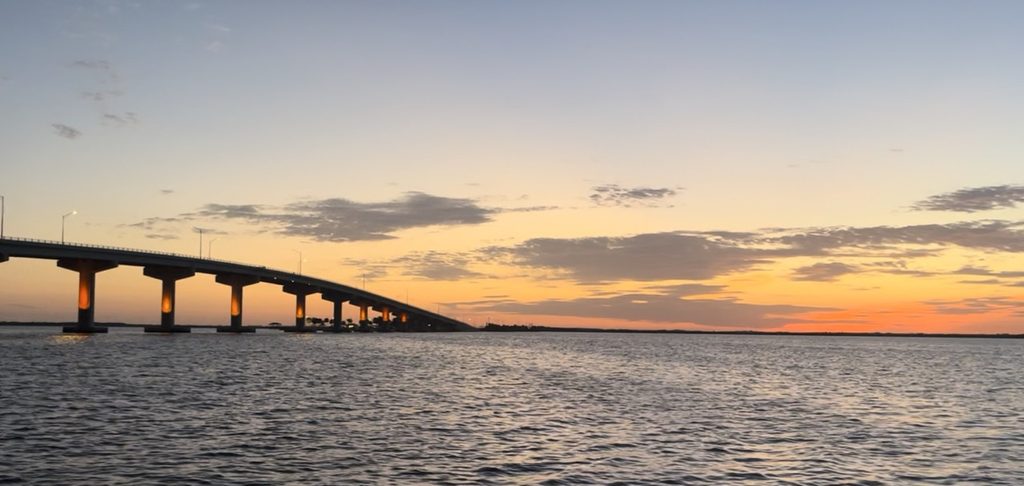
At 6:15 AM, the sky was beginning to brighten over the A. Max Brewer Memorial Bridge (SR 406), just south of our anchorage. That was our signal. Time to get moving!
Starting early meant traveling during the coolest part of the day. In July, in Florida, that’s a pretty darn good motivator. Leaving our anchorage near Titusville, we headed north along the Indian River Lagoon.
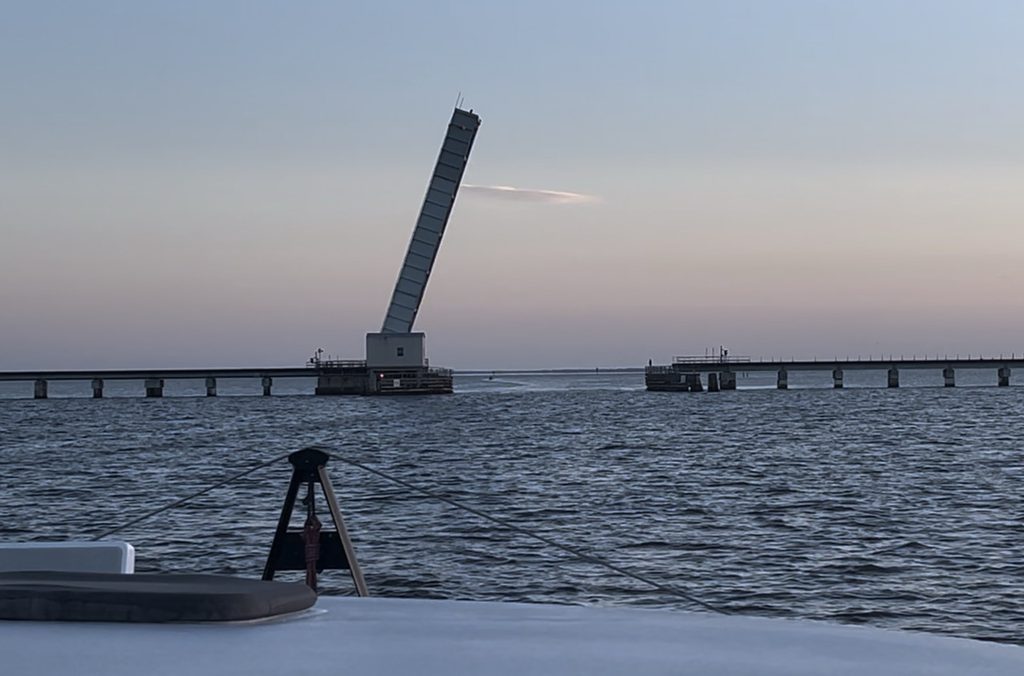
We soon navigated through the narrow opening of the NASA (Jay-Jay) Railroad Bridge (MM 876). This unmanned railroad bridge has approximately 7 feet of clearance when closed but is normally left in the fully open position.
Originally built to transport equipment and materials to Kennedy Space Center, the railroad is now rarely used. The bridge spends most of its time open, allowing vessels to pass without interruption.
Past the bridge, the northern stretch of the Indian River Lagoon opened up, with the Merritt Island National Wildlife Refuge along the eastern shoreline and mostly residential areas to the west.
Established in 1963 as part of the development of Kennedy Space Center, the refuge encompasses approximately 140,000 acres of coastal habitats.
This would mark the end of our journey along the Indian River Lagoon.
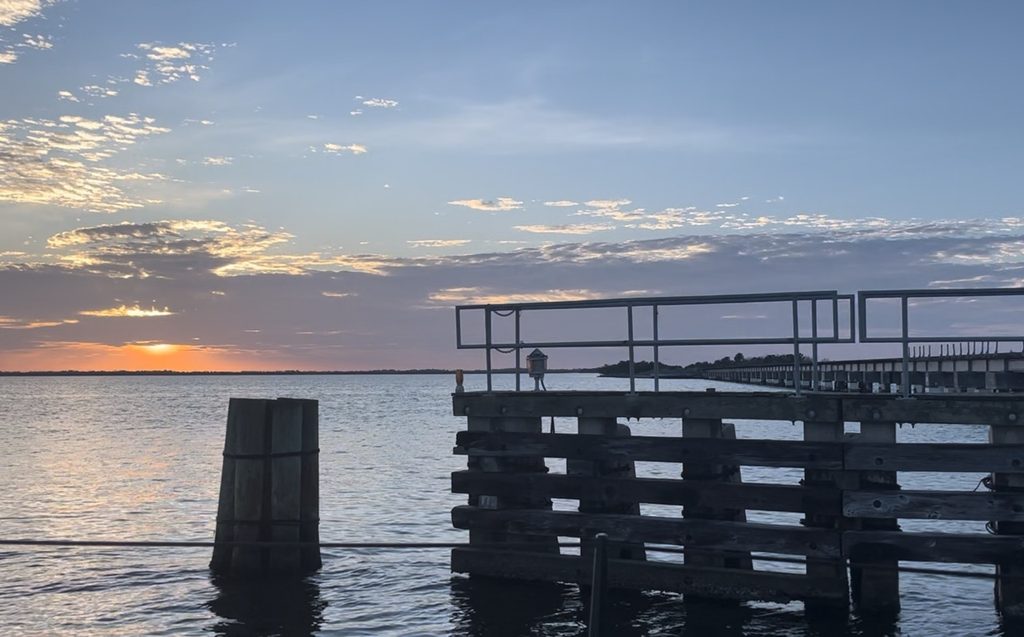
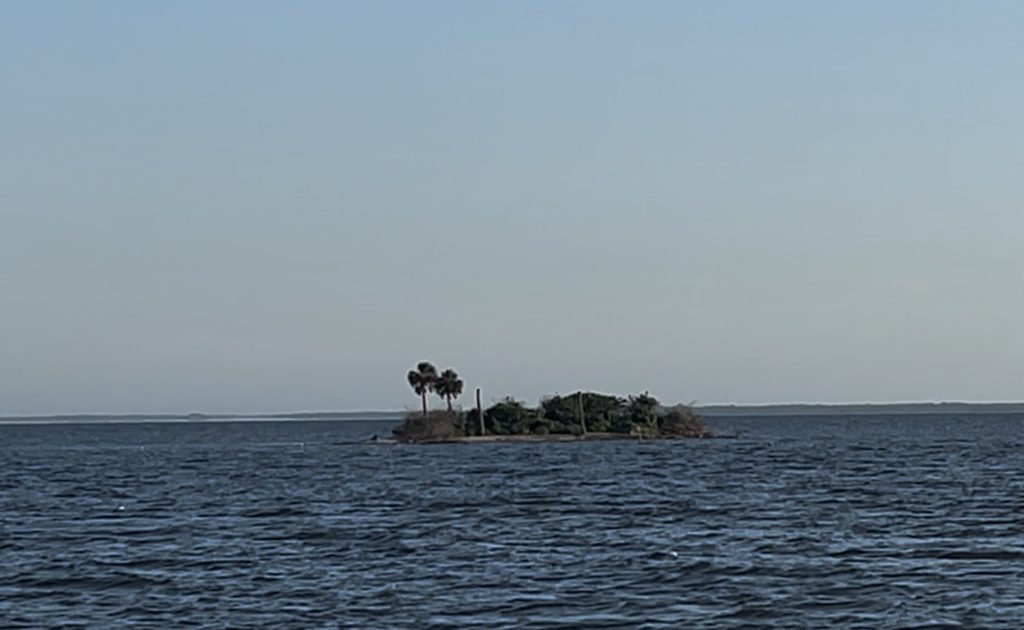
Haulover Canal – A Shortcut With a History
One of the more interesting sections of the day’s route was the Haulover Canal (MM 869), a narrow passage connecting the Indian River Lagoon to Mosquito Lagoon.
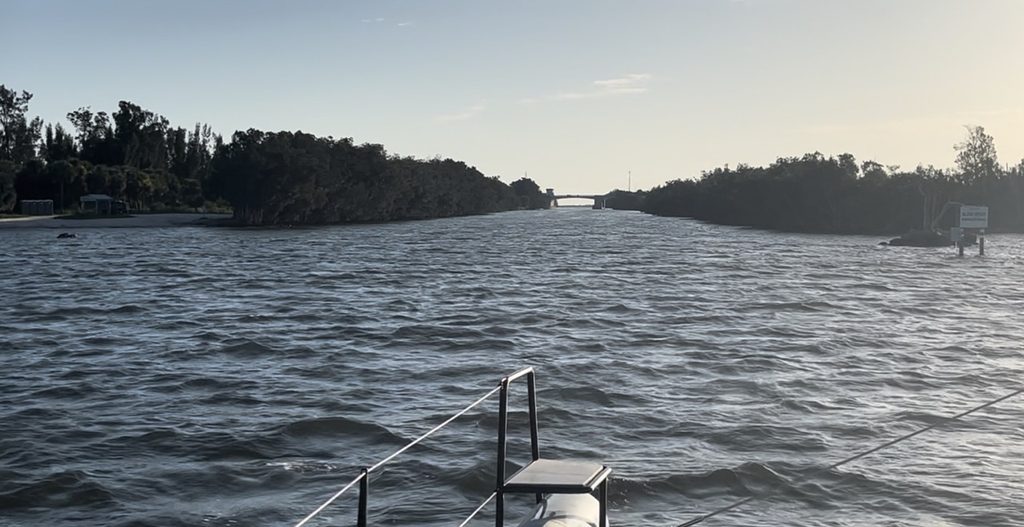
After days of navigating broad, shallow waterways, this short canal was a noticeable change of scenery. The narrow channel was lined with vegetation and was clearly a popular fishing spot.
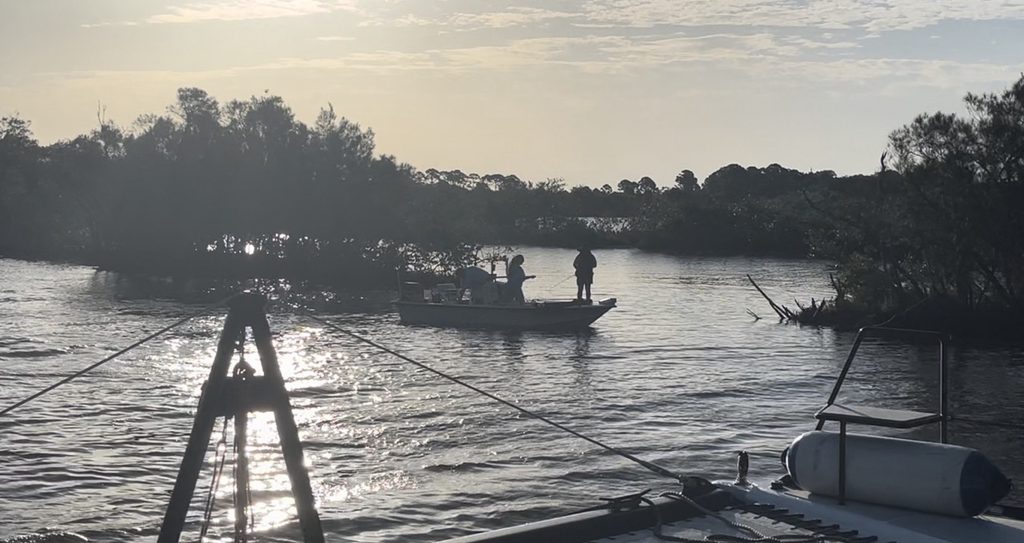
The name Haulover dates back to the days before the canal existed, when Indigenous peoples and later settlers carried or dragged their boats across the narrow strip of land separating the two lagoons.
A canal was eventually dug in the 19th century, replacing the overland portage with a navigable waterway.
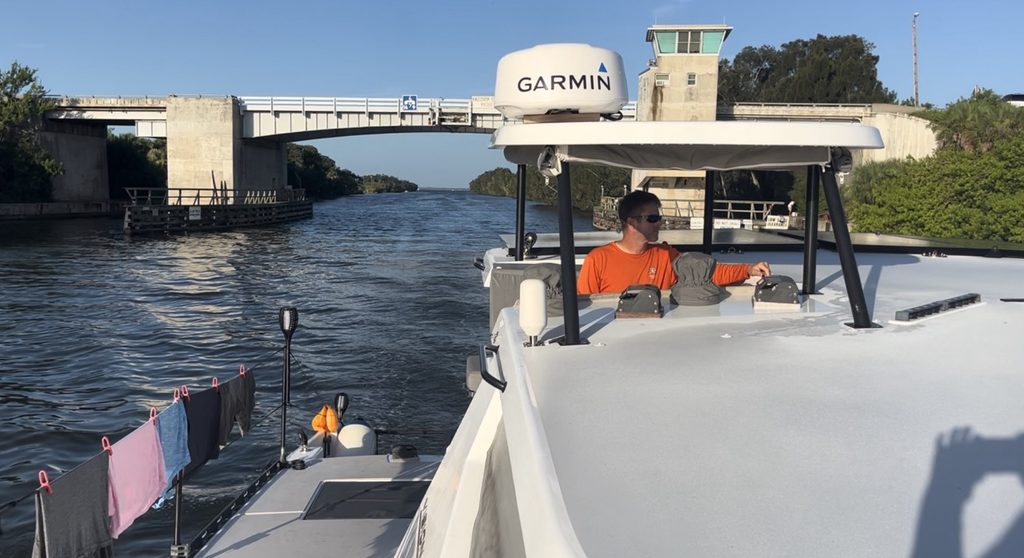
Today, the canal is part of the ICW and is crossed by the Allenhurst (Haulover Canal) Bridge, which has approximately 27 feet of clearance when closed.
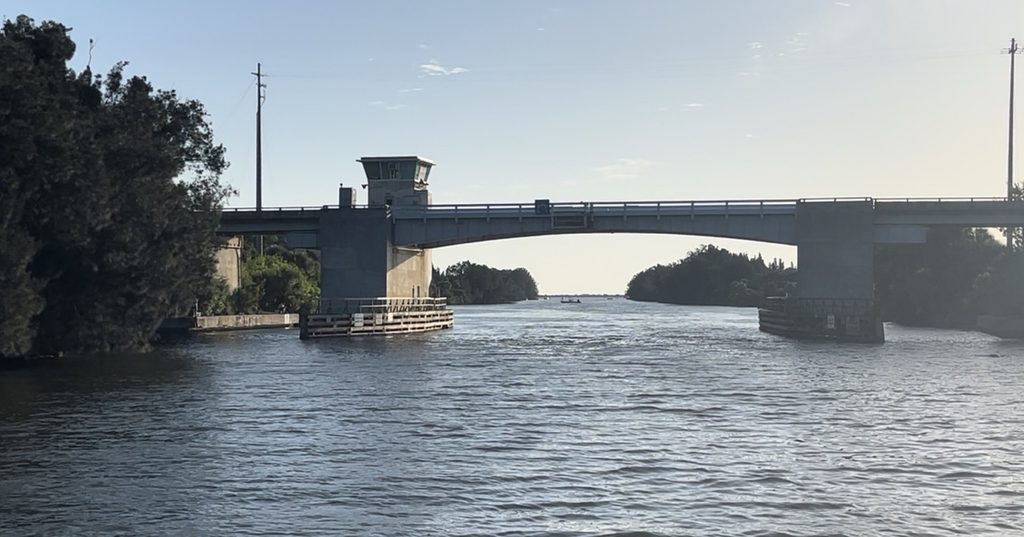
With our new mast still in transit somewhere unknown, and definitely NOT on our boat, it was just another bridge we could slip quietly under.
Mosquito Lagoon – Doesn’t sound very inviting
Emerging from Haulover Canal, we entered Mosquito Lagoon, a shallow coastal lagoon bordered by the Merritt Island National Wildlife Refuge and Canaveral National Seashore.
Despite its rather unfortunate name, Mosquito Lagoon is considered one of Florida’s most remarkable natural waterways.
The lagoon is part of the larger Indian River Lagoon estuary system, one of the most biologically diverse estuaries in North America.
Its shallow grass flats and marshes provide habitat for dolphins, manatees, sea turtles, and an impressive variety of fish and birds. We were even greeted by a few dolphins as we entered the lagoon!
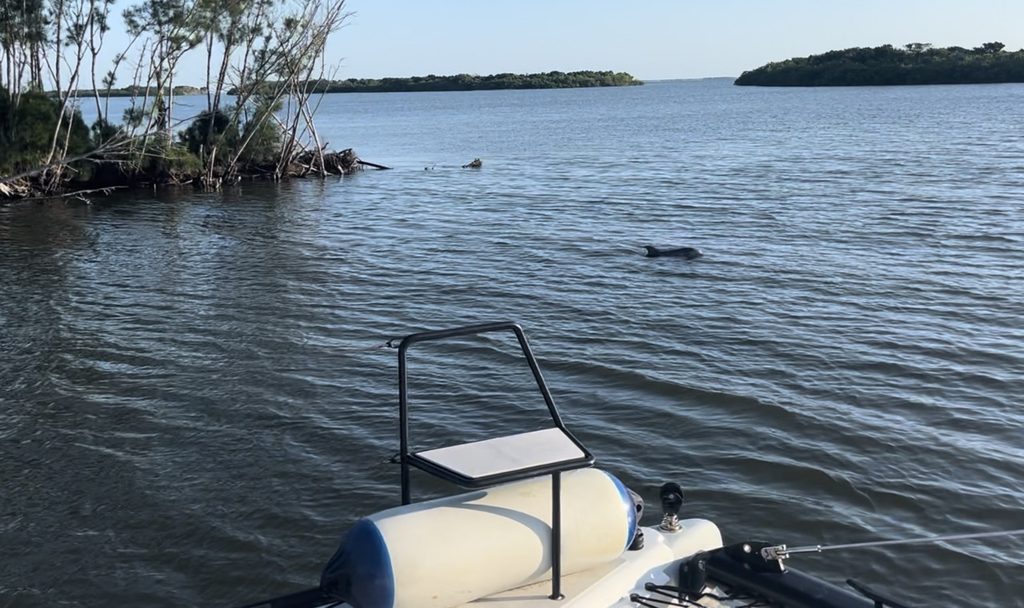
Other than a few small waterfront communities, much of the surrounding shoreline remains undeveloped, creating a striking contrast to the heavily populated stretches of the ICW farther south.
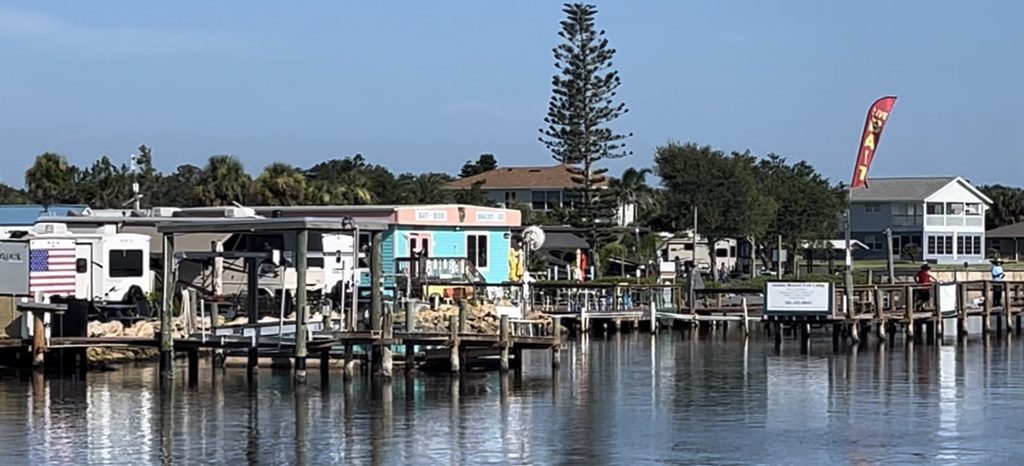
And yes, sadly, the mosquitoes are REAL.
Florida apparently felt that naming an otherwise beautiful lagoon after bloodsucking insects was perfectly reasonable.
Every day, mosquitos wake up and choose violence.
Today was no different.
New Smyrna Beach – Back to Civilization
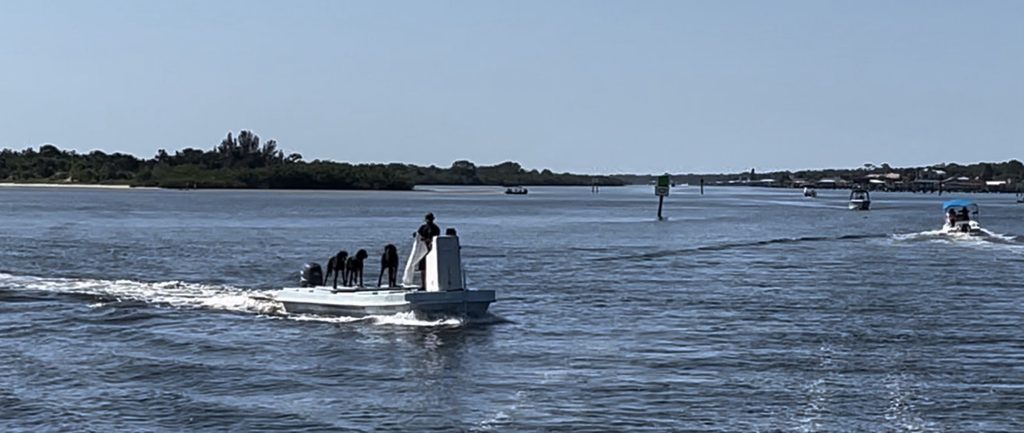
Continuing north, the scenery gradually shifted from undeveloped marshlands to waterfront homes, docks, marinas, and recreational boats as we approached New Smyrna Beach.
Fun Fact: New Smyrna Beach has earned the nickname “Shark Bite Capital of the World” because of the number of reported shark bites in the surrounding waters. Somehow, I don’t think that made it onto the welcome sign!
Fortunately, most incidents are minor, nonfatal encounters, often described as “bite and release,” where a shark mistakes a splashing hand or foot for prey in murky water. Rumor is there have been zero fatalities attributed to sharks despite their reputation in the area. So don’t let that keep you out of the water! 🙂
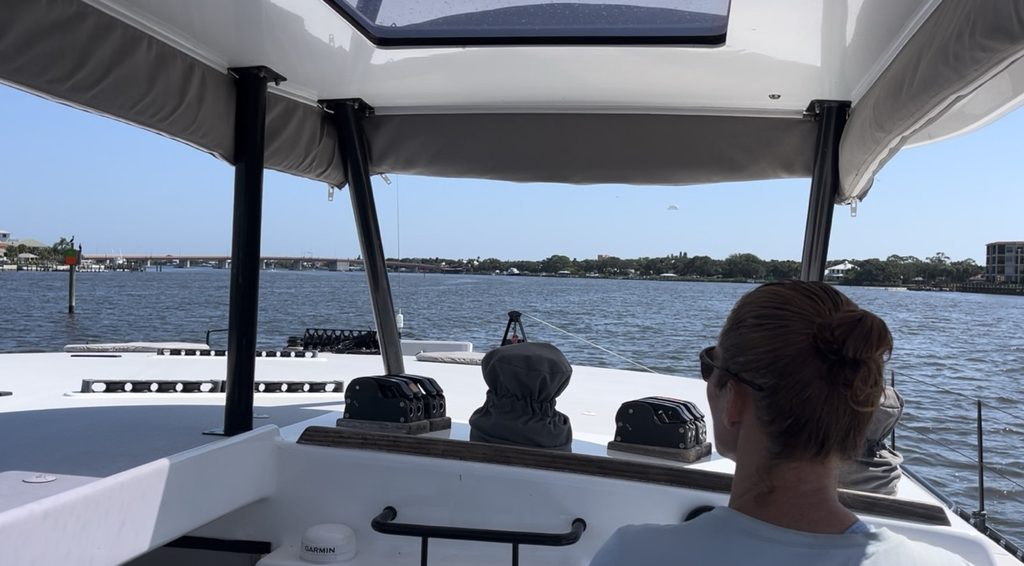
We crossed beneath the 65-foot Harris Saxon Bridge (ICW MM 846), which connects the mainland to the barrier island, and passed the lively New Smyrna Beach waterfront.
New Smyrna Beach is also one of Florida’s oldest coastal communities. In 1768, Scottish physician Andrew Turnbull brought approximately 1,400 settlers, many from the Mediterranean island of Menorca, to establish a plantation colony.
Today, New Smyrna Beach is better known for its laid-back atmosphere, arts community, and excellent surfing.
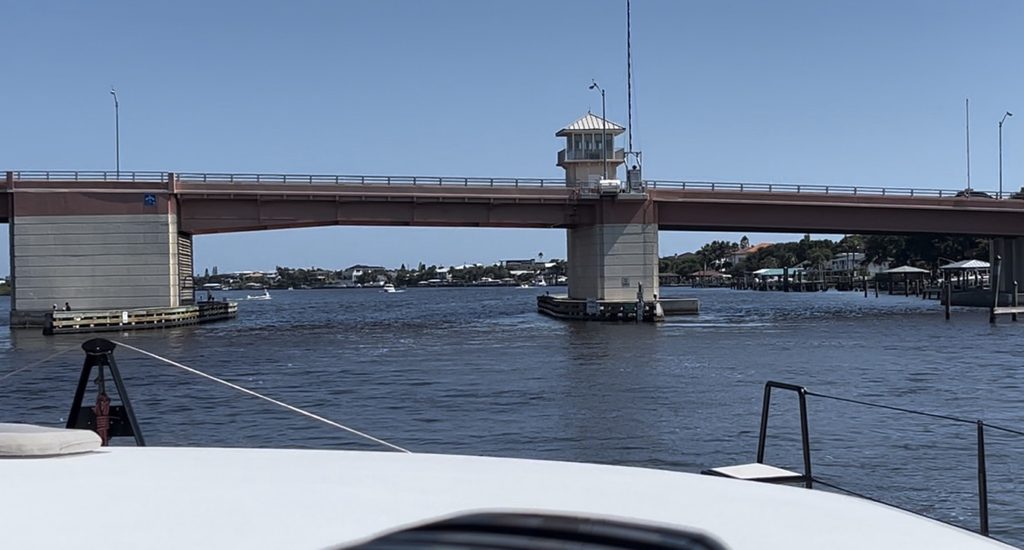
Just around the bend, we came upon the George E. Musson Memorial Bridge (SR 44, MM 845), a bascule bridge with approximately 24 feet of closed clearance, near the route toward Ponce de Leon Inlet.
Ponce Inlet and the Halifax River
The Ponce de Leon Inlet provides access between this section of the ICW and the Atlantic Ocean.
It’s generally considered a fair-weather inlet, popular with recreational boaters and sport fishermen. Because of its shifting shoals and sometimes challenging conditions, many offshore sailors prefer the wider, deeper entrance at Port Canaveral.
Once past the inlet, we entered the Halifax River, which would lead us to our destination for the day: Daytona Beach.
The river is bordered by Port Orange, South Daytona, Daytona Beach, and Holly Hill on the mainland side, with the beach communities to the east. This section was fairly uneventful as we watched Florida roll by. As we approached Daytona, the quiet natural scenery gradually gave way to bridges, marinas, waterfront restaurants, and a LOT more development.
Daytona Beach – The Birthplace of NASCAR
Daytona Beach is probably best known for two things: NASCAR and its famous hard-packed sandy beaches.
Fun Fact: Long before the Daytona International Speedway opened in 1959, automobile racing took place directly on the beach! Beginning in the early 1900s, drivers used the wide, flat sand to set land-speed records. Later, organized stock-car races were held on a course combining the beach with a paved road. Hence Daytona’s reputation as the birthplace of NASCAR, which was founded in 1948.
From the ICW, Daytona has a completely different feel.
Instead of racetracks and beachfront hotels, the Halifax River offers views of marinas, waterfront homes, parks, bridges, and plenty of recreational boat traffic. The waterfront communities south of the city were relatively laid-back, but as we approached downtown, things got considerably busier.
We passed beneath the 65-foot Port Orange Relief Bridge on our way north.
Closer to downtown, the bridges started coming FAST.
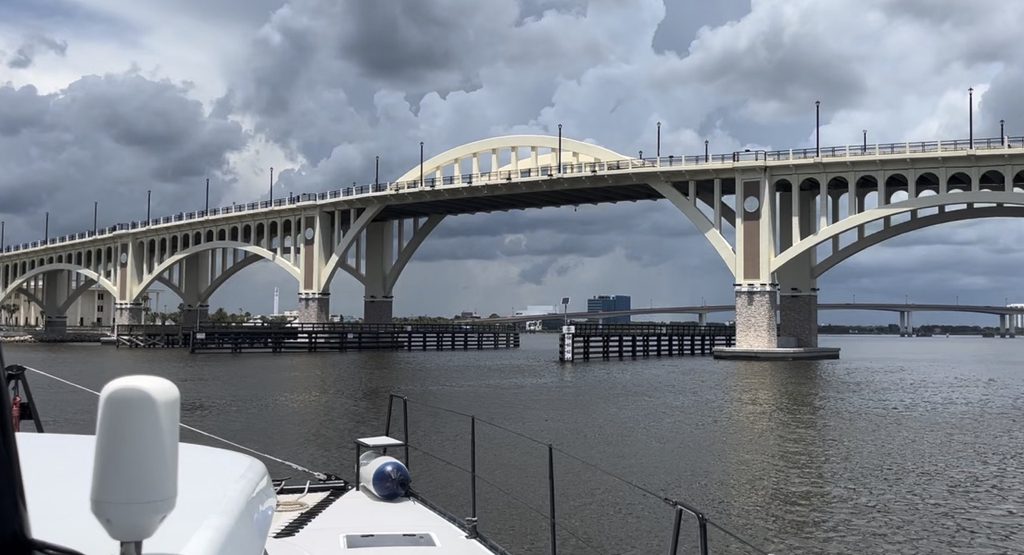
The first was the beautifully constructed 65-foot Memorial Bridge (MM 830.6), where we encountered a surprisingly strong current rushing through the narrow channel beneath it.
So strong, in fact, that we had to angle our approach and increase power to the motors just to keep Water Wings tracking straight as we passed underneath.
That was followed almost immediately by the 65-foot International Speedway Boulevard Bridge (MM 830.1), then the 22-foot Main Street Bascule Bridge (MM 829.7).
And finally, the dual 65-foot bridges of the Seabreeze Causeway (MM 829), one of the major crossings connecting downtown Daytona Beach with the barrier island.
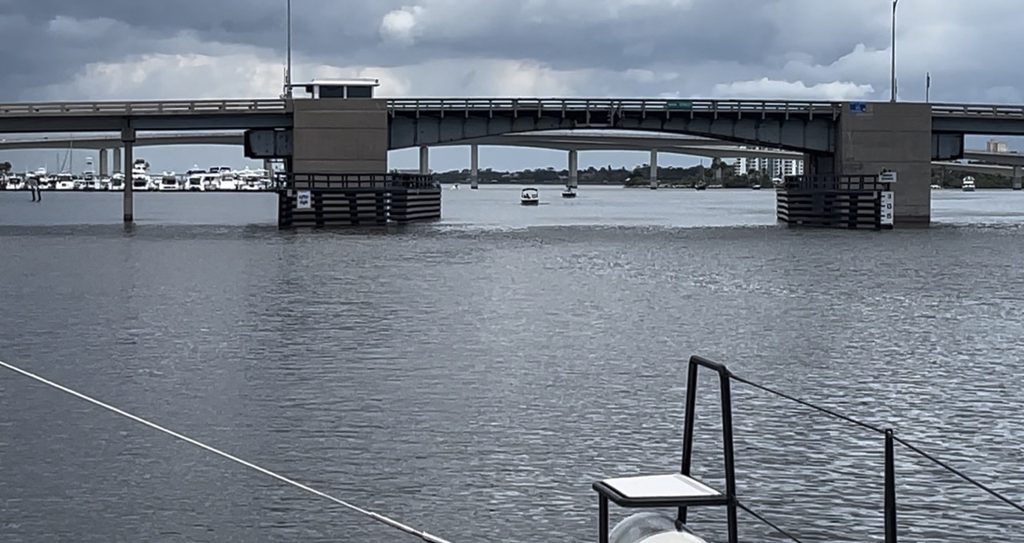
A VERY Electric Welcome to Daytona Beach!
We passed beneath the Seabreeze Bridge and dropped anchor just north of it.
And NOT a moment too soon. About ten minutes after setting the anchor, the sky unleashed its fury!
Florida’s afternoon thunderstorms are practically a summer tradition, but this one packed considerably more punch than your average afternoon shower. A REAL test for our 75-pound Rocna anchor!
The torrential rain began, and winds quickly climbed above 30 knots, gusting even higher.
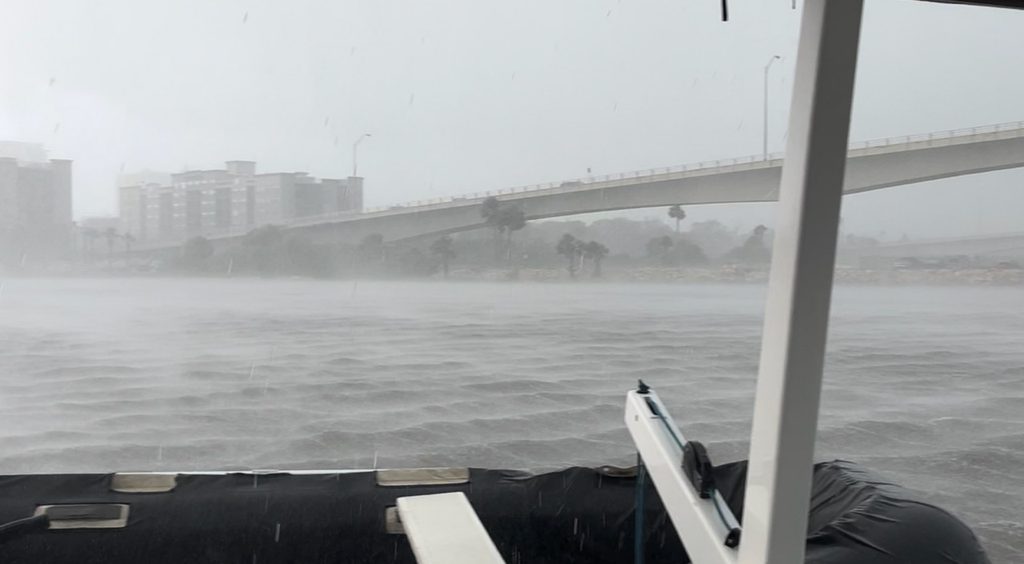
Nearby Ormond Beach Airport would record a gust of approximately 48 kts, while Daytona Beach reported gusts around 36 kts.
Then came the lightning.
We packed our smaller electronics into the microwave, hoping its metal “faraday” enclosure might offer some protection from a nearby lightning strike. Will it work. Hopefully we never have to find out…
Then we hunkered down in the saloon and hoped the worst of the storm would miss us.
We started counting the seconds between each flash of lightning and the thunder that followed.
It was getting closer.
And closer.
And CLOSER.
Then…
BOOM!!!
An instantaneous, blinding flash followed by what sounded like a BOMB going off!
From inside the saloon, we watched as lightning struck a light pole on the bridge less than 100 meters off our stern.
THAT WAS TOO CLOSE!
YIKES!
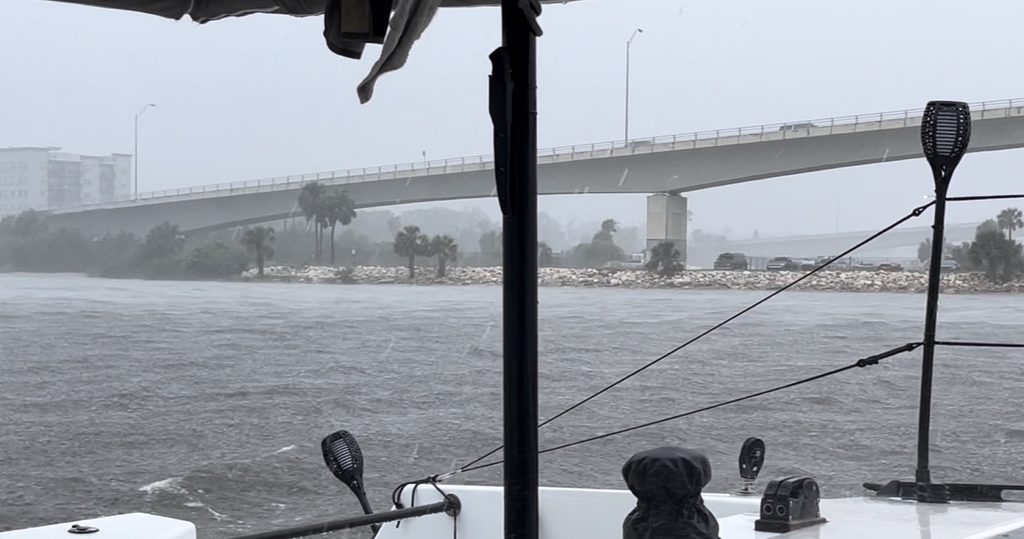
Thankfully, the storm eventually moved along without any further scares.
We’d learn more about just how destructive it had been a little later. For now, we were simply thankful that Water Wings, and we, had come through it unscathed.
Daytona Beach – Pizza, Beer, and a Little Disappointment
Once the storm passed, we were greeted by clearing skies and grumbling stomachs. Time to go find some FOOD!
We dropped the dinghy and headed across to Daytona Beach’s entertainment district along Seabreeze Boulevard on the barrier island side of the ICW in search of pizza.
After securing the dinghy at the Seabreeze boat ramp, we headed into town. The Seabreeze Boulevard area is known for its lively nightlife, bars, and restaurants. Being Sunday night, however, things weren’t exactly hopping.
We started at Daytona Pizza & Wing Co., which was good enough, although from what I can tell, the restaurant no longer exists.
Next, we wandered down the street to Daytona Taproom. They had a decent number of beers on tap, so that was promising. Unfortunately, the bartender clearly didn’t want to be there, and the place was filled with cigarette smoke. We had ONE beer and left. Not exactly the atmosphere we were looking for!
Caribbean Jack’s – A Little Tropical Therapy
Rather than call it a night, we decided to jump back in the dinghy and cross the river to one of Daytona Beach’s popular waterfront establishments, Caribbean Jack’s.
Located along the Halifax River at Loggerhead Marina, Caribbean Jack’s is known for its tropical atmosphere, waterfront dining, live music, and marina views.
NOW we were talking! We ordered a couple of beers and struck up a conversation with the bartender, asking how they’d fared during the storm.
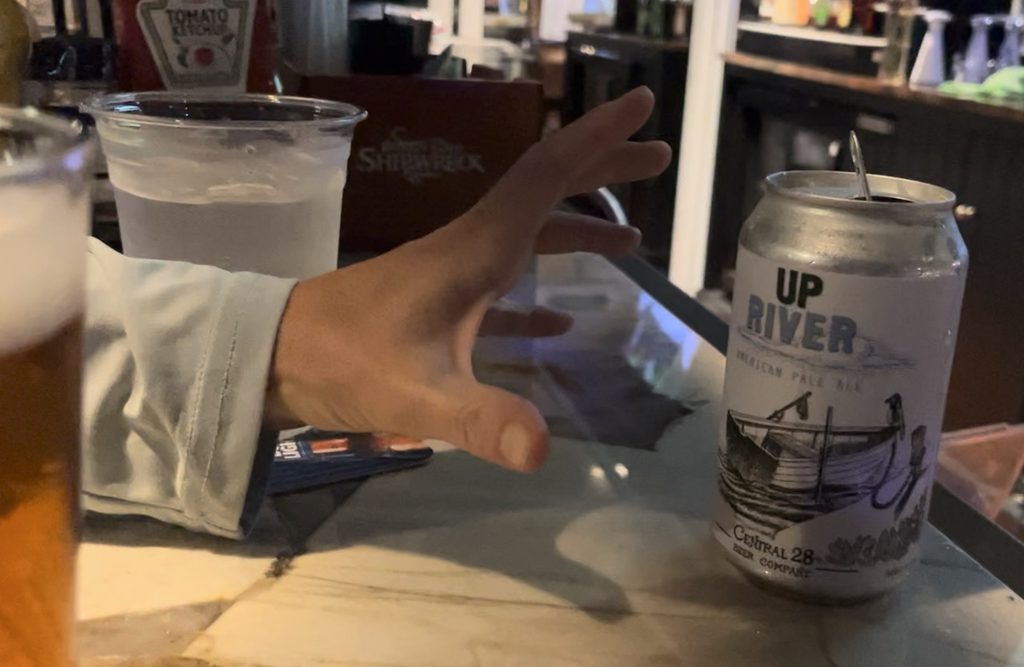
Apparently, things had been pretty wild on land, too!
A particularly powerful burst of wind, believed to have been a microburst, had torn the roof off a building along North Beach Street, not far behind the bar. A microburst is an intense downdraft from a thunderstorm that hits the ground and spreads outward, sometimes producing winds comparable to those of a tornado.
Knowing how close that damage had occurred made us even more thankful we’d made it through the storm without incident.
On that note, we took our beverages out to the open-air waterfront deck to enjoy the view and some fresh post-storm air.
And then came the BONUS!
LAST NIGHT’S SCRUBBED SPACEX LAUNCH WAS A GO!
The Falcon 9 launch we’d hoped to watch from our front-row anchorage in Titusville had been rescheduled, and this time it actually happened!
So there we sat, beers in hand, watching a much smaller, much farther-away rocket climb into the evening sky.
Not quite the spectacular viewing spot we’d planned the night before, but STILL an incredible sight to behold!
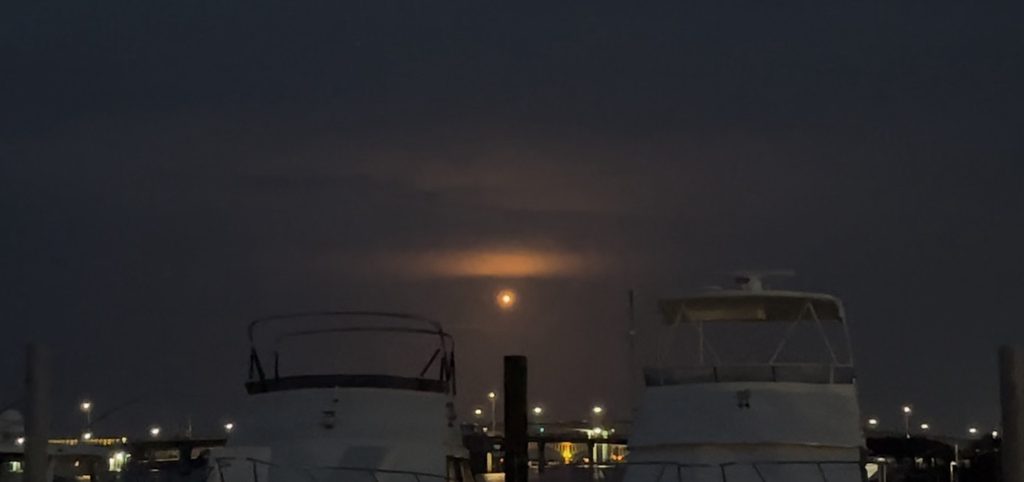
Lightning AND a Launch.
I’d say Daytona Beach certainly knew how to make an entrance! After a crazy day, we settled into enjoy a quiet evening on the water.
Discover more from Water Wings Sailing
Subscribe to get the latest posts sent to your email.