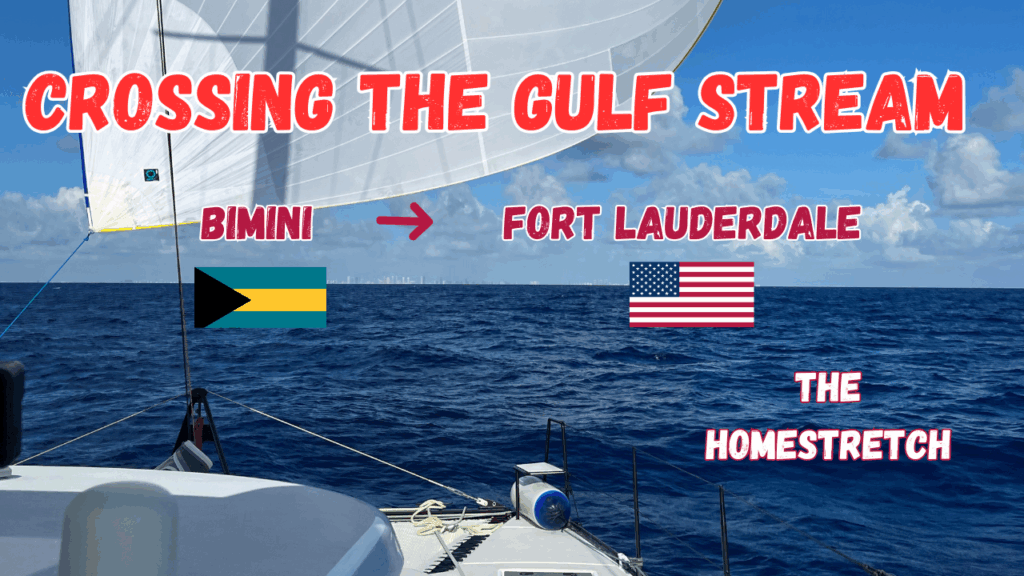
The bittersweet day had finally come. After nearly a year away, our whirlwind adventure was reaching its homeward stretch — ten months of the highest highs, the lowest lows, and every flavor of saltwater chaos in between.
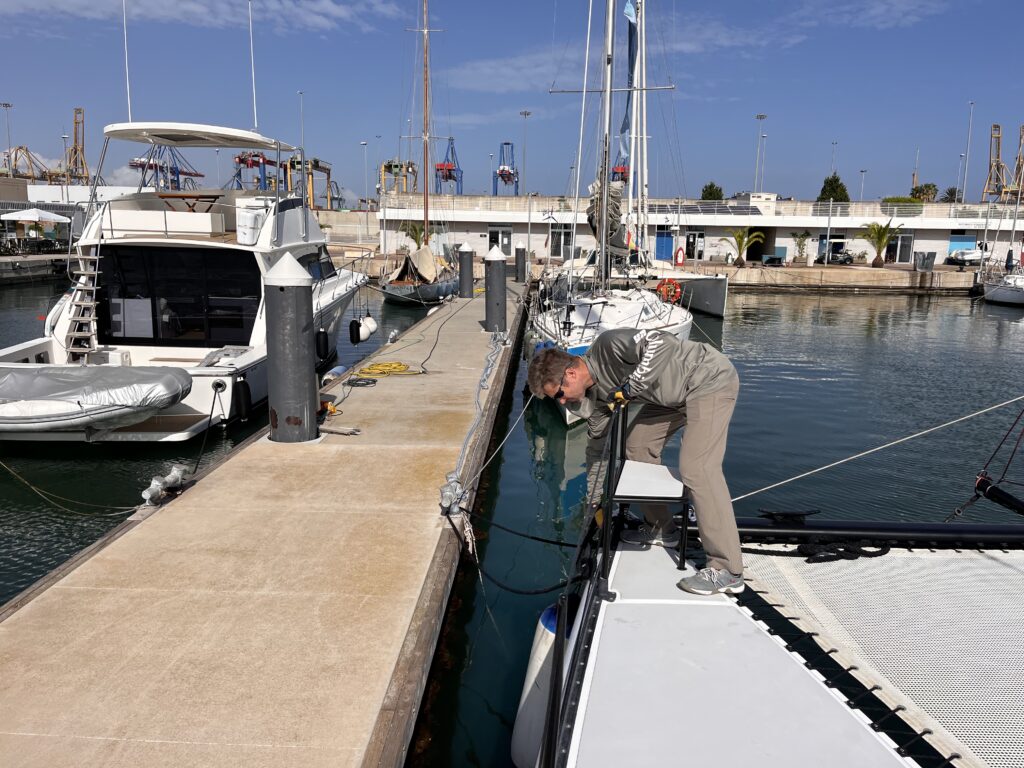
We first stepped aboard Water Wings in Valencia back in May 2022. She was beautiful… in that “what have we gotten ourselves into?” kind of way! Unfortunately, she had sat for a few months alone on the dock not properly closed up nor ready for an ocean crossing. Five stressful months in a foreign country (where our Spanish stretched about as far as our dinghy fuel) followed: long, hot bike rides for groceries and boat parts, countless repairs, and a crash course in figuring out how to sail our new home.
By November, we pointed west toward the U.S., chasing the horizon through the Caribbean and Bahamas. Now, here we were — 10 months later — just one more passage away from home.
Crossing the Legendary Gulf Stream
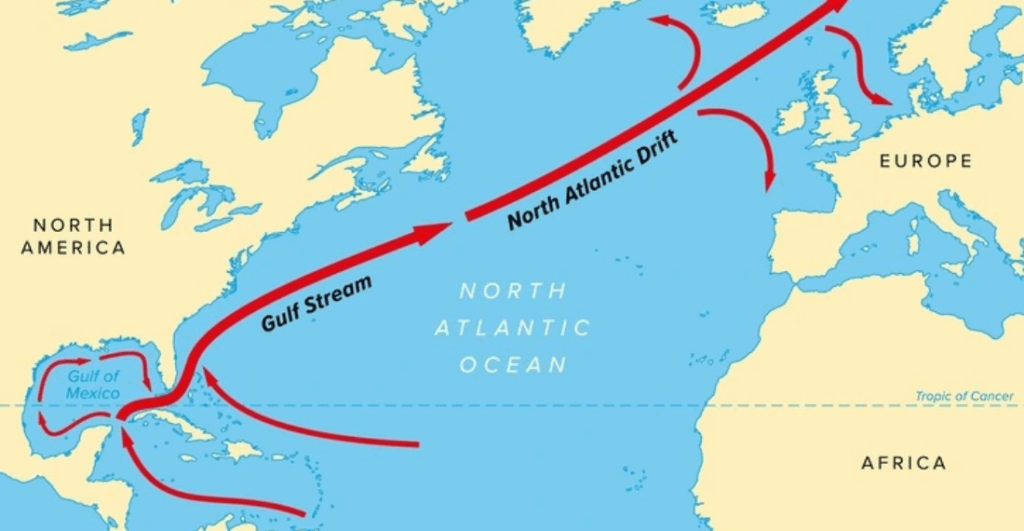
Of all the passages we’d done, this one carried a special kind of weight. The Gulf Stream has a reputation. You hear the stories — boats tossed like corks, currents gone rogue, weather that turns on a dime.
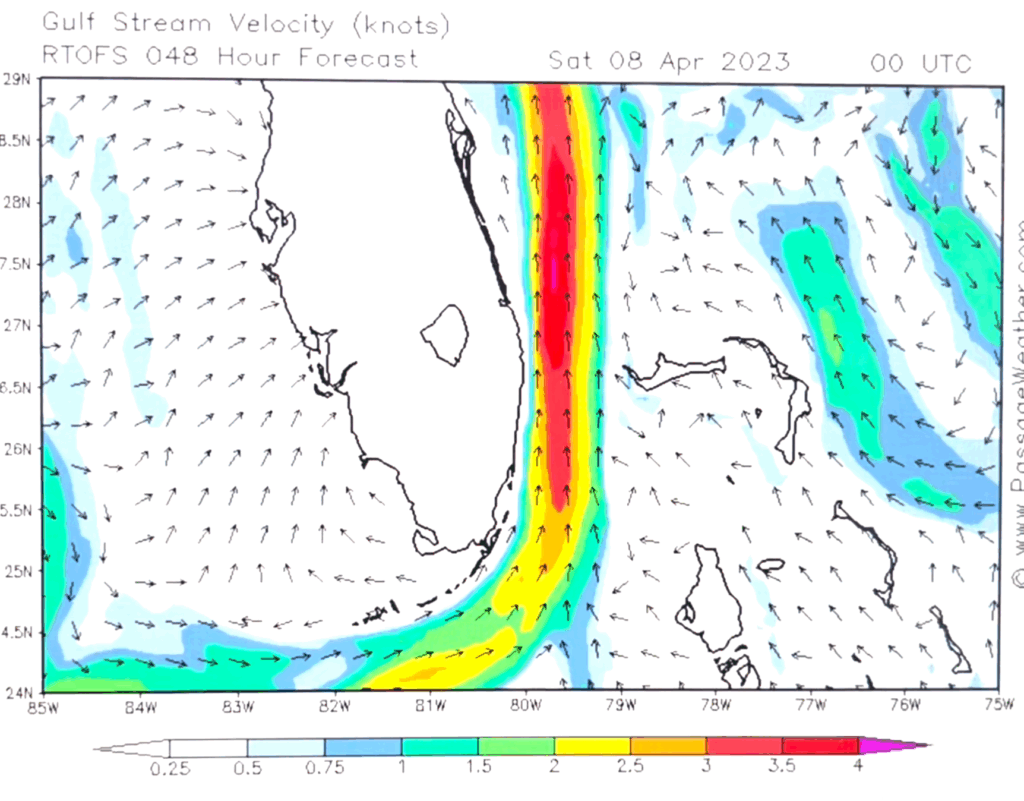
The run from Bimini to Fort Lauderdale is only 50 nautical miles, but it’s 50 miles of wild, moving ocean. The Stream flows like a giant, liquid conveyor belt, 2 to 4 knots of warm current pushing relentlessly north. When wind and current disagree, waves stack up, steep and angry. And when that happens, you really don’t want to be out there. The Stream is a living breathing force – swift, powerful, and never the same twice.
The Stream also makes its own weather — sudden squalls, crackling lightning, and gusts that come out of nowhere. To make things trickier, it’ll drag you miles north if you’re not careful. You can’t just point at your destination and go. You have to plan your heading south of your target, trust your math, and let the current carry you home. (Yes, kids — this is where geometry actually comes in handy.)
Prepping for the Crossing
We’d been watching (read: obsessing over) the forecasts for two weeks, searching for the perfect window: calm winds, small seas, and a steady Stream. Charts, models, notes — the works. We were ready.
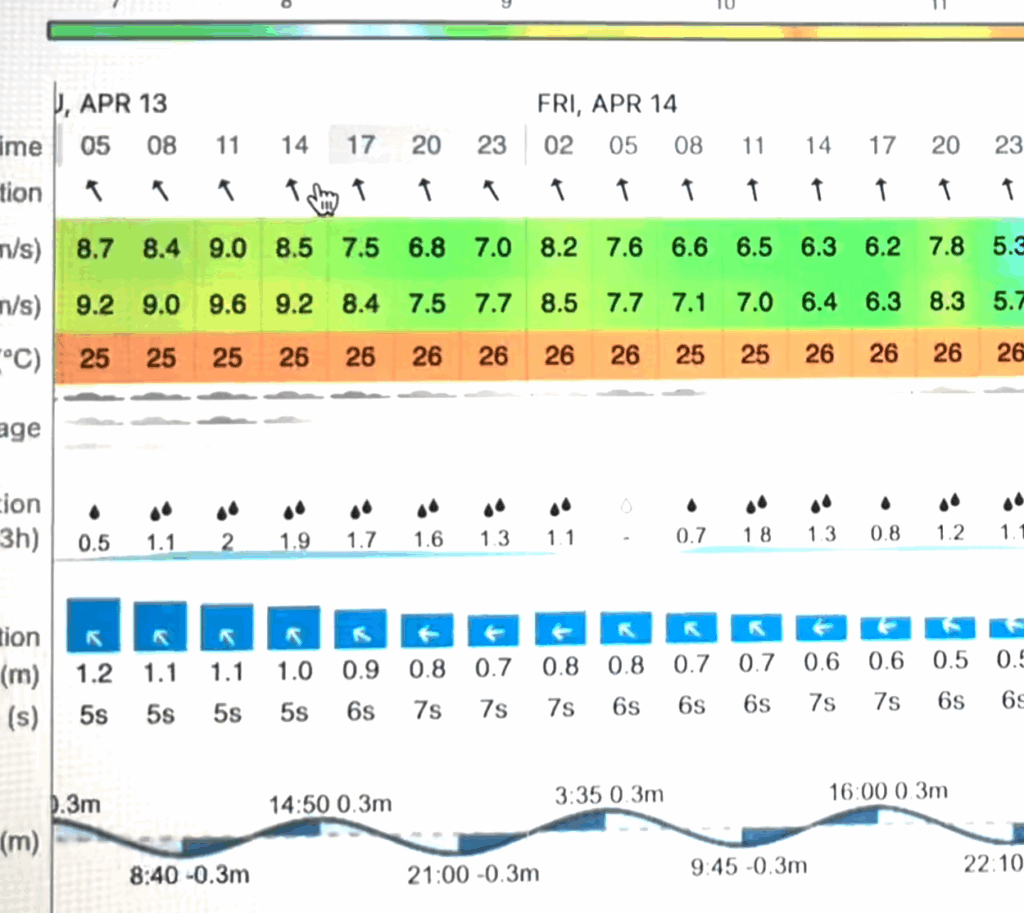
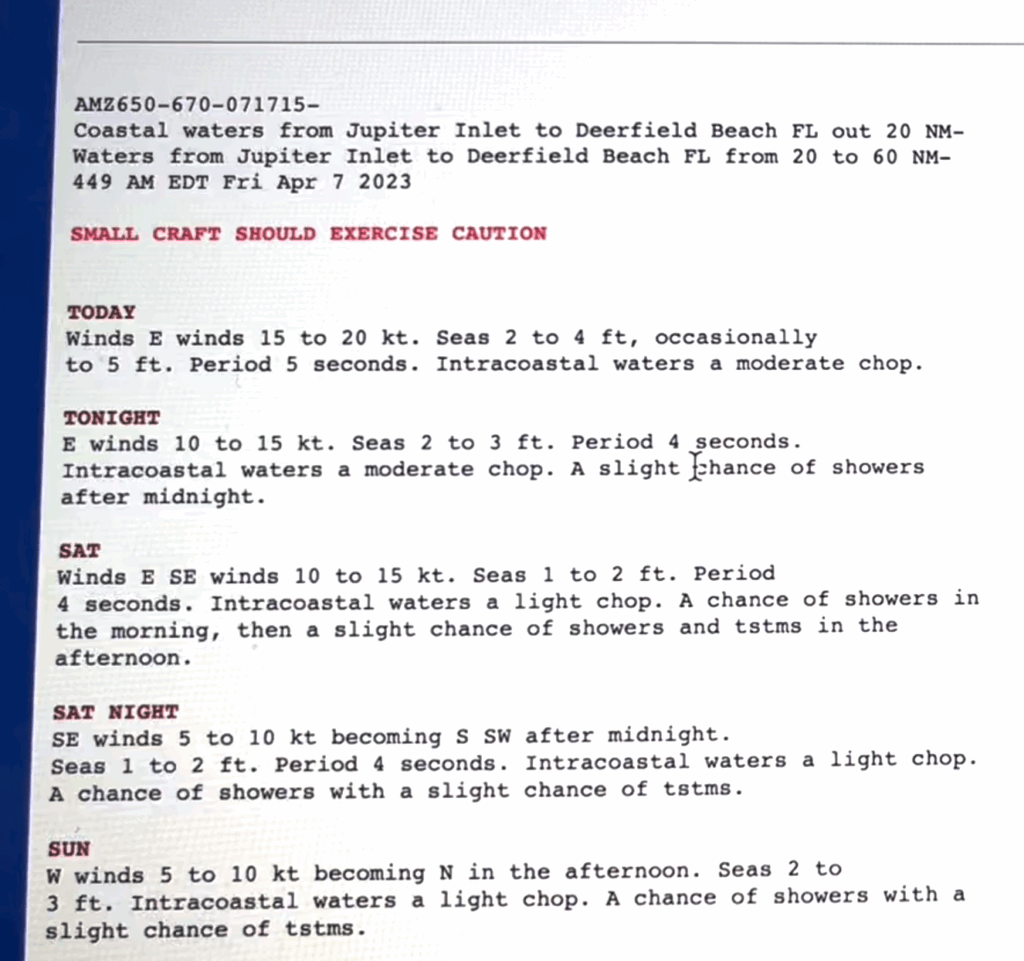
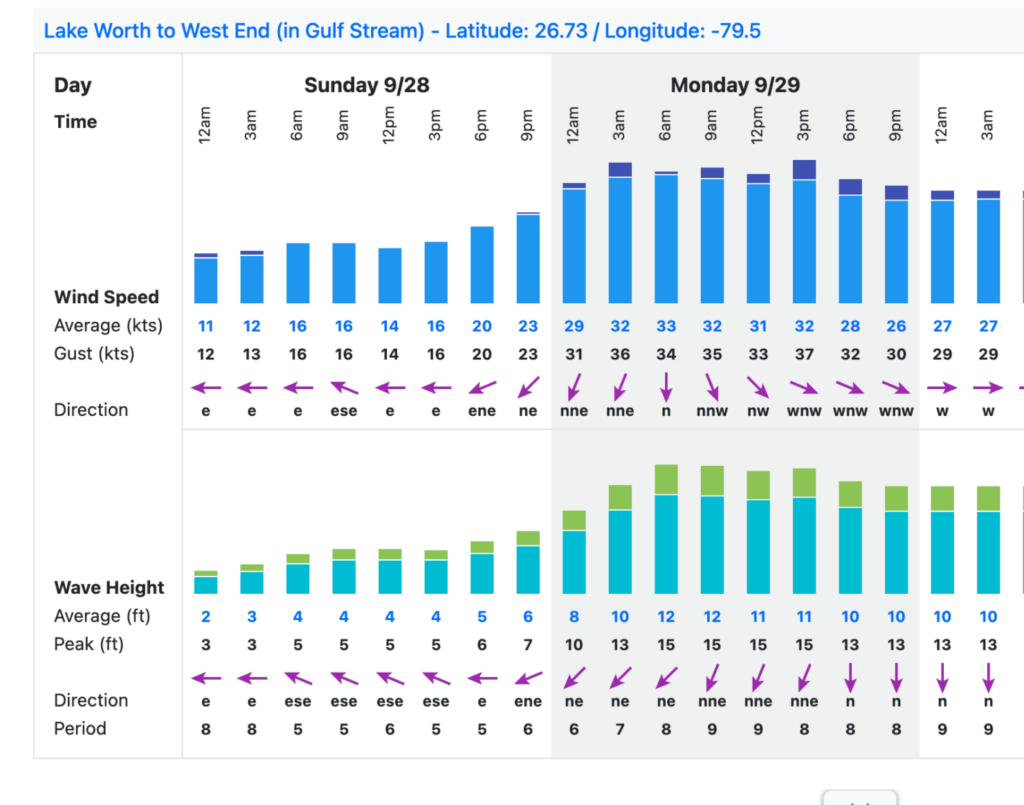
For anyone planning a similar crossing, we’ve put together our detailed HOW-TO guide with timing, resources and a checklist: [HERE]
Spoiler: caffeine and patience rank high.
With all this in mind…how did we do?!
Early Departure
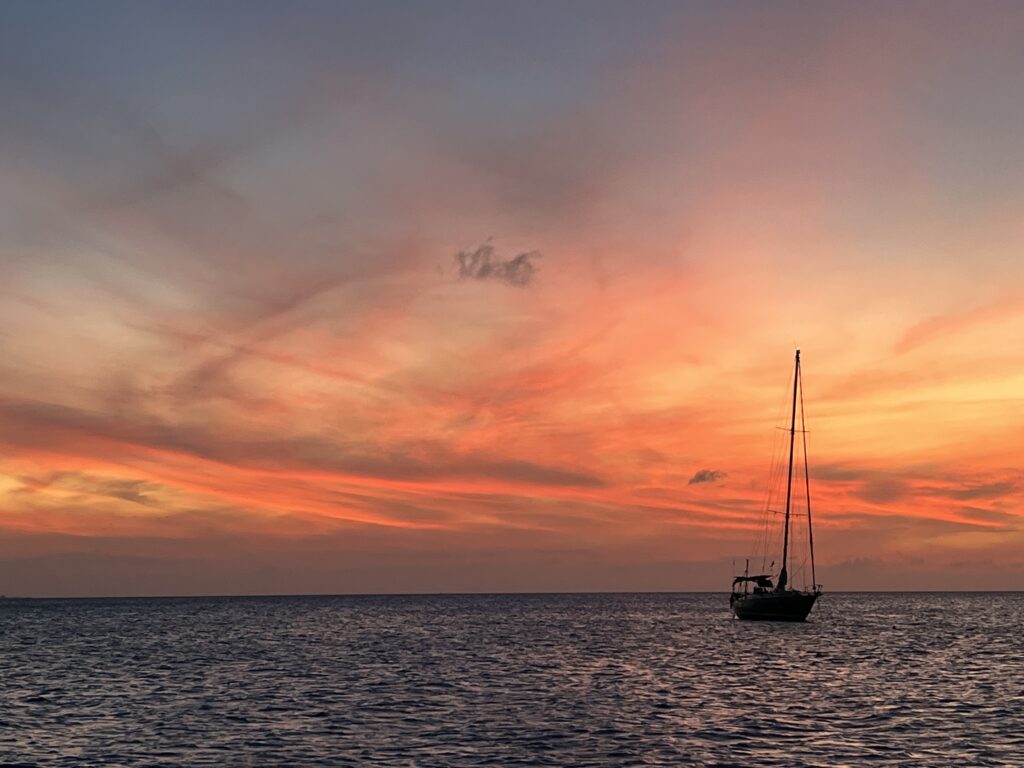
After one last Bahamian sunset and a night of “rock and roll” courtesy of both ocean swell and off-key karaoke, we were up at 4 a.m., pulling anchor under the stars.
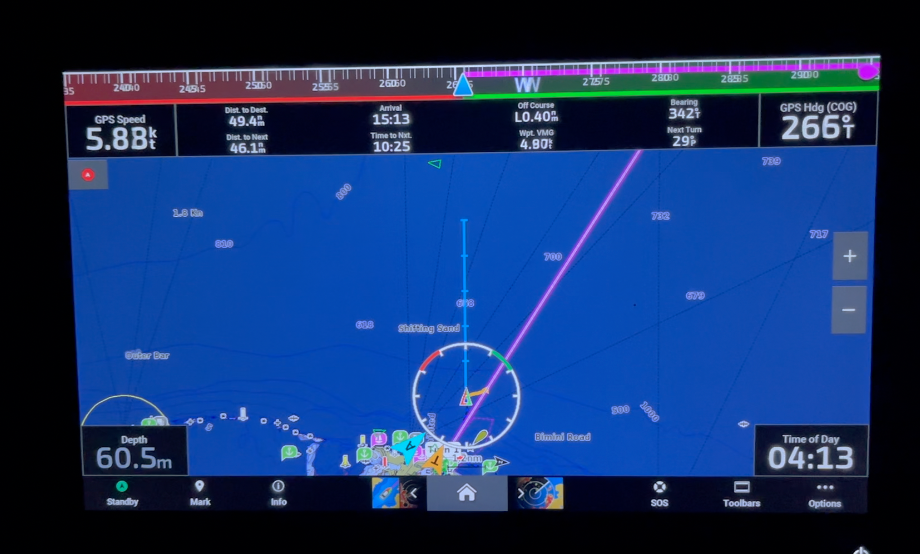
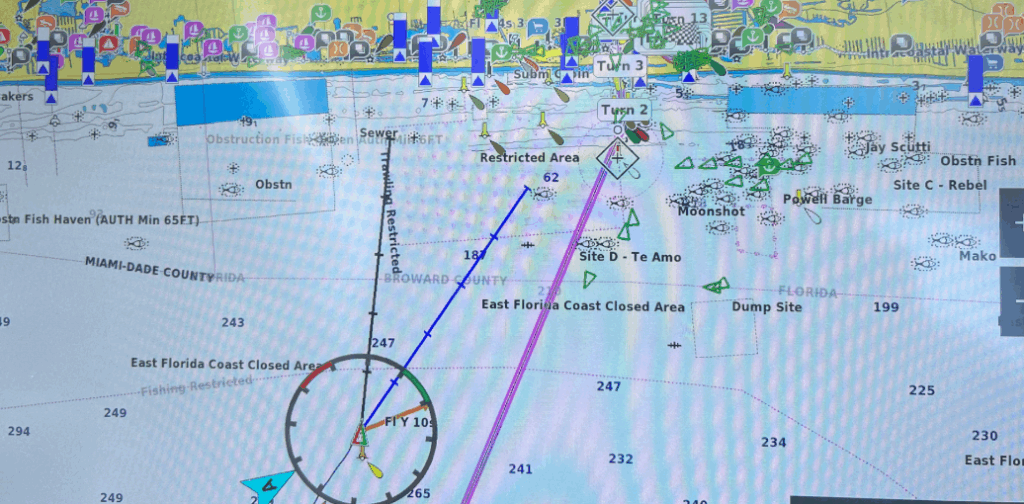
Heading: 260°.
Destination: Fort Lauderdale.
Projected landing point (our heading): Miami.
That’s right — we aimed 50° south of our actual goal, knowing the Gulf Stream would carry us north like a sneaky conveyor belt.
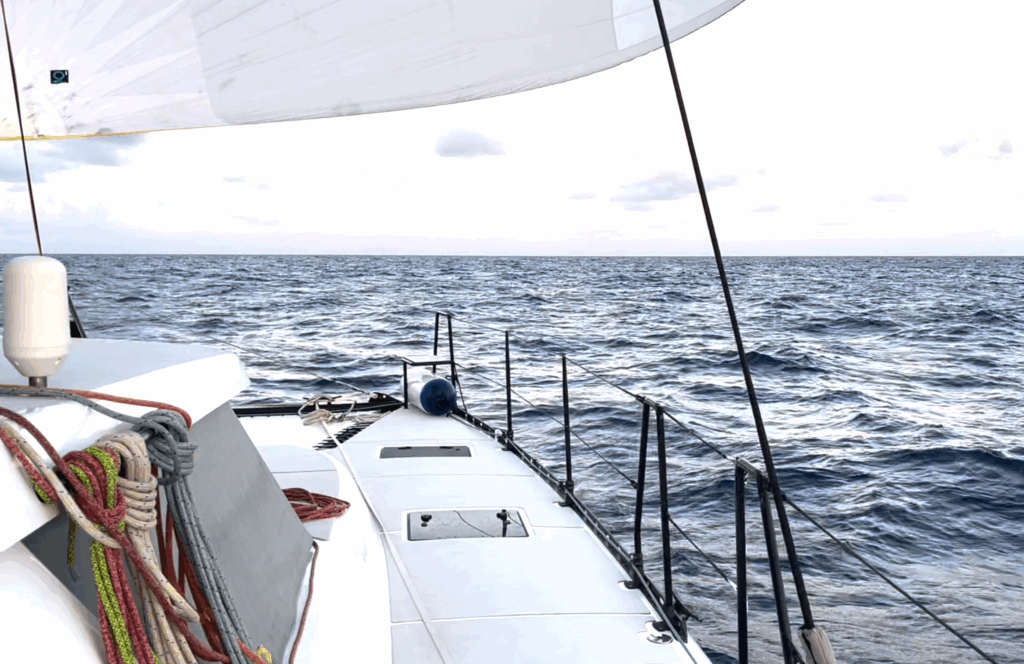
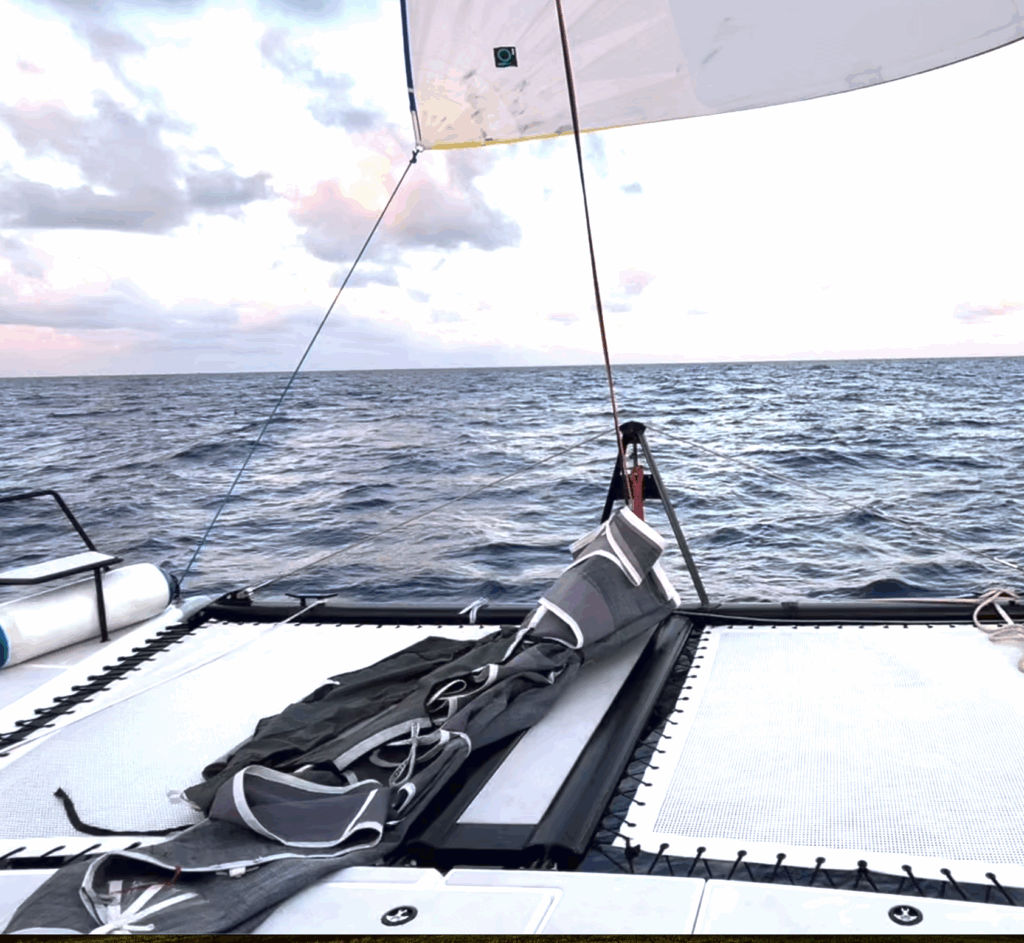
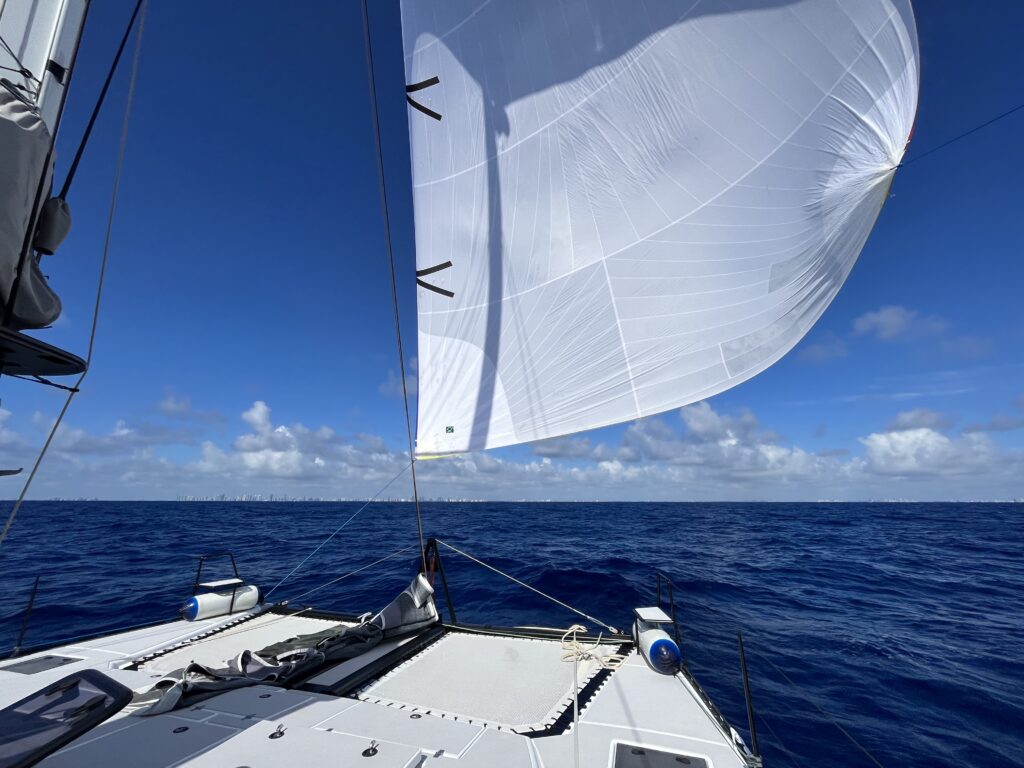
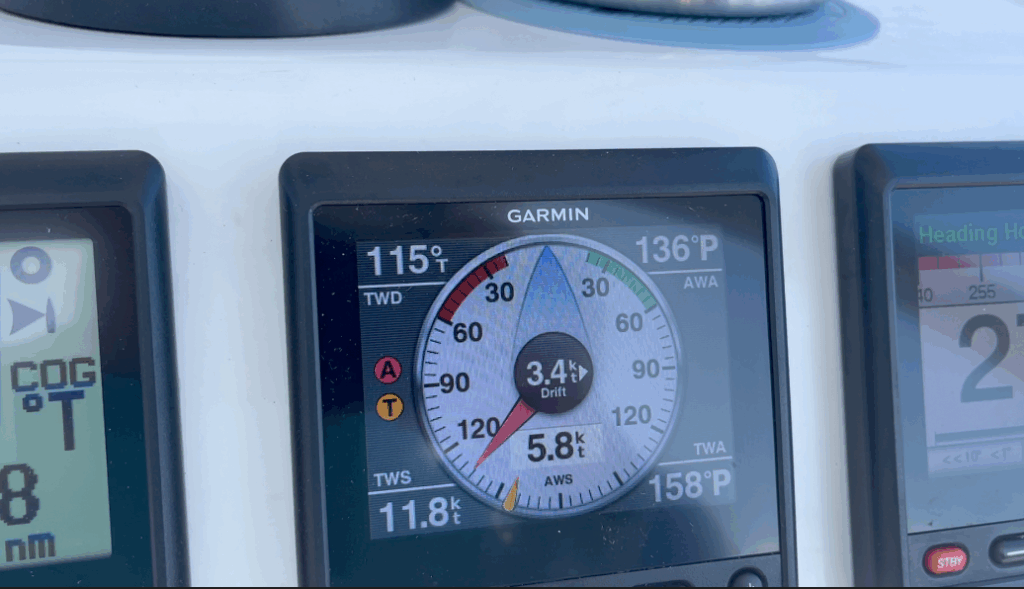
As dawn crept over the horizon, we made 7–8 knots with 13–15 knots of quartering tailwind. Time to hoist the spinnaker — our last working sail. The main would only go up to its first reef and does nothing for us with out a proper headsail in these winds, the Code Zero had ripped back in the Atlantic crossing, and the jib… well, let’s just say it now resembled swiss cheesr. Whoever thought high-tech laminate racing sails belonged on a cruising boat clearly never spent a year in the tropics. (They shall not be named.)
Smooth Sailing (Mostly)
Conditions were nearly perfect: gentle 1-meter swells, light wind, and that mesmerizing blue of open water. About halfway across, an Ocean Reef 60 powerboat hailed us on VHF.
“What kind of vessel are you? You’re moving fast!”
We told him — a sailing catamaran, spinnaker up. He couldn’t believe we were keeping pace at 6–8 knots under wind power while he burned through 6 gallons an hour.
Kevin, never one to miss a punchline, replied, “Yeah, not only are we sailing, but we’re regenerating 1 – 1.5 kilowatts an hour per engine with our OceanVolt motors.” (ah, great right, just wait…famous First words!)
There was a long pause, then laughter. Gotta love quiet bragging rights.
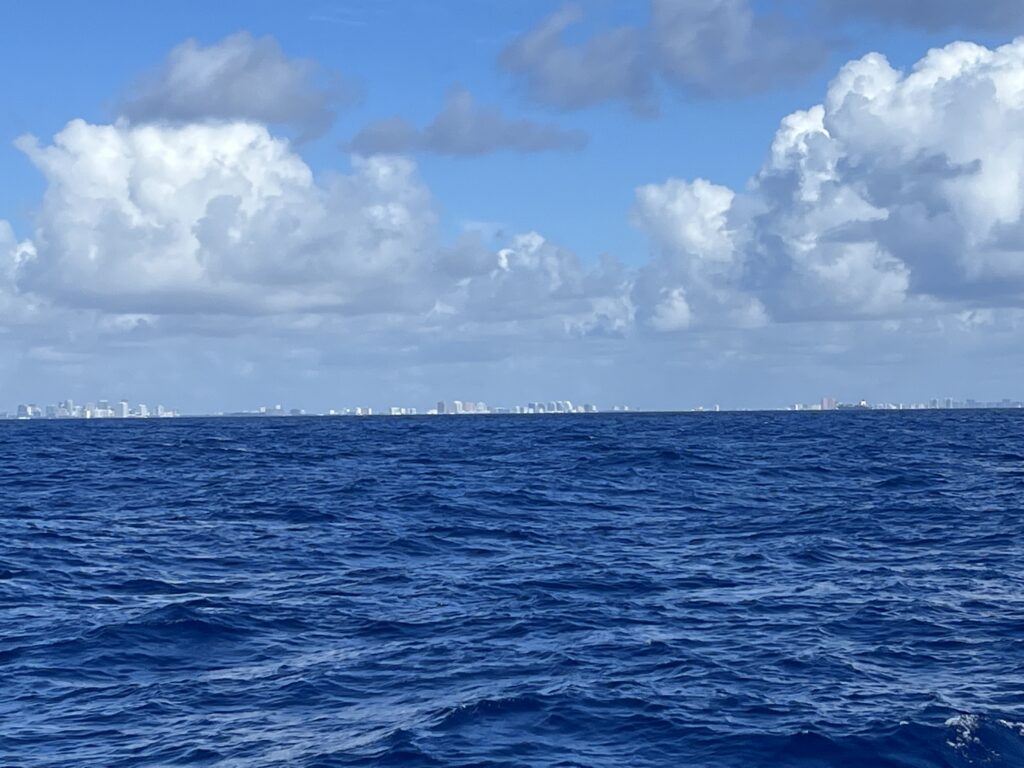
By late morning, the skyline of Miami emerged into view with about 9 miles to go — the first cityscape we’d seen in months. It felt both foreign and familiar, and a bit surreal.
Chaos at the Inlet
We arrived at the Port Everglades inlet just after noon — on a Saturday. Rookie move.
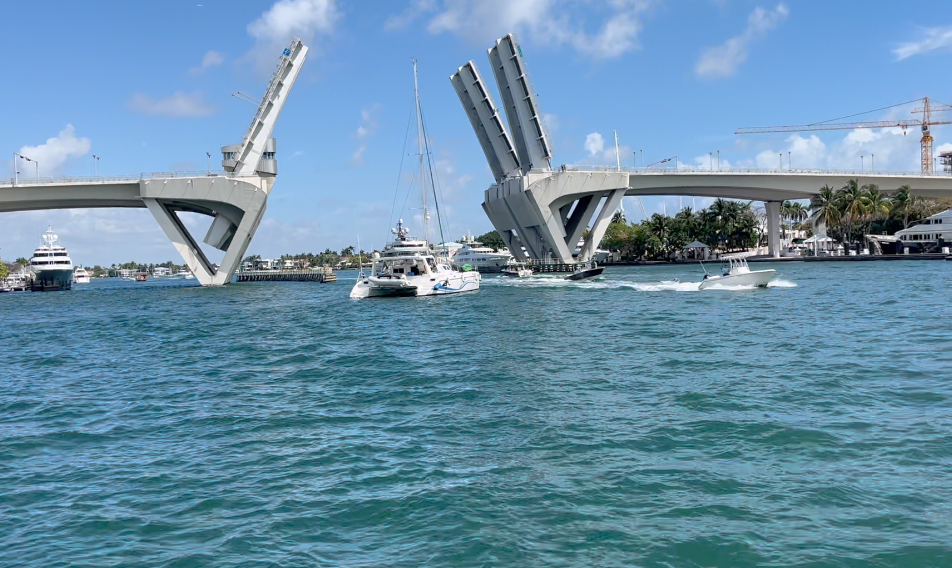
The bridge had just opened, and every powerboat in South Florida apparently decided now was the time to go full throttle. Jetskis darted like hornets, sportfishers roared by, and giant tankers lumbered through the channel. It was boating mayhem — pure, unfiltered chaos. (Think Dennis “Deacon” Hopper from Waterworld.)
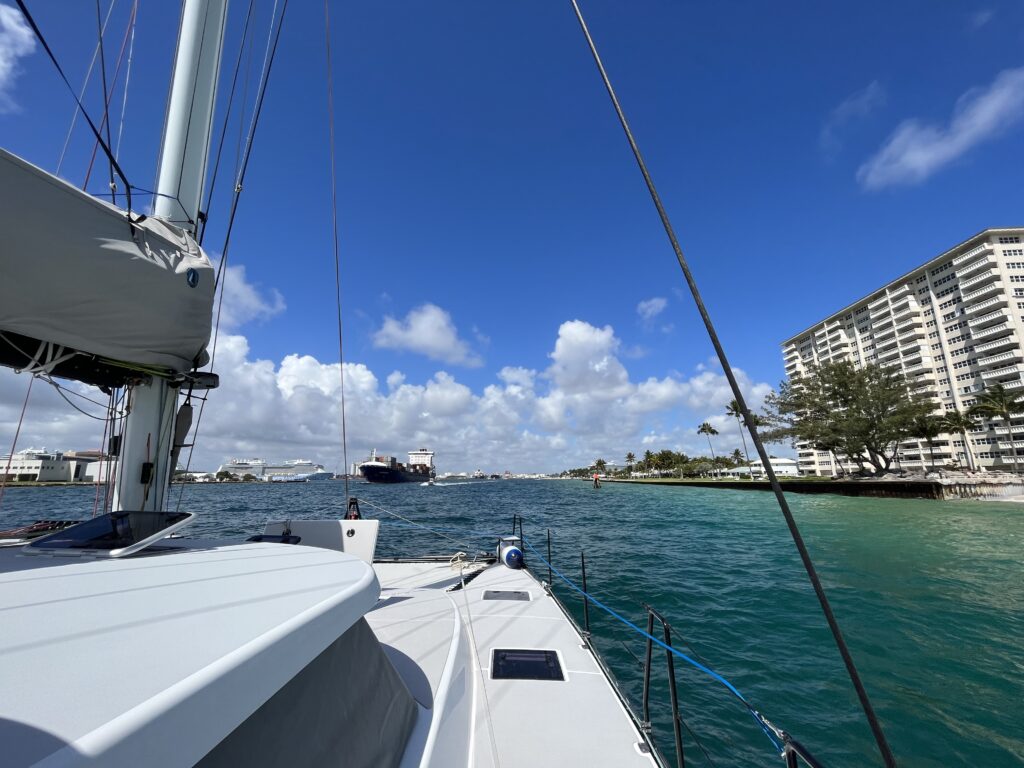
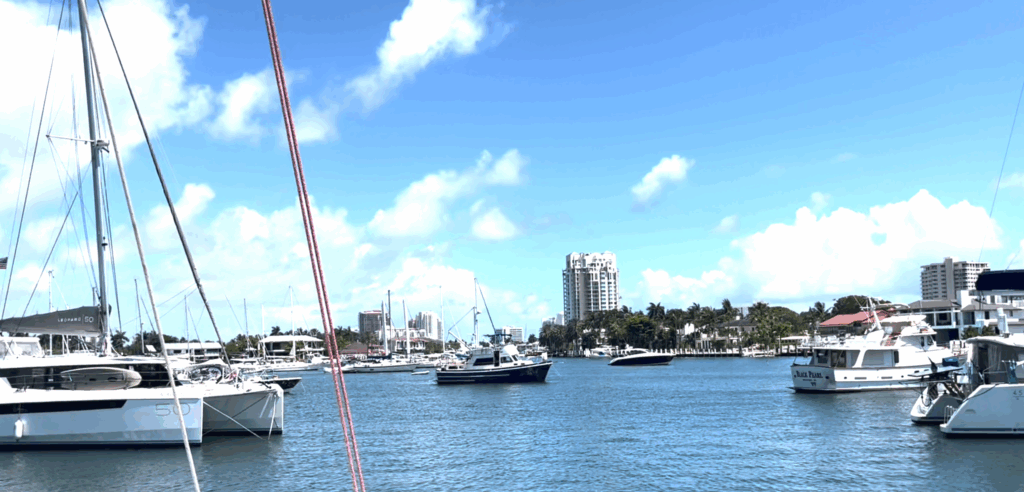
And then, as if on cue, our port motor began making a loud grinding sound. The kind that makes your stomach drop. We still had thrust (barely), so we pushed on. Praying our motor would keep going, we idled behind the the 17th Street Bridge until it lifted and then wound our way into narrow shallow entrance of the Lake Sylvia anchorage, a popular spot for boaters and daytrippers alike, much to the dismay of the multimillion dollar houses that line it.
We dropped anchor. Finally. Relief washed over us like, well, the Gulf Stream. It was incredibly crowded with boats of all sorts and they were very close and pointed varying directions due to the current. Not the most comfortable spot. (No touching boats!). But we’ll take it.
We Nailed It
Despite the chaos, the crossing was textbook perfect. Light winds, calm seas, and our navigation math dead-on — we landed right at the inlet, exactly as planned. Boom.
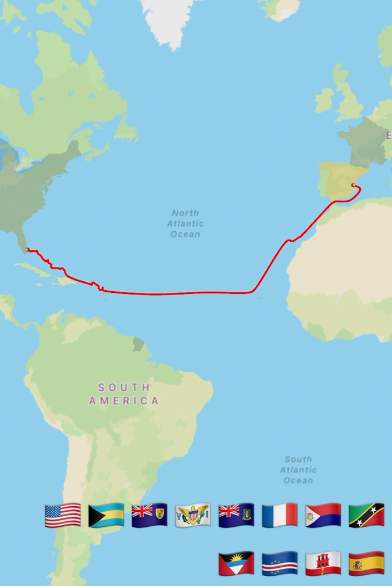
From Valencia to Fort Lauderdale — 6,000 nautical miles, sailing the Med, the Atlantic Ocean, countless islands, and a thousand stories. What a ride.
Once anchored, we pulled up the CBP Roam app to check in. No cell service, of course, so we MacGyver’d a Wi-Fi connection from a nearby hotspot, reset Google Fi, and filled out the forms and waited for the video call to be cleared in.
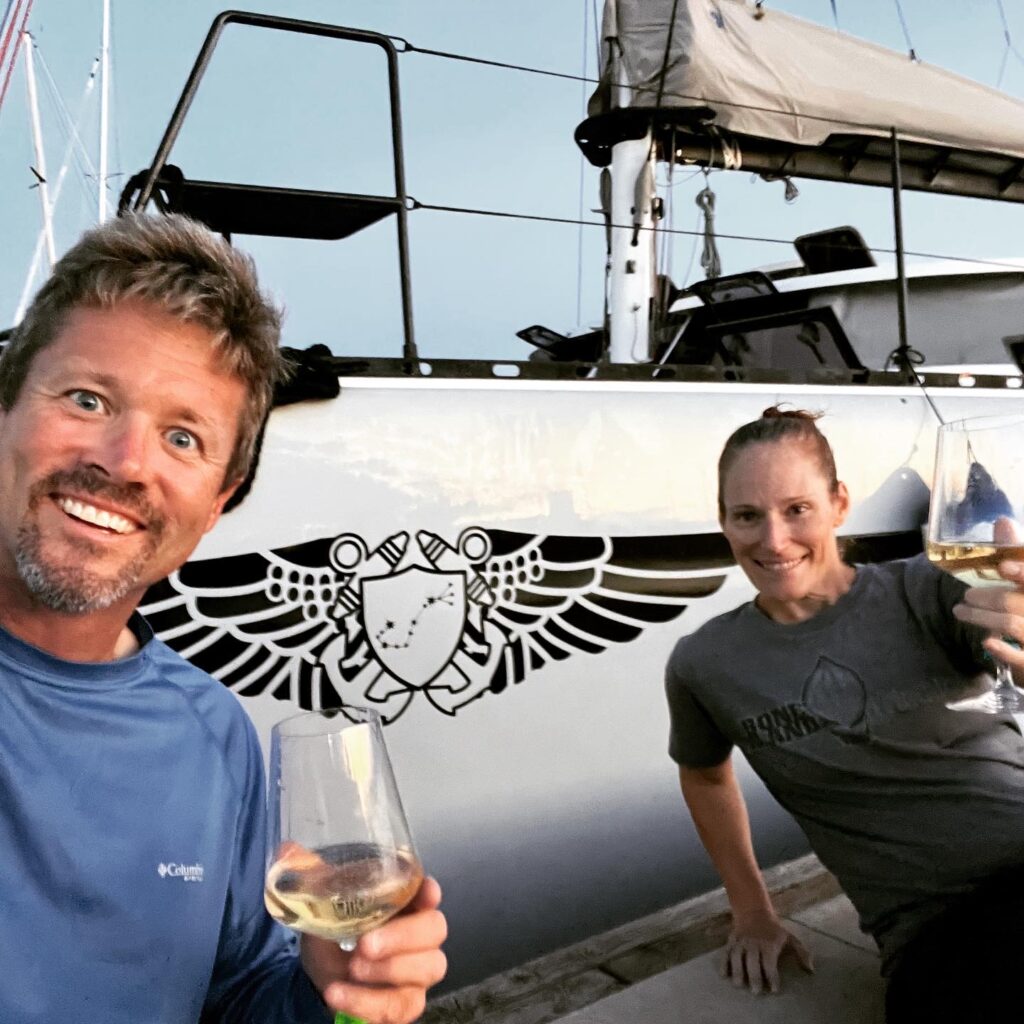
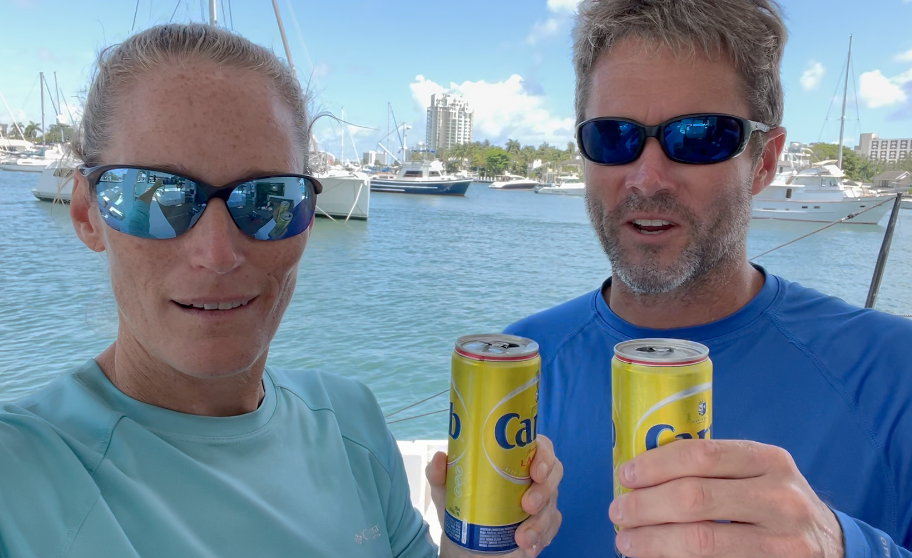
We cracked open two Caribs, laughed at the absurdity of it all, and raised our Q flag just long enough for Kevin to do a little victory dance to the boom-boom soundtrack of the neighboring party boats. Because…
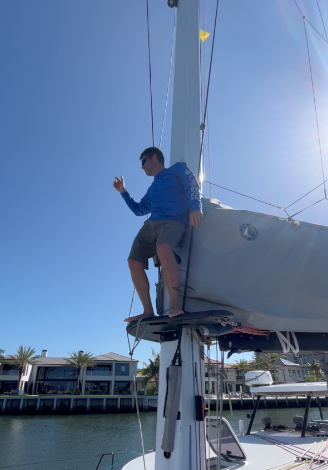
Five minutes later, an email pinged in:
“Welcome back to the U.S. You are cleared in.”
Just like that — no video call, no drama. Easiest check-in ever.
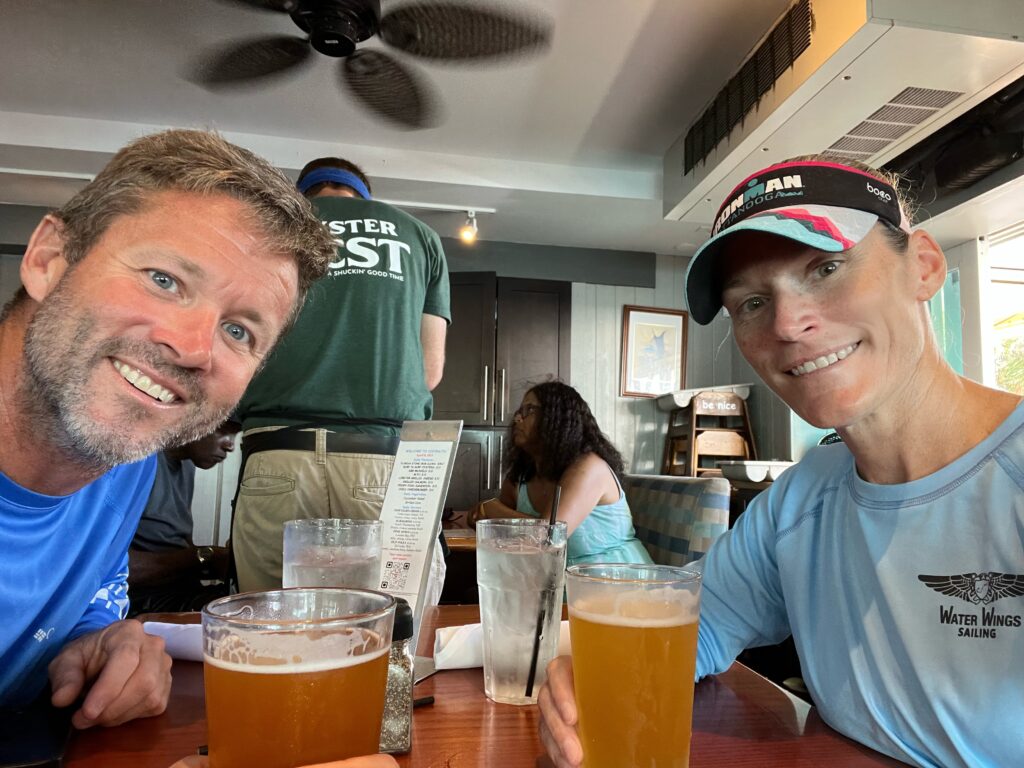
Then it hit us. After nearly a year, we were home. Time for some proper beers and cheeseburgers!
Next Up:
Fort Lauderdale — A Longer Than Planned Stop
One bad motor, one worse rig, and one long stay that stretched right into hurricane season. Because, of course, it did.
Discover more from Water Wings Sailing
Subscribe to get the latest posts sent to your email.