Change of Plans (Many times over)
With hurricane season looming and our new mast still nowhere in sight, we had some tough decisions to make.
How do you get out of Florida in the next 30 days to start heading north in order to satisfy our insurance requirement…when we are still sitting in a man made lake off the ICW (Lake Sylvia) with questionable sails and only one “reliable” motor?
Our insurance doesn’t leave any room for interpretation. The vessel MUST be north of Cape Hatteras by July 1st.
Our haul out date was May 30th. Two months. Piece of cake right?
Sure, except for two small problems.
The Rig Problem
First problem. After multiple conversations with Sparcraft South Africa, we learned something unsettling: Our new mast hadn’t even left South Africa.
Why a new rig? See Our Advanced Wings System Saga
Despite quoting us shipping costs, they hadn’t actually figured out how to ship it to the U.S. Turns out they’re very good at building masts for the Vision 444… just not so much at logistics.
Even in a best-case scenario—if they figured it out, got it boxed or paired with another Vision 444 boat shipment, and everything went perfectly—we’d still be cutting it dangerously close to install and departure before hurricane season.
And even then… would we trust the boat offshore with the unknown motor problems?
This decision was easy.
Decision: We are not going offshore—especially around Cape Hatteras—without a new rig and sails. Non-negotiable.
So that left us with one option if we are going to move before the rig is replaced:
Take the ICW north. There was just one catch…
We couldn’t fit under the bridges with our current 73-foot mast. So the new plan became…remove the mast. Motor north.
Which brings us to problem number two.
The Motor Problem
This one was the real wildcard.
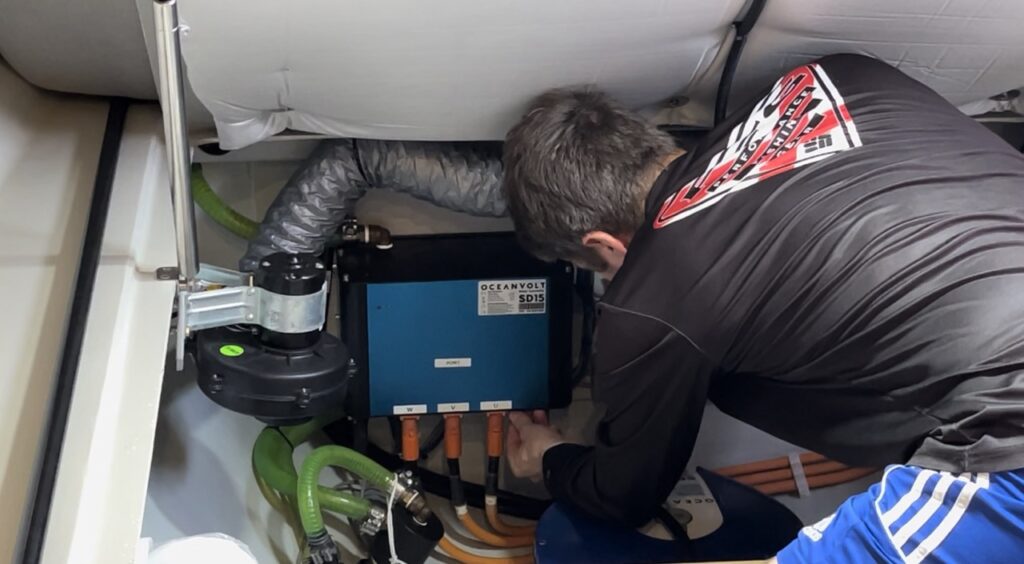
At the time (2023), Oceanvolt was based solely out of Finland. Which meant communication came with language gaps, time zone delays, and a lot of waiting.
They did have a rep out of Annapolis who happened to be in Fort Lauderdale at just the right time. He was able to come out, confirm there was indeed a problem, which helped Finland acknowledge the problem…
…and that was about it.
From there, we were looking at two very different paths. We get hauled out and…
Best case:
Quick diagnosis. Easy fix. We head north—either offshore with a new rig (if it magically arrives) or up the ICW without one. But 1500 miles of constant Oceanvolt motor use…untested.
(Through backchannels we had actually heard that OV was monitoring this closely, their motors had never done anything like this previously despite their advertising it ‘should’ work.)
Worst case:
Major issue. Replacement required. Parts shipped from Finland. Long delays. Mounting costs.
And the longer we waited, the worse it would get:
- Increased insurance premiums if they even give us a hurricane zone clause.
- Risk of policy issues during hurricane season.
- Yard & lodging fees stacking up fast
At that point, it felt like we might as well start playing the lottery.
A Partial Decision
We couldn’t fully decide anything until we knew what was wrong with the motor. But we could make one call:
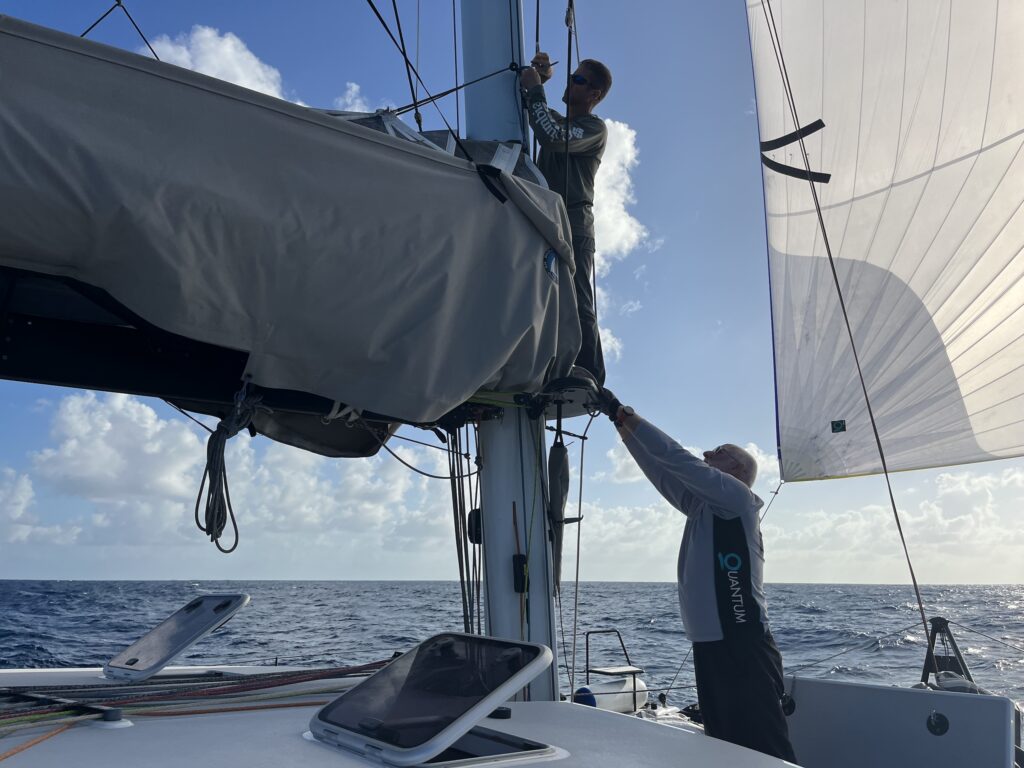
We would pull the mast while on the hard.
It gave us options:
- Safer hurricane storage if we had to leave the boat on the hard through hurricane season
- Ability to motor north via the ICW
- Or—if everything miraculously aligned—install the new rig and go offshore
We felt good about a decision that actually made things… slightly more flexible.
Prepping for haul out
This would be our second haul-out. The first, at Varadero Puerto Gandia in Gandia, Spain, had been smooth and well-run as we prepped for our Atlantic crossing.
Lauderdale Marine Center (LMC) was going to cost nearly three times as much. Naturally, expectations were high.
To limit time (and cost) on the hard, we decided to do as much work as possible beforehand—starting with removing the sails while still at anchor in Lake Sylvia.
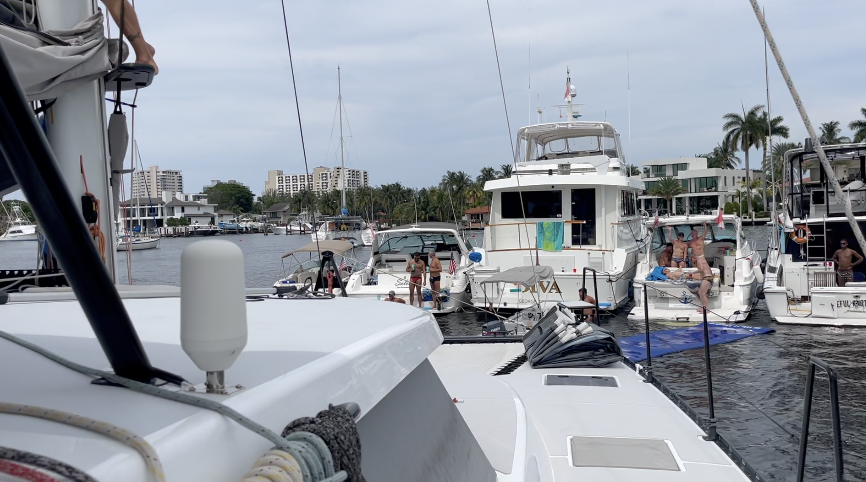
Big sails. Limited deck space. Florida heat. Afternoon storms. It was entertaining, mostly to those partying around us in the Lake.
We tackled one sail per day:
- A torn up (for the third time) Code 0 – Removal of the Torsion line for inspection
- Our battered jib (RIP to a true workhorse—it carried us through the Bahamas)
- The two massive mainsails with broken (again) battens and lots of holes.
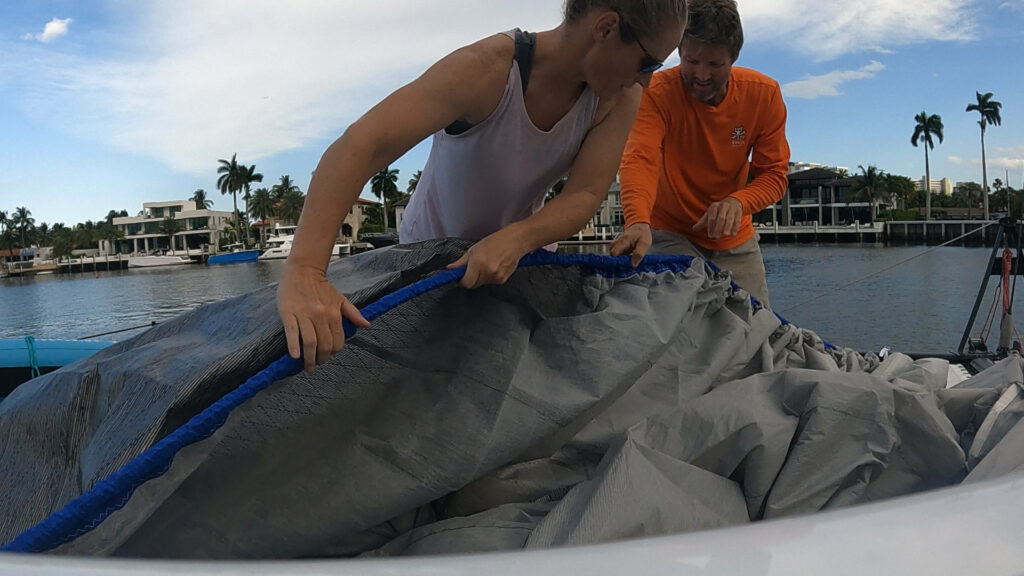
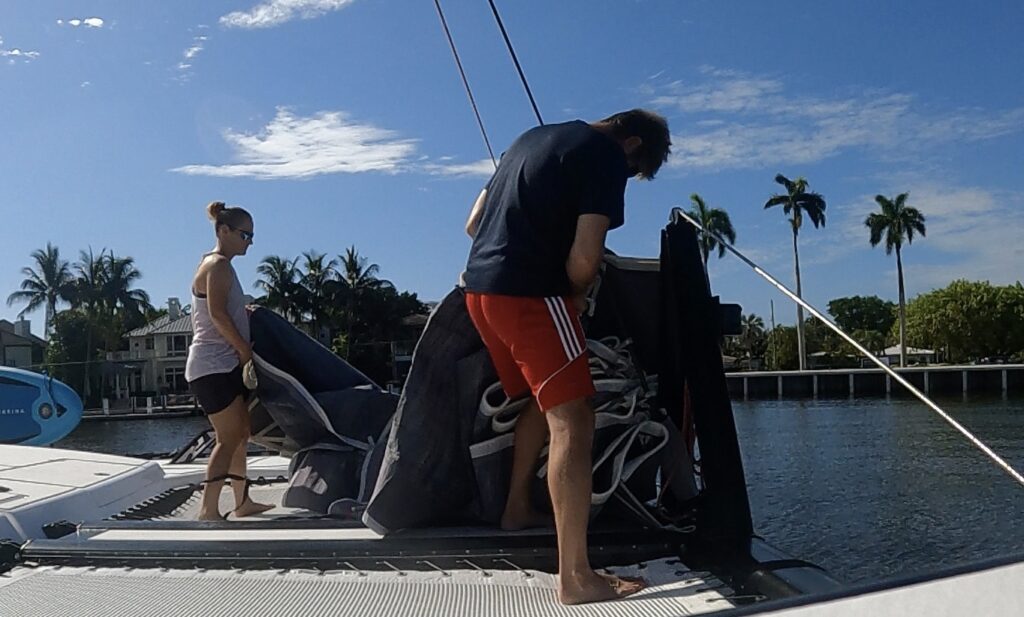
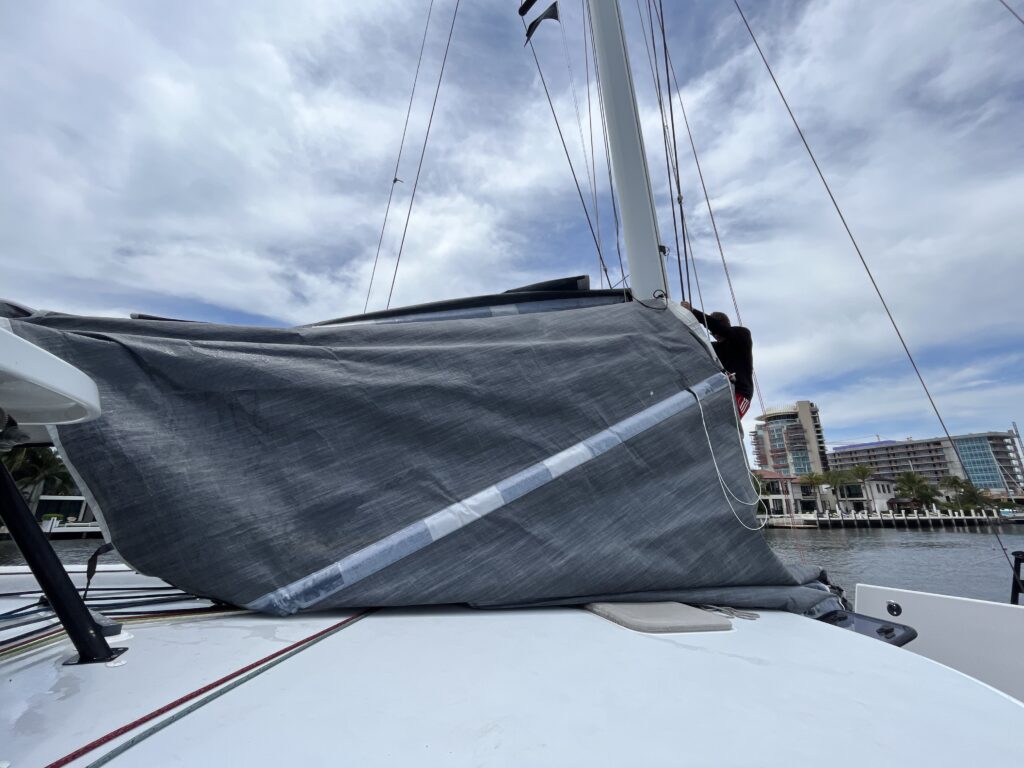
We ended up donating the sails to a kids’ sailing program through our friend Geoff, who also volunteered to help us make the 5 mile trip up the New River to LMC. A fair trade.
Spoiler alert: the Code 0 was done.
By the time we got a good look at it, the sailcloth was barely holding on, and it wasn’t the torsion line causing the issues like we originally thought.
The real problem was the bottom-up furling system. In any kind of breeze, we could never fully roll in the top of the sail, which left it flapping just enough to slowly tear itself apart. And apparently, this wasn’t new—based on what we heard, the sail had been put through the wringer long before it ever got to us. Quantum Sails actually asked “what did you do to this sail?”
At that point, there wasn’t much left to save.
Lesson learned the hard way: never go bottom-up furling.
The “Fun” Projects
In between the bigger jobs, we managed to knock out a few more “fun” projects.
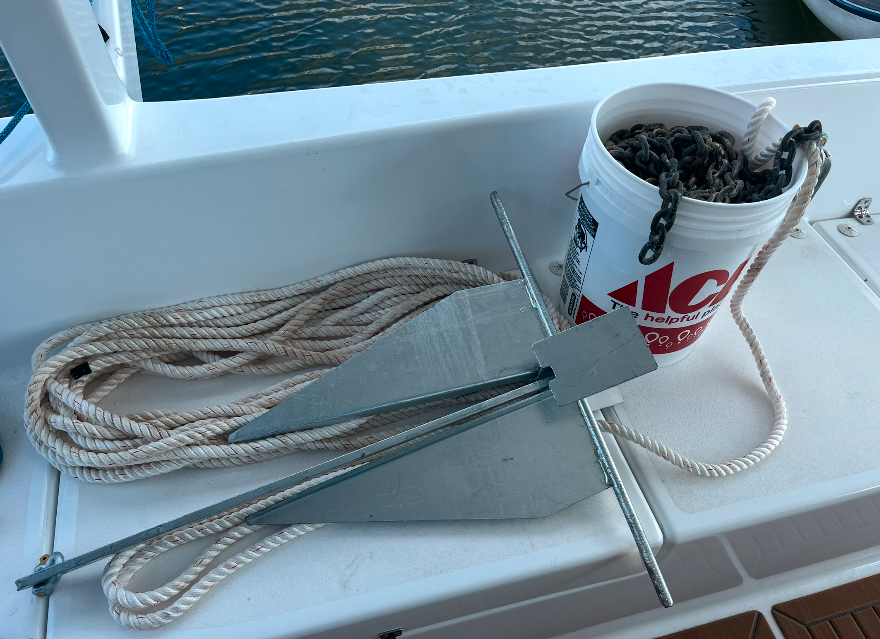
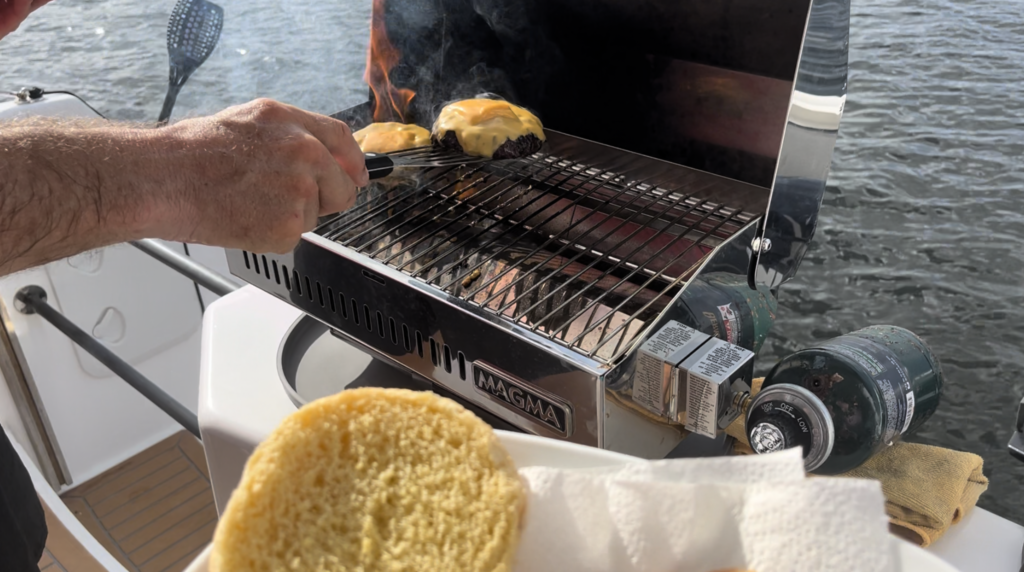
We picked up a spare anchor—because once you’ve had a sketchy anchor situations, (ie you lose it…looking at you, Lake Sylvia), you don’t make that mistake twice. We also installed a new fish cutting table and grill, leaning into the idea that at some point we’d get back to the fun parts of this lifestyle.
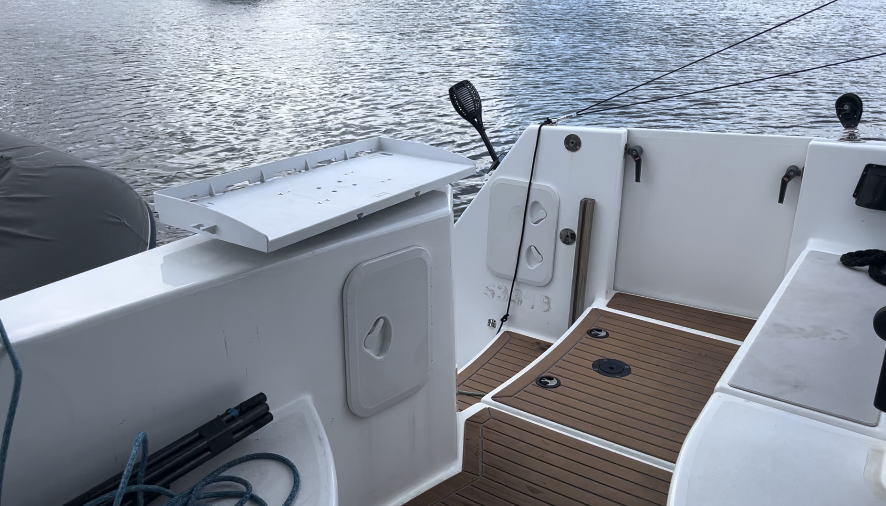
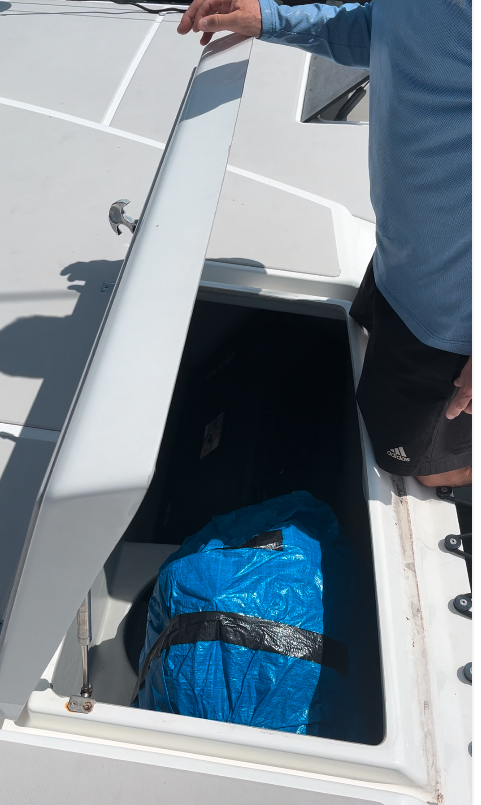
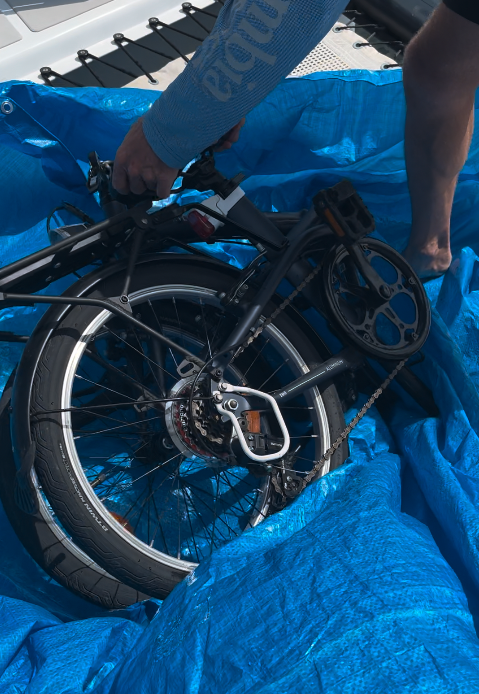
And finally, we unearthed our folding bikes, which had been packed away since before our Atlantic crossing. Slightly worse for wear, but still rideable—and, as it turned out, about to become essential.
A Disney Jungle Cruise?
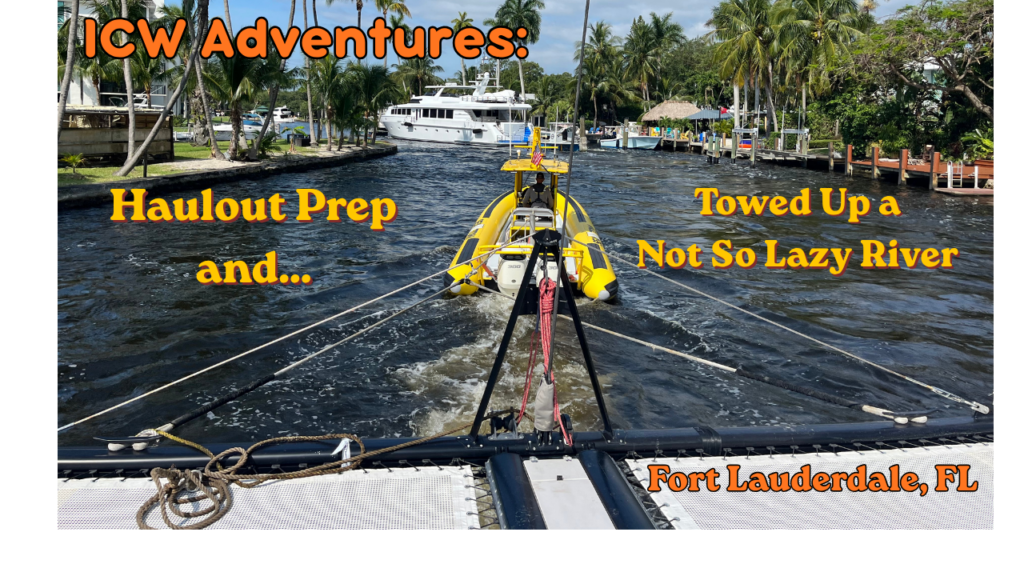
Next challenge: getting our limping boat five miles up the narrow, winding, heavily trafficked New River… with one working motor.
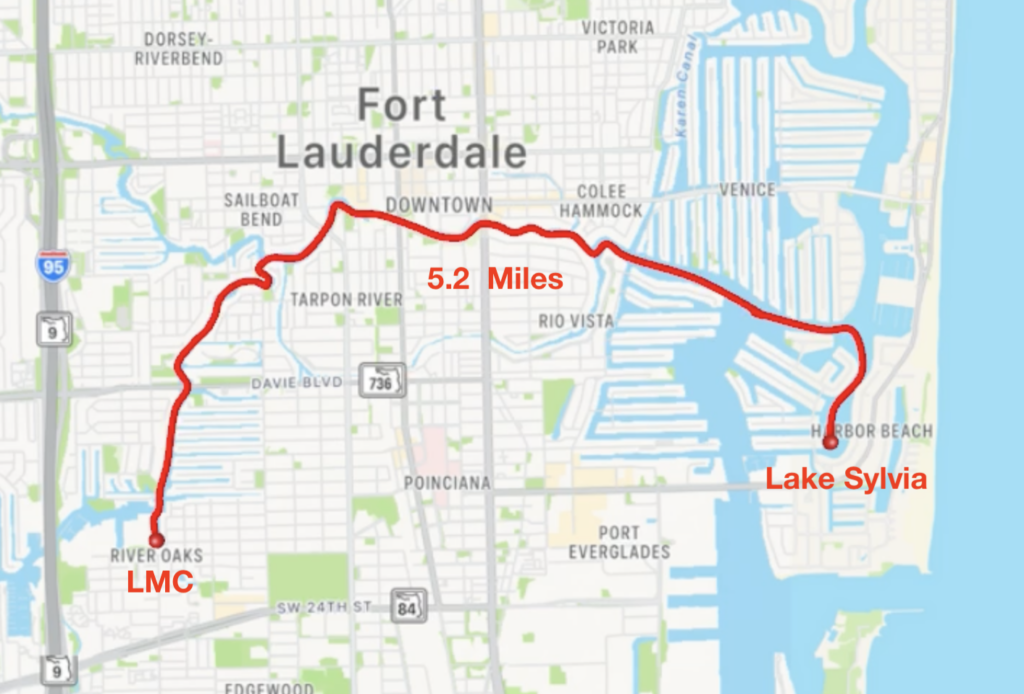
Kevin thought we could manage it. After doing a lot of research, I disagreed.
Too many bridges. Too many tight turns. Too many multi-million-dollar yachts lining the river that we absolutely did not want to “accidentally” meet.
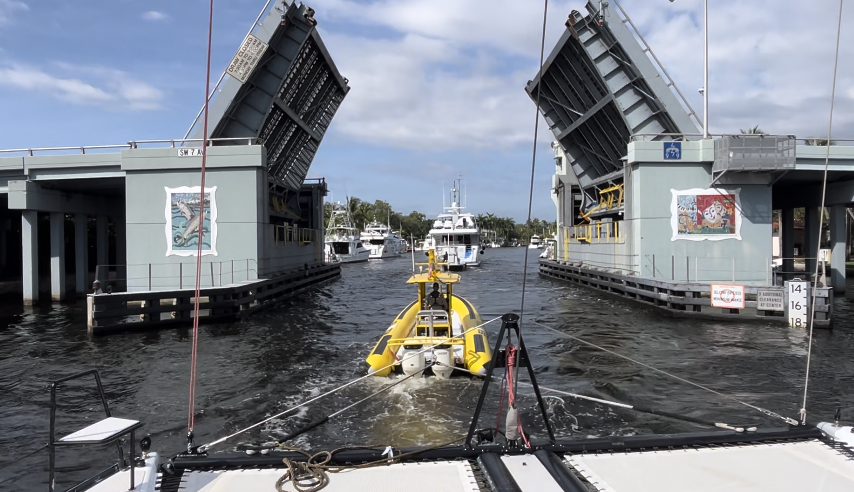
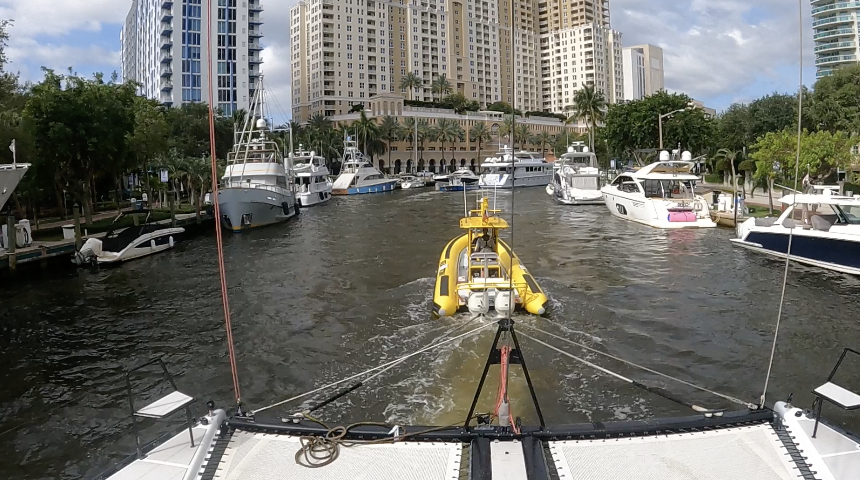
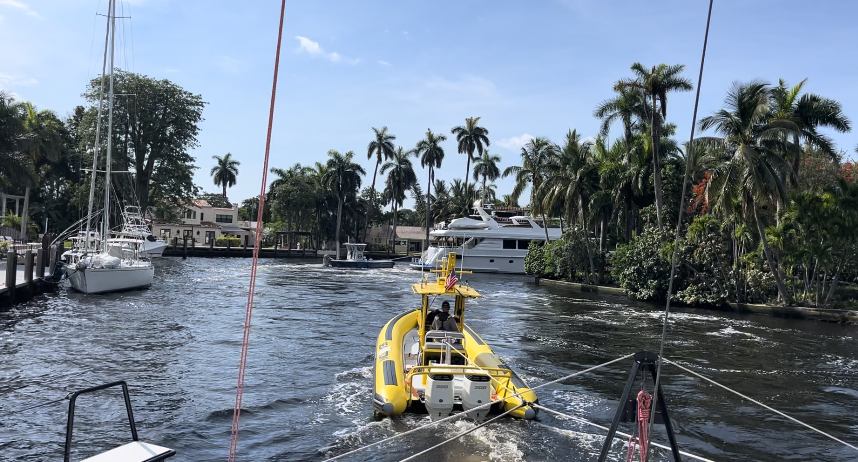
After a lot of discussion, we went with the most conservative plan. So we called SeaTow. Sadly, having just gotten to the states, we had yet to purchase the glorious Boat US/Sea Tow package that would have afforded us a free pass to LMC on a single motor. Dang.
Either way, best decision we made all week.
They showed up on time, got us hooked up, and with Kevin steering, we made our way slowly upriver against the current.
Honestly, it felt like a Disney Jungle Cruise—even if the stakes were significantly higher.
We followed just behind a mega-yacht, also being towed by two tugs, heading to LMC, letting them clear the path. What could have been stressful turned into something oddly calm… controlled… almost enjoyable.
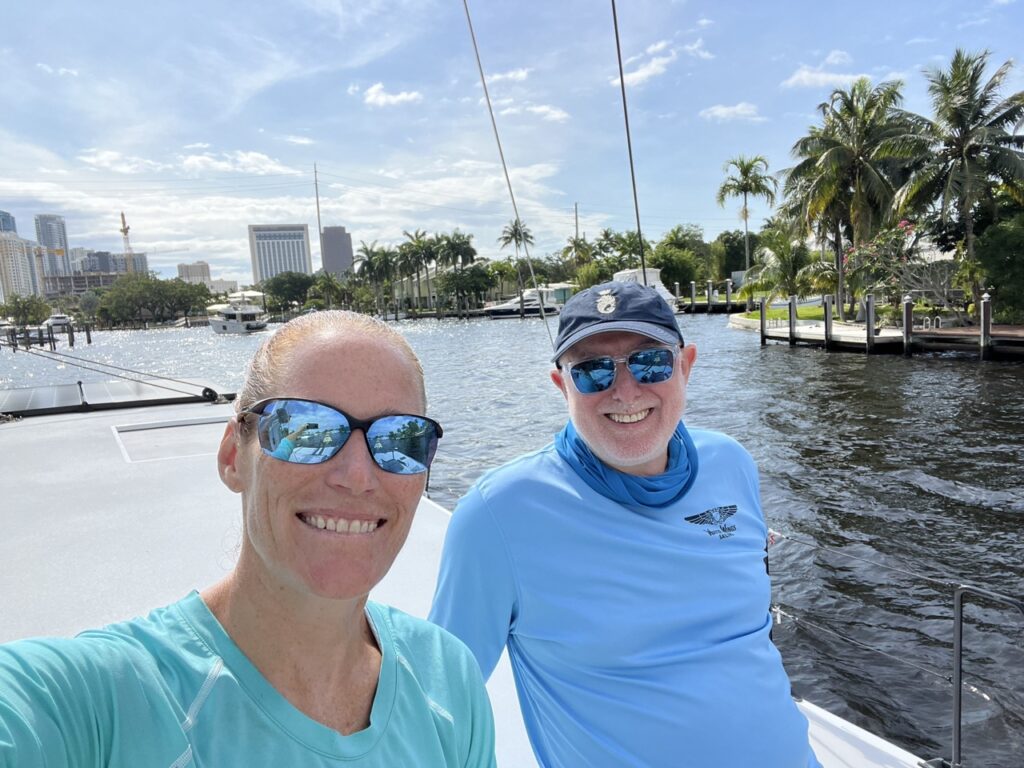
Until the end.
Trying to get into a narrow slip with one working motor and a significant current proved…difficult.
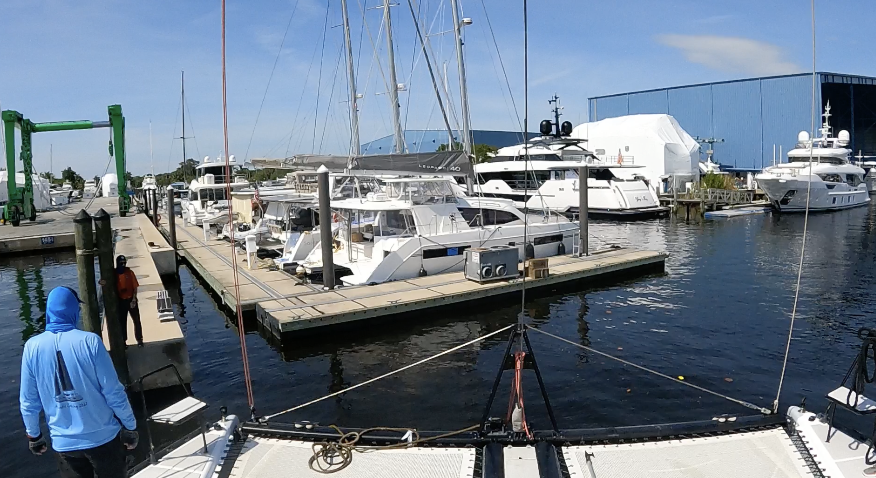
Thankfully, we had SeaTow with us and after a few missed attempts, he was able to pull us back, nudge us into position, and the dock crew was able to bring us safely into the slip.
A very solid reminder of why we didn’t try to do it ourselves.
And then the “Fun” really began…
What followed was more stressful than we expected:
More bad news.
Complicated logistics.
Even more waiting.
And a stay in Fort Lauderdale longer than we ever planned.
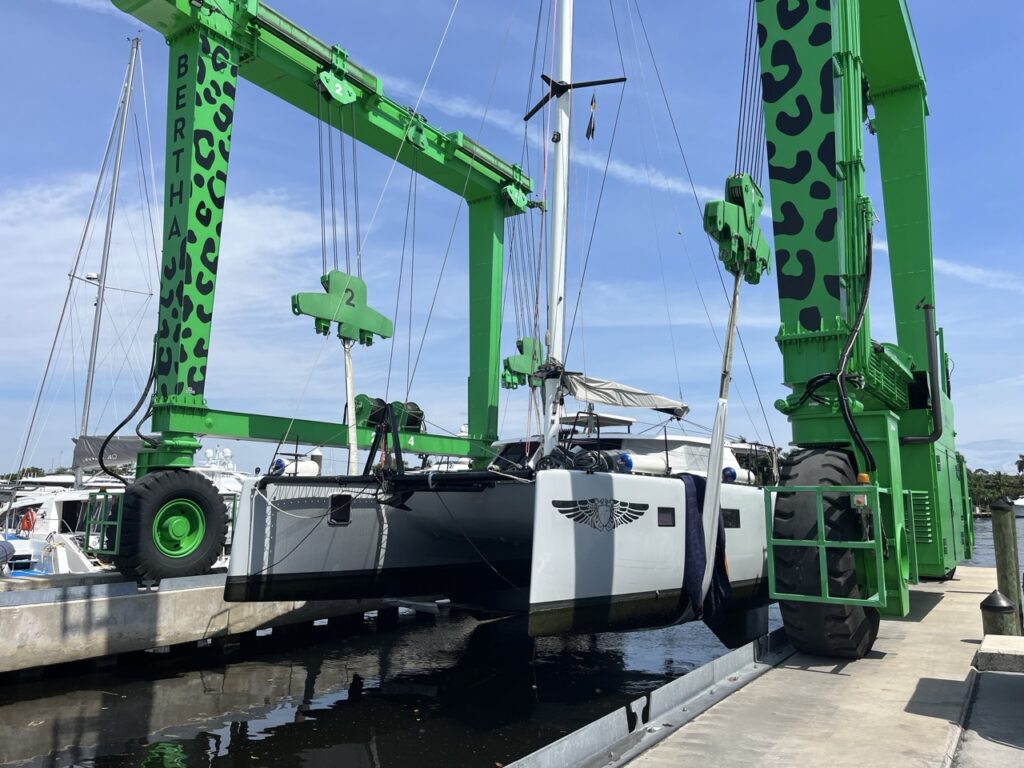
Thankfully, we had some incredible friends—who quickly adopted us as family—helping us through it.
Because at this point…. We were going to need it.
Discover more from Water Wings Sailing
Subscribe to get the latest posts sent to your email.