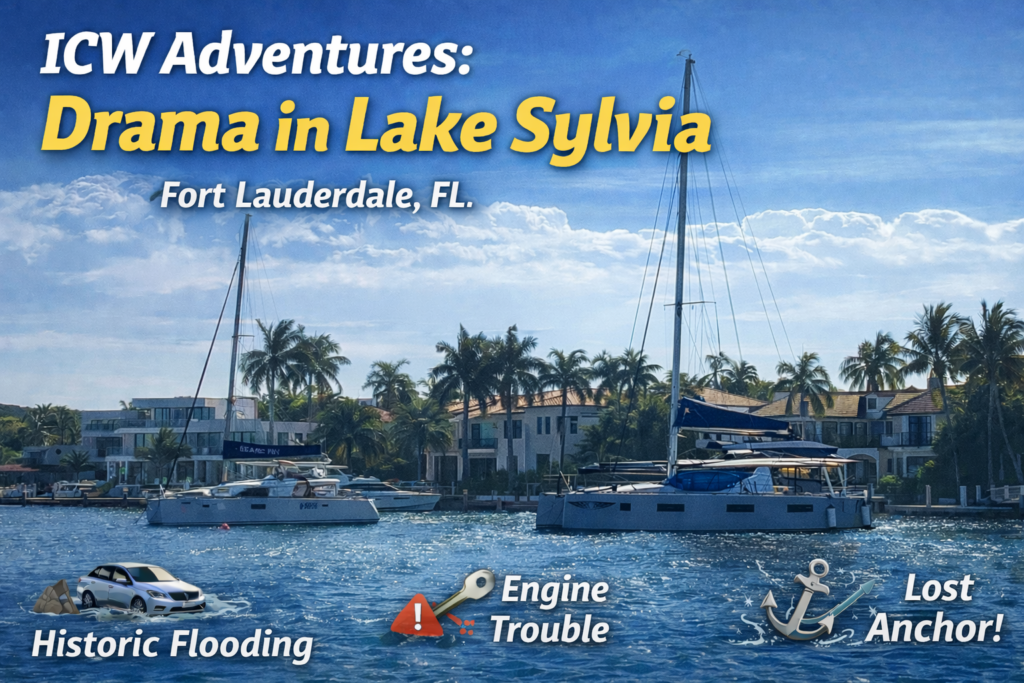
We are Talking Engine Trouble, Historic Flooding, and a Lost Anchor
Getting Settled in the Lake
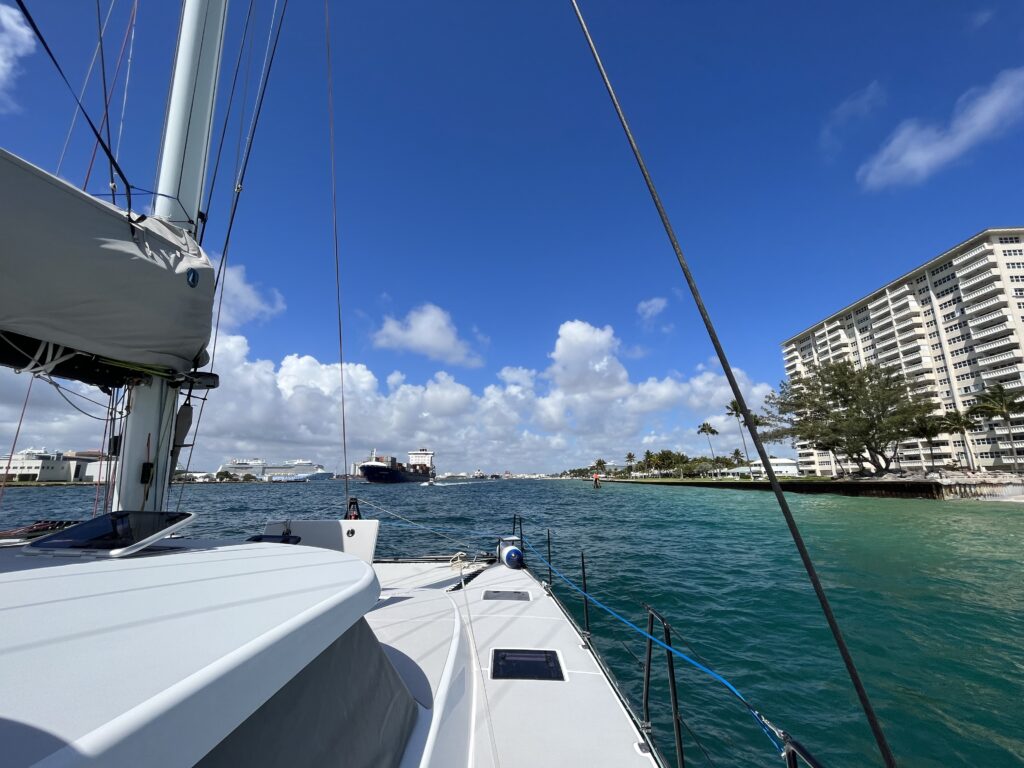
We entered the Intracoastal Waterway (ICW) at the Port Everglades inlet, funneling straight into the densely packed waterways of Fort Lauderdale, Florida. The initial entrance was… unnerving. Dozens of speedboats came barreling toward us, all hitting plane at once, like an unhinged reenactment of Waterworld.
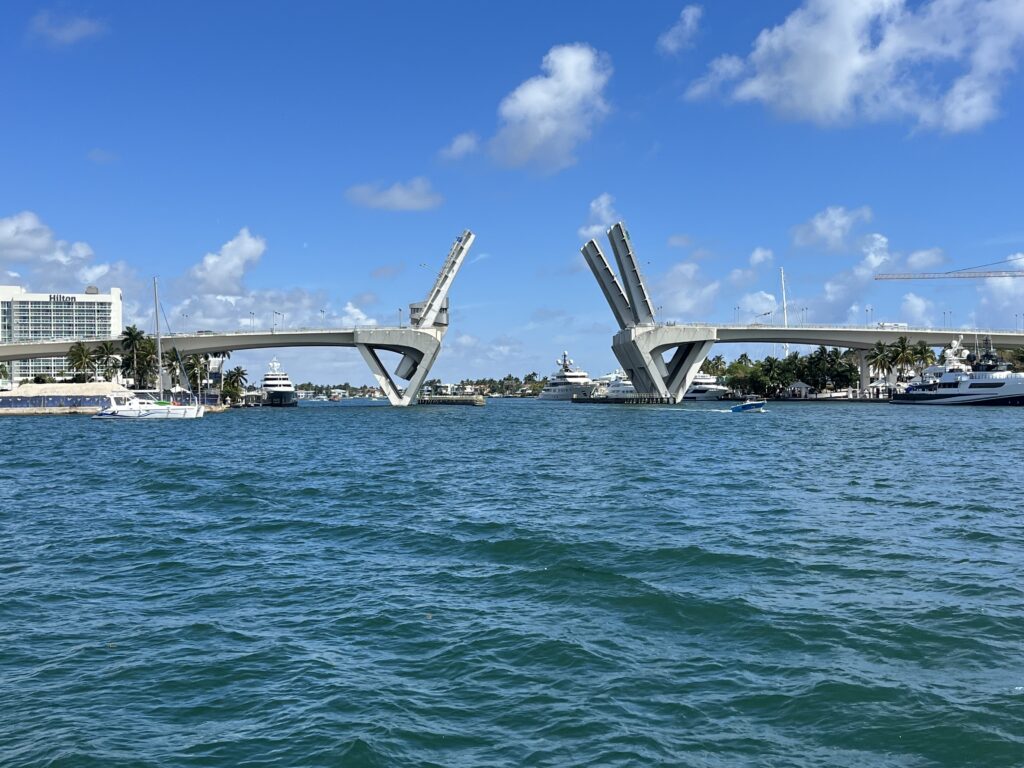
Once we were properly inside the waterway, we slid off to the side and waited for the next 17th Street Bridge opening, bound for our anchorage of choice—Lake Sylvia, a small, protected “lake” surrounded by multi-million dollar McMansions just off the ICW.
- More on how we planned for the Gulf Stream, click HERE.
- How did our Gulf Stream Crossing go, Click HERE.
Back on U.S. Soil (Floating, Anyway)
It finally felt real: we had made it back stateside—11+ months after boarding an international flight and turning our retirement dreams into reality.
We had just completed 5,812.4 nautical miles from Valencia, Spain to Fort Lauderdale, Florida. Twelve countries. Thirty-five anchorages (fourteen in the Bahamas alone). Countless experiences, plenty of laughter, a few tears, and more new friends than we ever imagined.
We were ready for the adventure to continue—but first, we needed a breather.
And more importantly, to fix one major issue (the rig)… plus a growing list of smaller ones.
Our original plan was tidy and optimistic: Swap the rig in early to mid-May once it arrived, then head north past Cape Hatteras. Our insurance required us to be north of the designated hurricane zone by July 1.
As you can probably guess—none of these lofty ideas went according to plan.
Okay… Maybe Two Major Issues
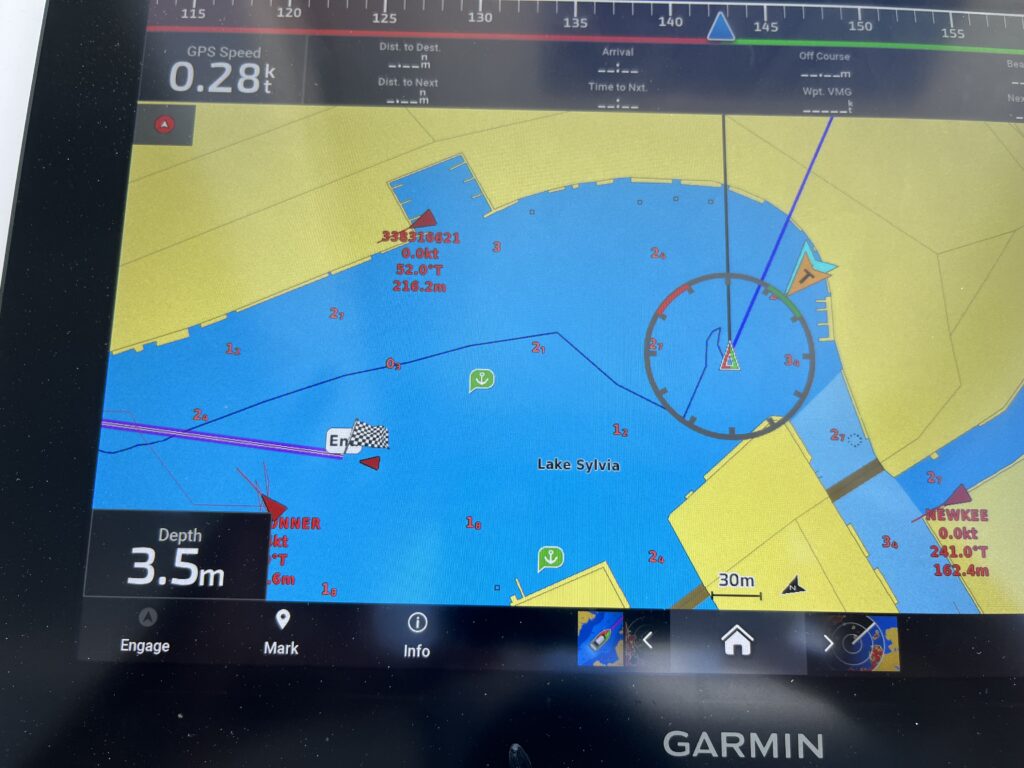
After successfully navigating our first bridge opening, we wound our way into the ever-popular anchorage of Lake Sylvia. Showing up on a beautiful spring Saturday afternoon was, in hindsight, not our best timing. The lake was packed—northbound cruisers, weekend boats, and day trippers everywhere.
To add to the excitement, as we initially approached the inlet our port motor began making a deeply unsettling grinding noise. Nothing quite raises the heart rate like transiting the busiest part of the ICW and maneuvering into a crowded anchorage while wondering if you’re about to lose an engine.
We managed to tuck into a small space between other boats and a concrete wall. The priority was simple: get the anchor down before things got worse.
Which is exactly when the port motor quit.
Clearing In, At Least That Was Easy
Even with one engine down, nothing could fully dampen the excitement of raising the yellow Q-flag and initiating our CBP ROAM Customs and Immigration clearance. Fifteen minutes later, we were officially cleared in.
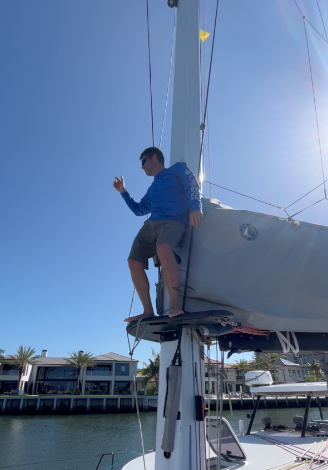
Kevin didn’t even have the flag all the way up when I got the clearance email and yelled, “We’re good!”
After some convincing that I wasn’t joking, he celebrated with a small victory dance, set to the booming music blasting from the center consoles rafted up in front of us.
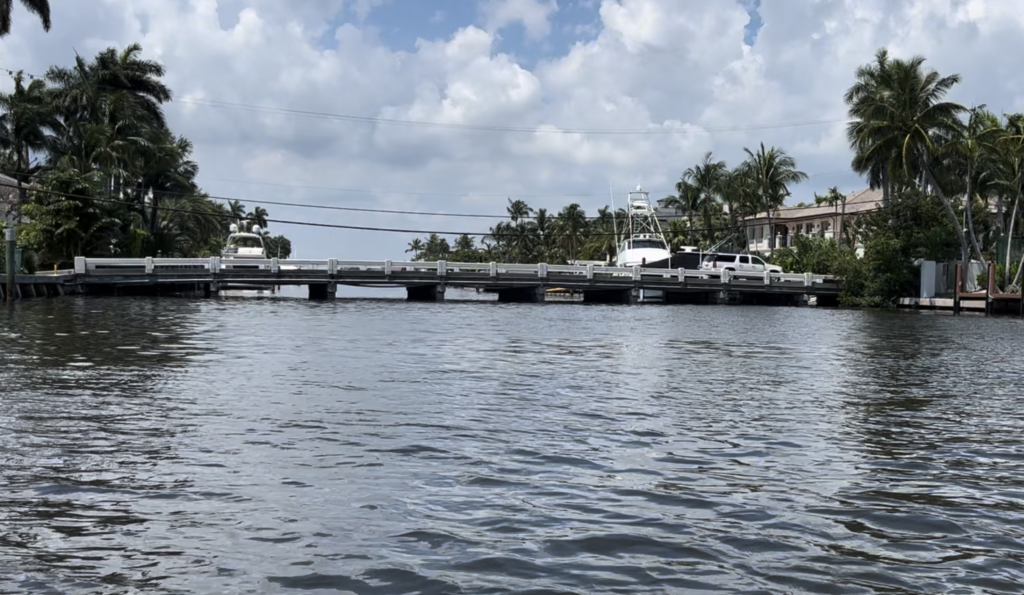
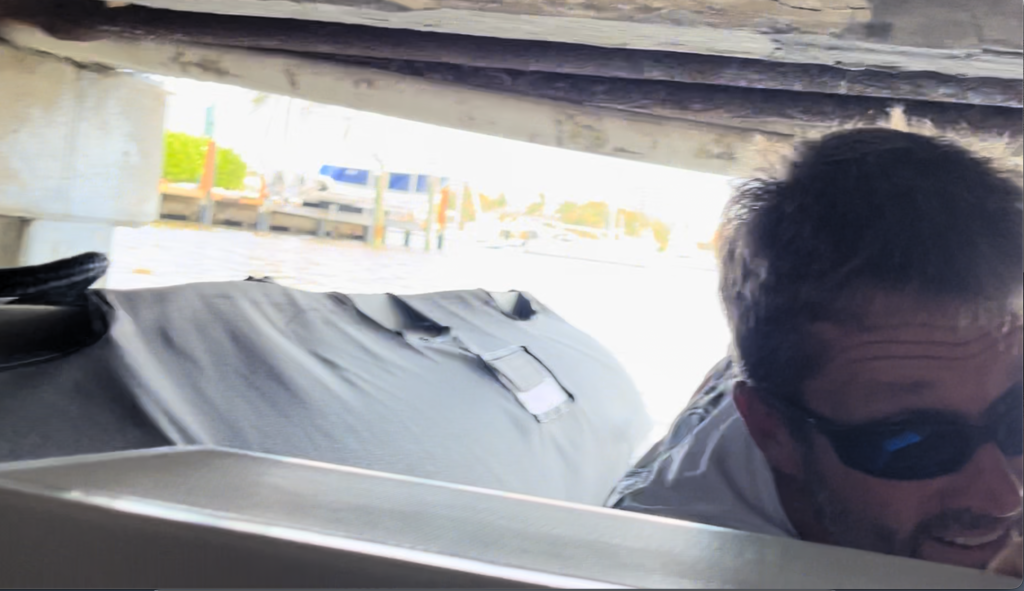
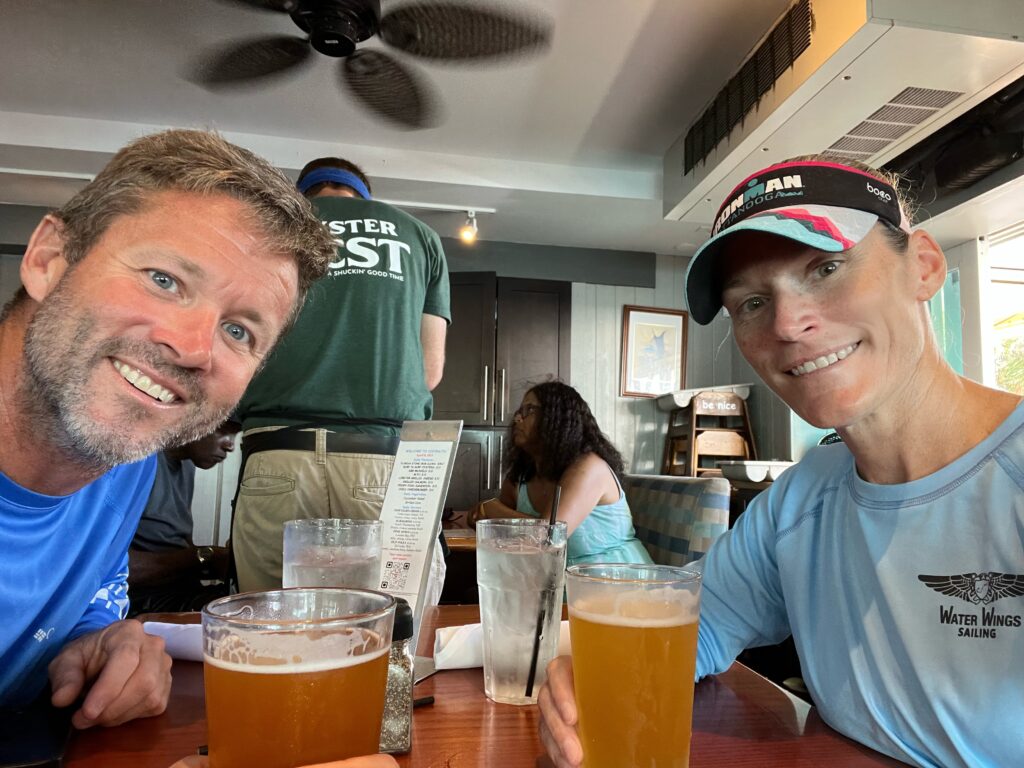
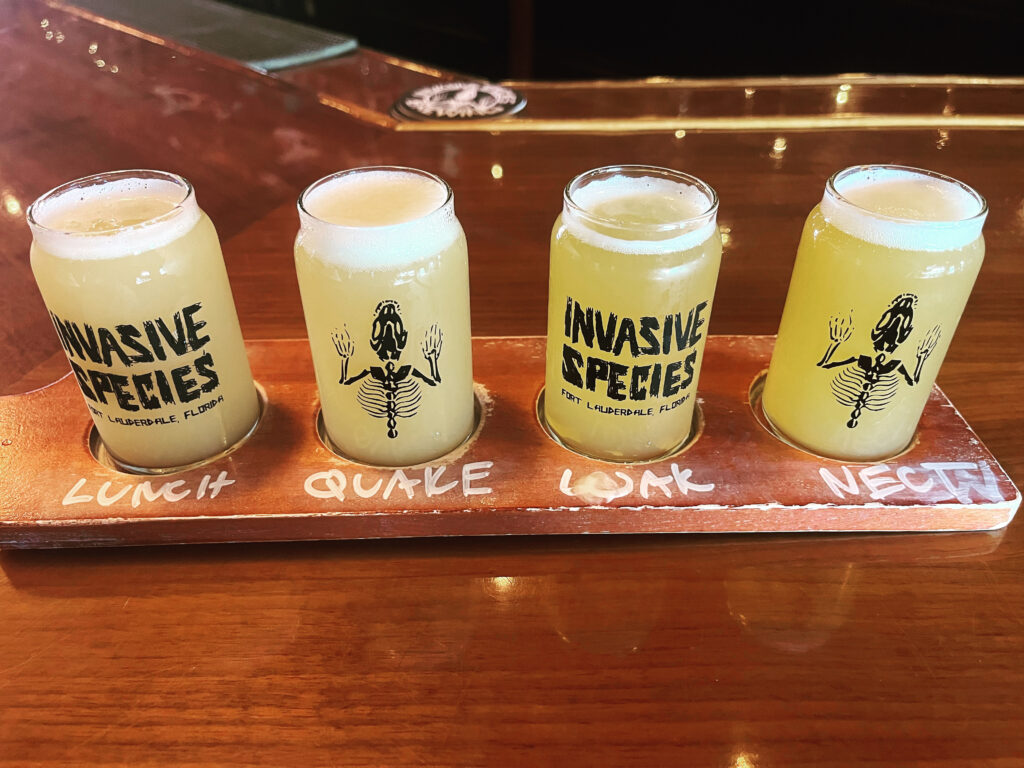
Once settled, we dropped the dinghy and went ashore for a celebratory beer and burger—our first decent burger in months. The dinghy ride itself brought another first: at high tide, we had to duck low to squeeze under a bridge on the way to the restaurant. Tight fit. Totally worth it.
A Storm Like No Other
The next day, the weather arrived—and didn’t leave.
It rained. And rained. And rained some more. Winds built, storms stalled, and conditions deteriorated quickly. We stood anchor watch for days, staring at the concrete wall just 20 feet off our stern as big gusts slammed the boat during tornado warnings.
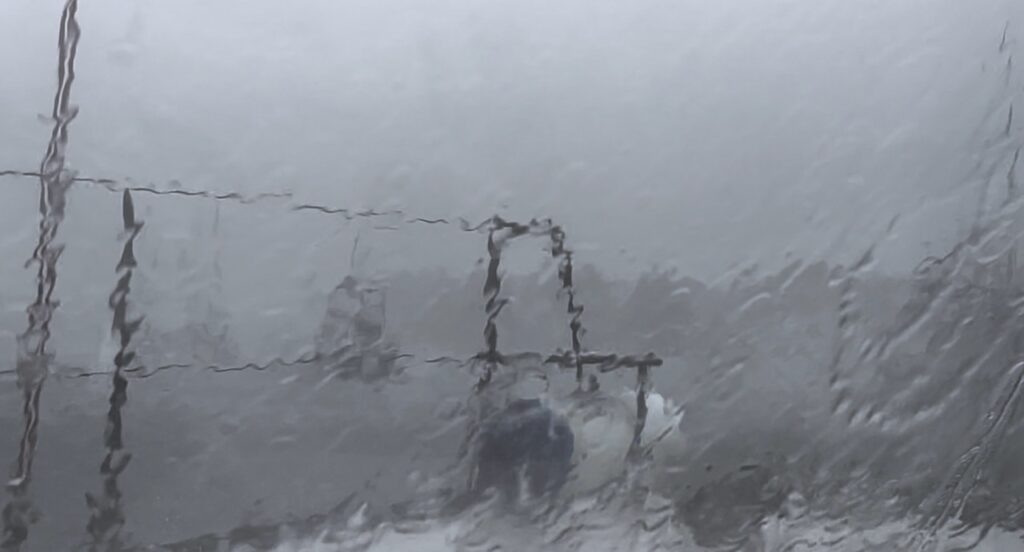
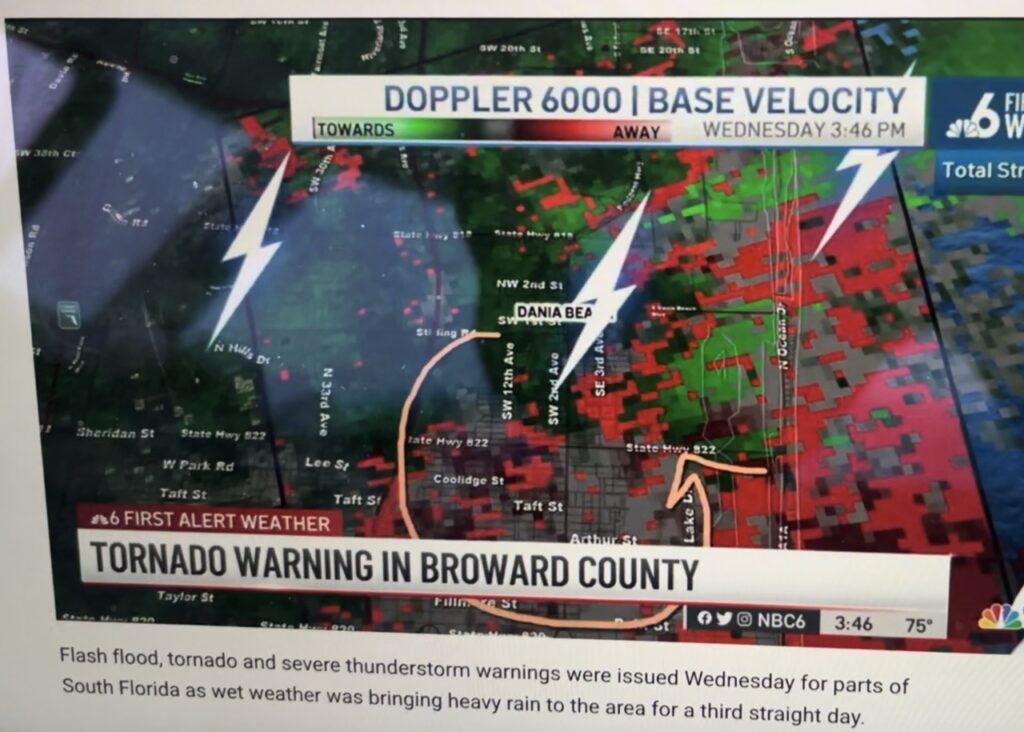
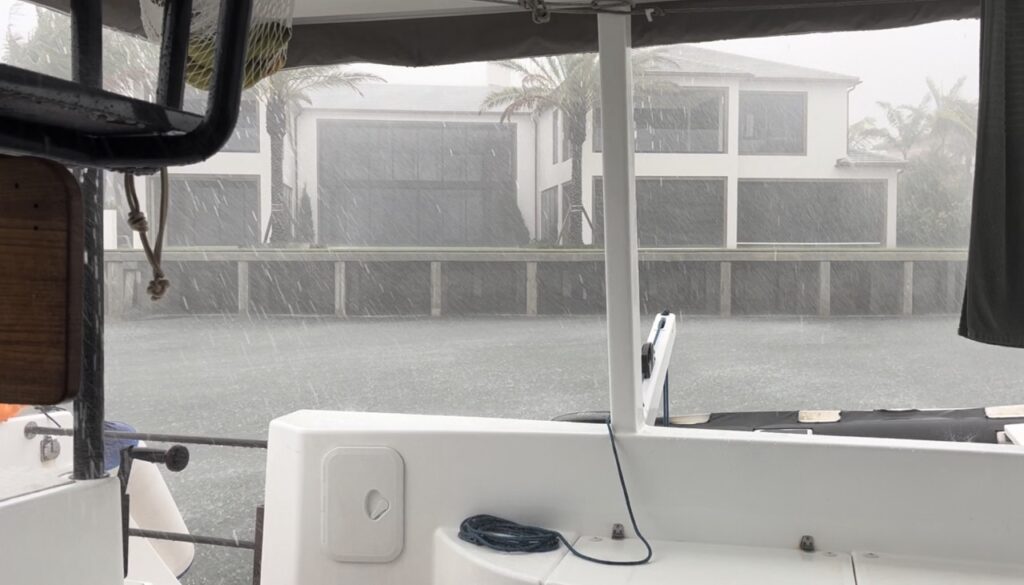
Despite the tension, we fared well—just damp, restless, and very aware of how little room for error we had.
On April 12, 2023, 26 inches of rain fell in just 12 hours, shattering the previous record of 14.5 inches set in 1979. Flash floods crippled the city. The mayor declared a state of emergency. Fort Lauderdale–Hollywood International Airport closed for more than two days. Thousands of Passengers stranded there. Trains stopped. Roads disappeared.
The storms turned out to be historic for Broward County. Fort Lauderdale experienced one of the worst flooding events in its recorded history. In some areas, rainfall totaled nearly a third of the city’s annual average—seven times the typical April rainfall.
Once ashore, we were SHOCKED at what we saw. All the shops and restaurants were closed or partially open trying to dry out massive flooding. Lots of cars were abandoned in the middle of streets having been swamped. A bus was sunk two feet deep in a median as it apparently tried to u-turn and failed.
Floating “quietly” at anchor, we had no idea how bad it truly was on land.
The Waiting Game: Where in the World Is Our New Rig?
If you’re new here, you might be wondering why we’re replacing the entire standing rigging on a boat that’s barely two years old. (Short answer: design vs. reality. Long answer: you can read all about it [HERE].)
We ordered the new rig from Sparcraft South Africa back in November, expecting delivery in April or May. The plan was to arrive in Fort Lauderdale, pull into Lauderdale Marine Center, and replace the mast without hauling out.
It was supposed to be shipped in April. It’s Mid-April. It hasn’t left yet and they still don’t seem to have a plan. If you’ve dealt with the marine industry, this should not be a surprise to you.
While waiting on the rig, we turned our attention to diagnosing the grinding noise from the motor. After countless conversations with Oceanvolt home base in Finland, Oceanvolt USA eventually came aboard. Unfortunately, they couldn’t identify the issue either. To be fair they were more salesman than mechanic.
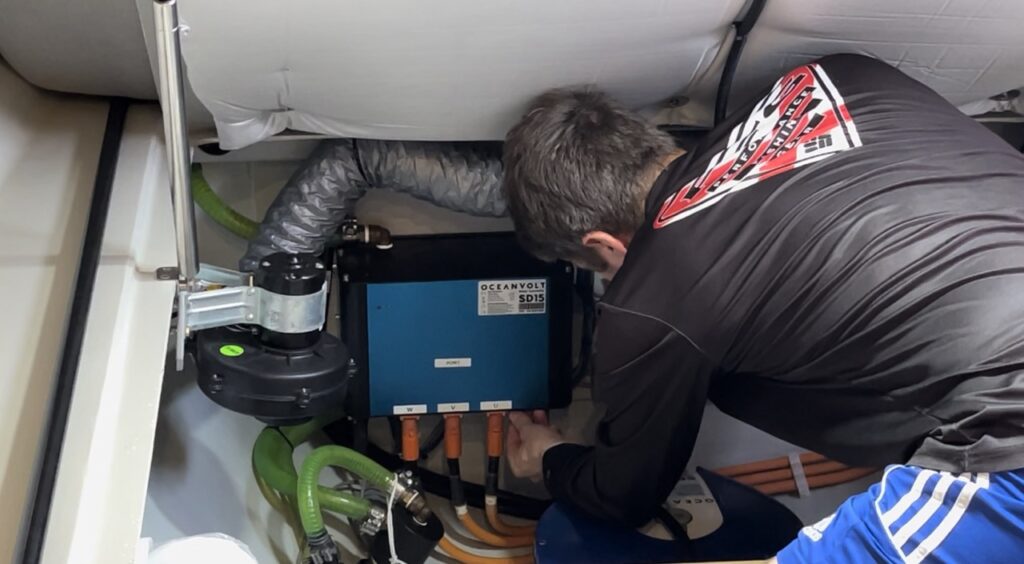

The conclusion was unavoidable—we needed to haul out.
The earliest available slot at Lauderdale Marine Center was about two weeks out.
But Wait… There’s More
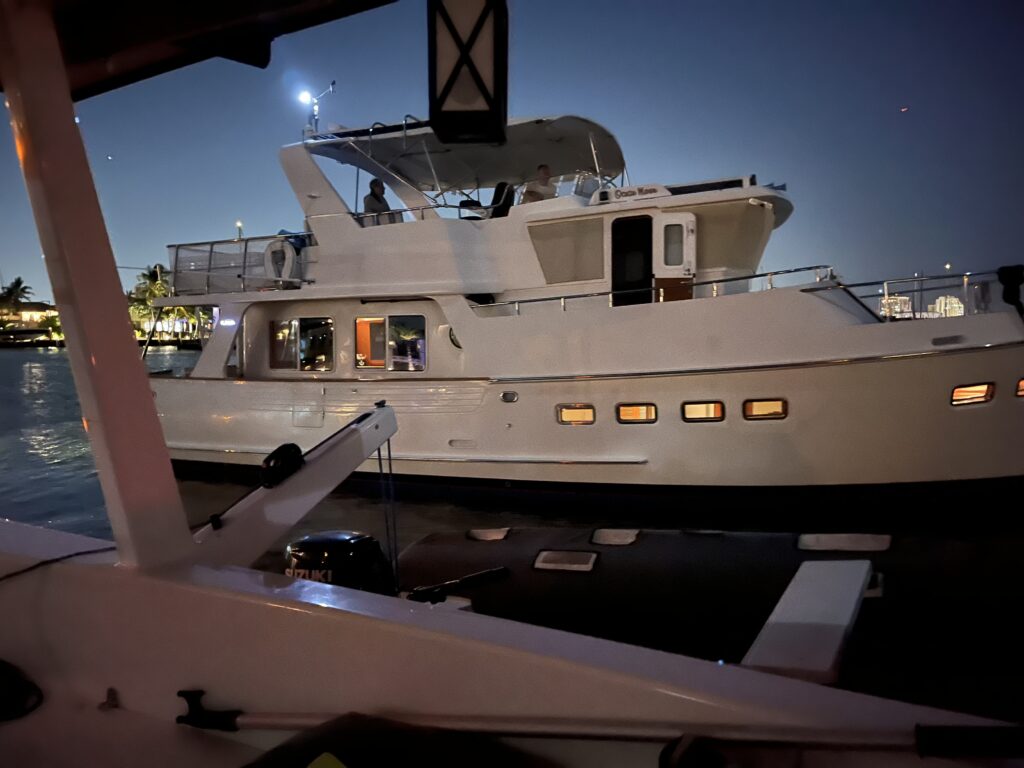
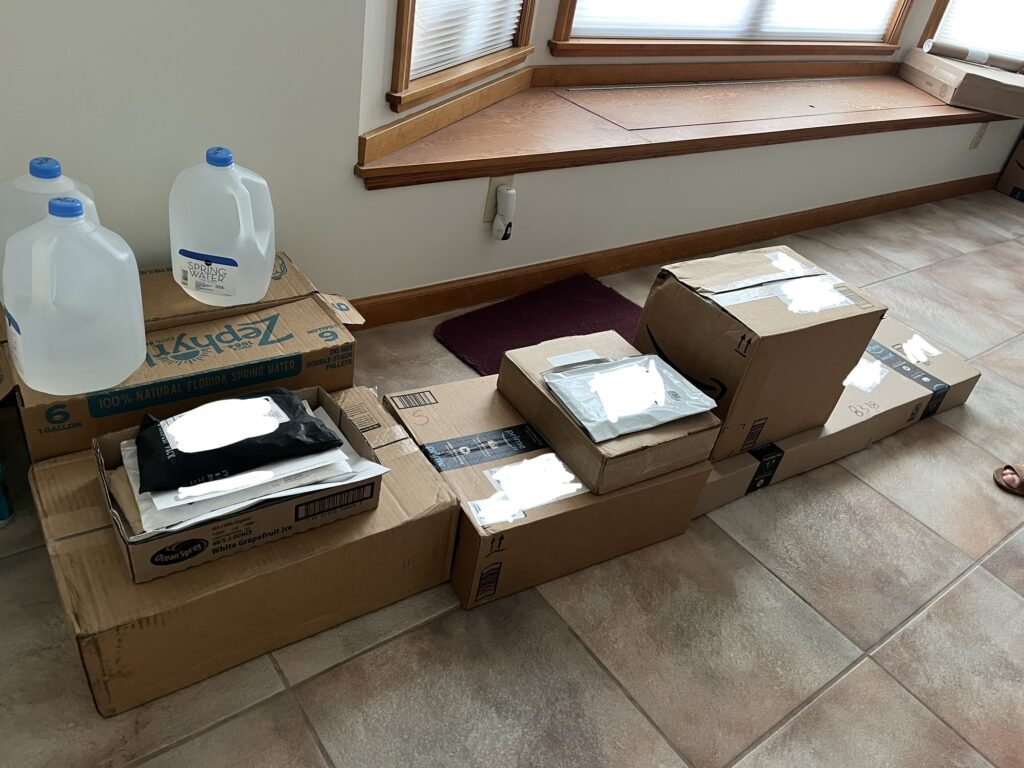
We tried to make the most of our time in Lake Sylvia—doctor visits, family time (who were also our mailbox), sightseeing, and sampling Fort Lauderdale’s food scene.
We might have stressed out a bit too in Lake Syliva. If you choose to anchor there, beware of the crazy currents vs. wind fun…boats swing ALL different ways!
But Murphy’s Law wasn’t done with us yet.
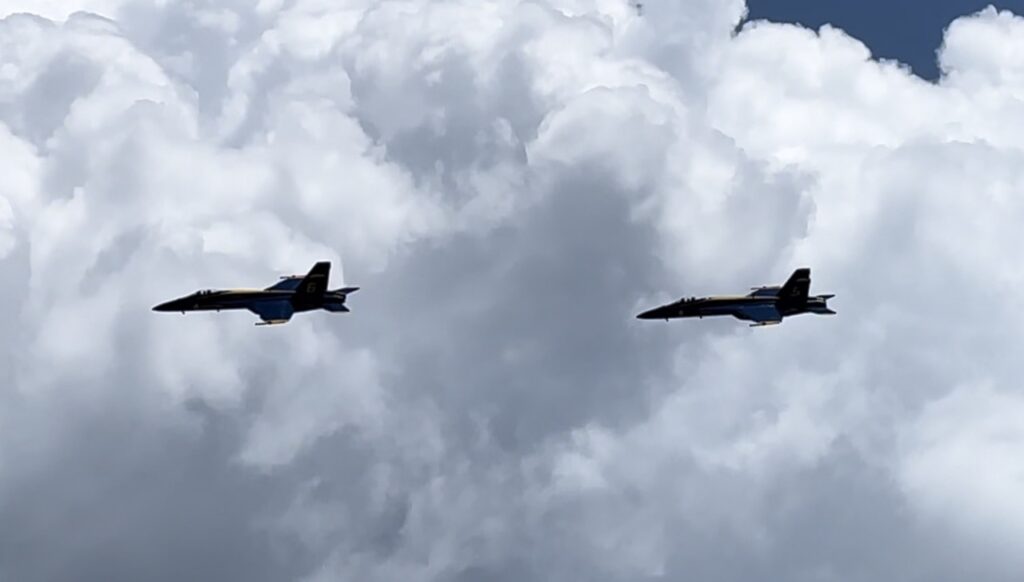
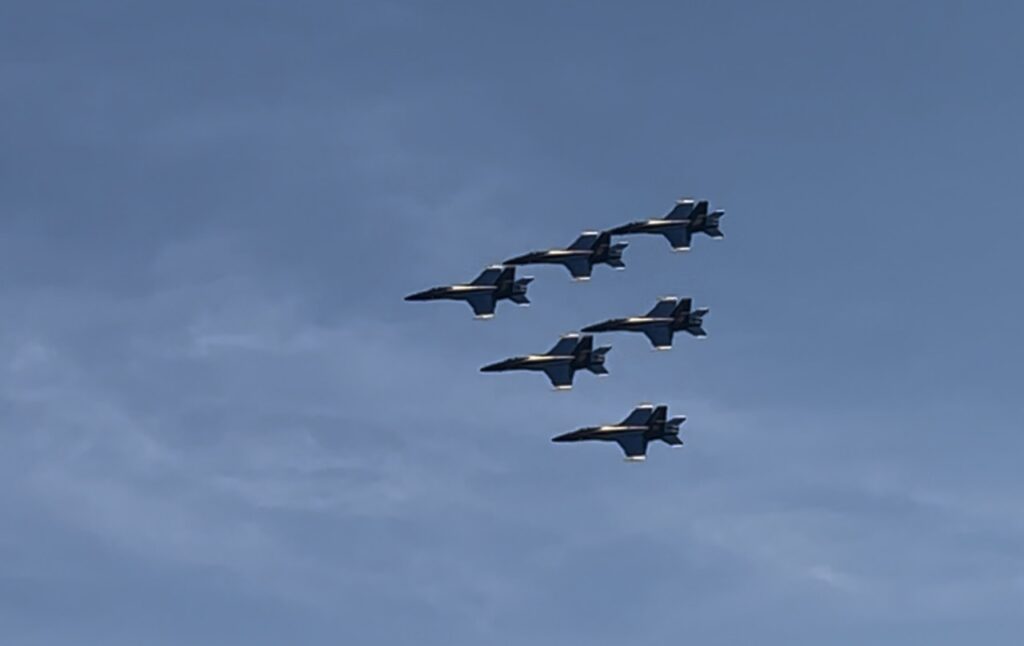
On one fateful day, we started preparing to watch the Blue Angels’ first day of their Fort Lauderdale airshow from the boat after Kevin returned from running errands. Perfect timing, as it turned out.
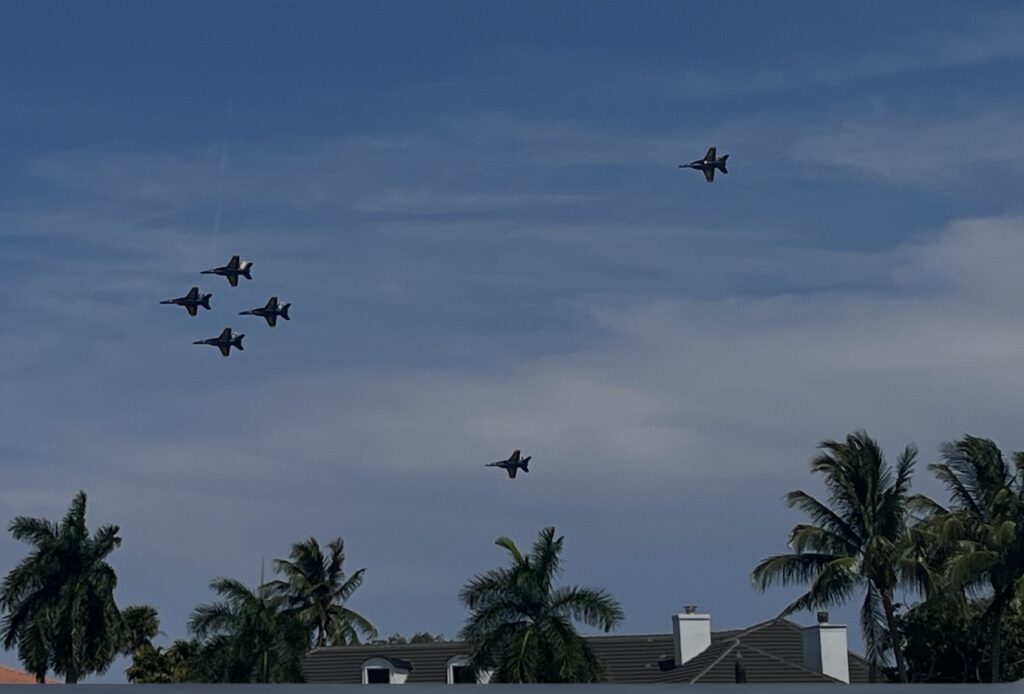
About 15 minutes later, we heard a sharp CLUNK.
We searched the boat and found nothing obvious. Just as we started to relax, I noticed something unsettling: we were drifting… backward… slowly… steadily… toward the boat behind us.
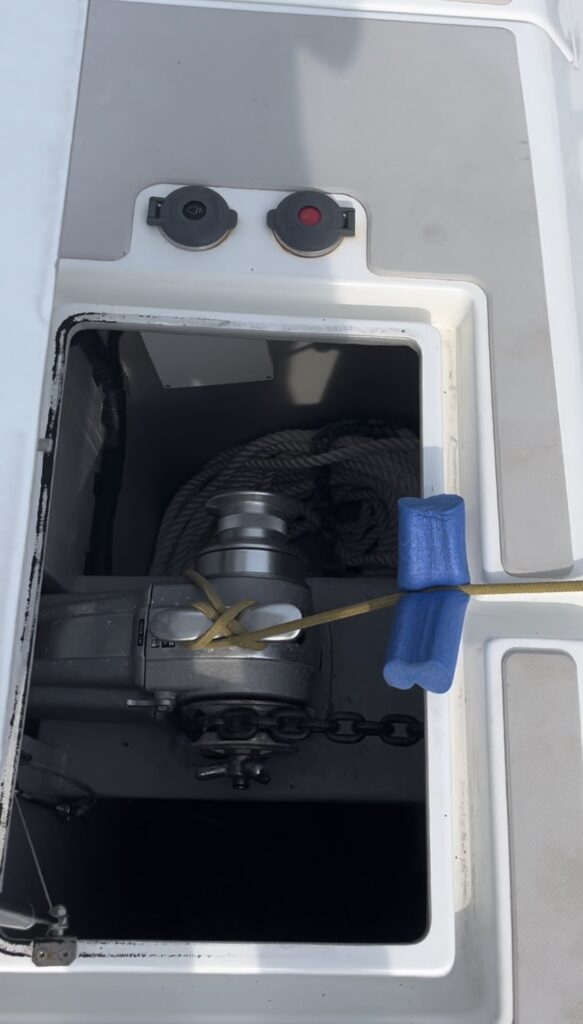
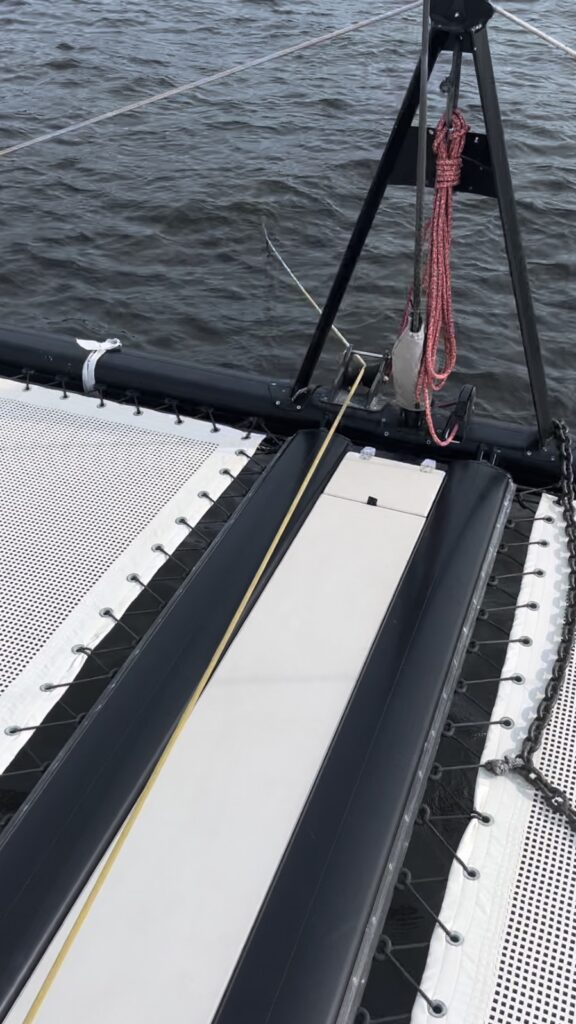
Kevin rushed to start the engines (only one of which still worked). We began raising the anchor to reposition—and the chain flew up.
No anchor attached.
We had lost our anchor.
Now picture this: a packed anchorage, boats swinging every direction, one engine, with the ability to really only steer the boat to the left (To our friends in Naval Aviation.. Why would we ever need to turn right. Ammiright?! IYKYK), no spare anchor, and a thunderstorm building with winds slowly climbing through 15-knots.
Not ideal.
We threaded our way through the anchorage, missing other boats by inches, calling out our situation so nearby boats could react. Once clear of the cluster and back in the ICW, we spotted Roy and Corey from SV Apricus—the boat we nearly hit—chasing us down in their dinghy… with their spare anchor.
Not all heroes wear capes…some come flying in with spare parts 🙂
With their help, we dropped anchor safely out of the traffic channel and finally had a moment to breathe.
Sailors Helping Sailors
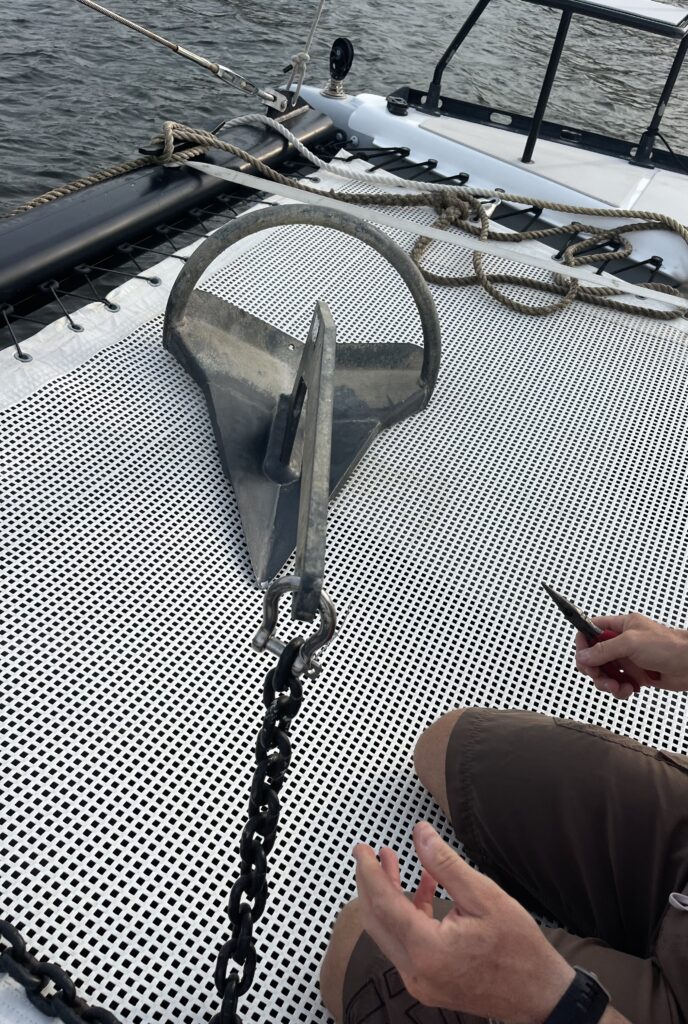
Once secure, we inspected the end of the chain and found the culprit: the anchor swivel had been attached directly to the anchor shank—a factory setup that prevented full rotation. Side loading bent the swivel, the pin sheared in half, and the anchor was gone.
As relatively new cruisers, it wasn’t something we’d thought to question after a year of trouble-free use. We once again didn’t know, what we didn’t know. A common theme.
What followed was a masterclass in cruising community generosity.
Roy and Corey loaned us their spare anchor and provided me with a round trip lift in their dinghy two miles to the nearest dinghy dock so I could Uber to West Marine for parts.
Another nearby boat, SV Searc Fin (Jimmy and Mimi), loaned us dive tanks for Kevin’s favorite part of this whole day. Getting into the very gross, very dark ICW water to try to blindly locate our dinghy with only a rough idea where it was. Jimmy even suited up and braved the water to help search while Mimi drove around in their dinghy shoo-ing away curious and/or oblivious day trippers. More heroes!
After nearly an hour—and several other anchors found along the way—they miraculously recovered ours.
With storms approaching, we still had to maneuver back into the anchorage on one engine. I played mini tugboat in the dinghy, lashed to the port side, while Apricus and Searc Fin flanked us and nudged as needed.
We made it. < deep. sigh. of. relief >
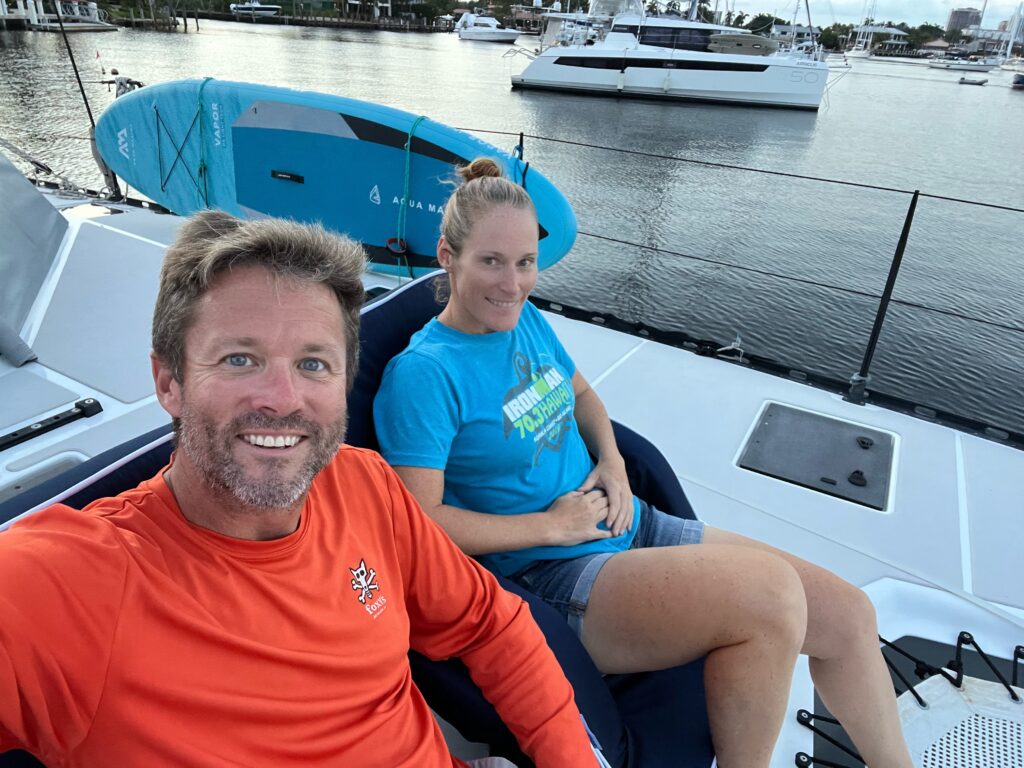
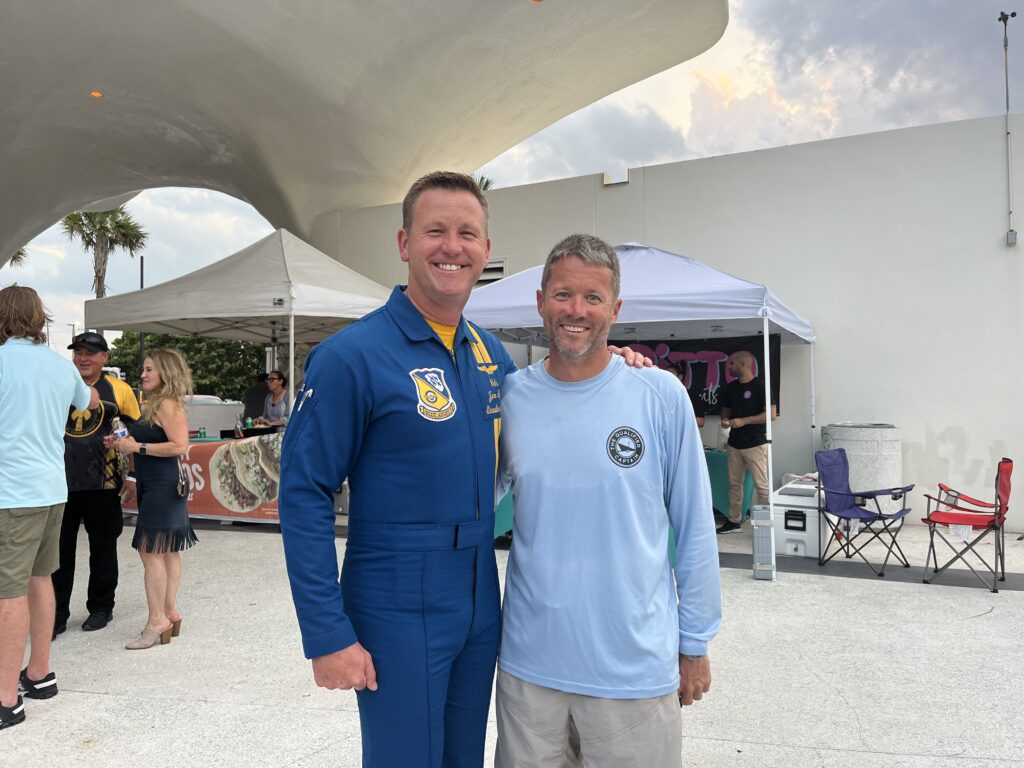
Once we navigated that debacle and recovered after a good night sleep, we were able to watch the Blue Angels in peace and comfortably leave the boat to visit friends!
Lessons Learned
In our first year aboard, lessons have come fast and often. When it came to the anchor, experienced cruisers gave us two clear options:
- Ditch the swivel altogether. Anchors naturally unwind as they’re raised.
- Upgrade to a Mantus Marine swivel (S3 for our 14mm chain).
We chose option two. Every cruiser we spoke to with the Mantus said the same thing: Once they installed it, they haven’t lost a night of sleep.
Sold.
For now, we installed a temporary stainless shackle with bonding wire. The Mantus swivel will go on once we’re on the hard.

Now comes the next challenge…
How do you take a 44-foot catamaran—with one engine—up the narrow, winding, bustling New River to Lauderdale Marine Center?
That story is next.
Discover more from Water Wings Sailing
Subscribe to get the latest posts sent to your email.